
The Impact of U.S.-China Trade Relations on Global Equities: Strategic Sector Positioning in a Shifting Geopolitical Landscape
The Escalation and Its Immediate Fallout
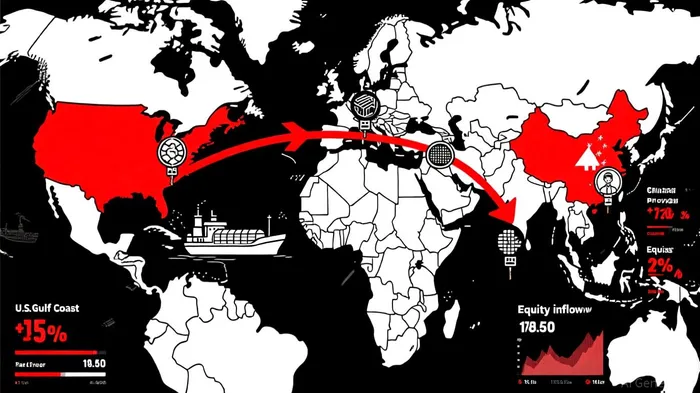
The U.S. Trade Representative's October 24, 2025, probe into China's adherence to the Phase One Agreement has reignited fears of a trade war. According to an Evrim Ağacı report, the U.S. alleges China has missed its $200 billion purchase target by 60% and failed to address intellectual property concerns. In response, the U.S. is considering a 100% additional tariff on Chinese imports, pushing the total rate to 155%. Meanwhile, China's export restrictions on rare earth materials have disrupted supply chains for critical technologies.
This escalation has sent shockwaves through global markets. Technology stocks, particularly those involved in chip design (e.g., SynopsysSNPS-- and Cadence Design Systems), have underperformed as U.S. export controls tighten, a MarketMinute article noted. Conversely, U.S. rare earth mining firms have surged, reflecting investor anticipation of supply shortages.
Strategic Sectors for 2025: Where to Position and Where to Avoid
1. Technology and Semiconductor Supply Chains
The technology sector remains a battleground. U.S. restrictions on chip design tools have forced companies to pivot to alternative suppliers or invest in domestic R&D. However, this sector is not without opportunities. As reported by Reuters, renewed diplomatic engagements in late 2025 have spurred $2.92 billion in inflows into tech equity funds. Investors are betting on firms that can navigate regulatory hurdles while capitalizing on AI-driven demand.
2. Natural Gas and LNG Infrastructure
The U.S. natural gas sector has emerged as a beneficiary of shifting trade dynamics, according to Reuters. Asian firms are aggressively acquiring U.S. LNG assets to meet rising energy demand, particularly in AI-driven data centers. Over $28 billion in gas and LNG assets are currently up for sale, signaling a structural shift in global energy markets. This trend is likely to accelerate as China's rare earth export restrictions force industries to seek cleaner energy alternatives.
3. Precious Metals and Industrial Commodities
Gold and precious metals have seen sustained inflows, with $7.16 billion poured into related funds over nine consecutive weeks, Newsmax reported. Industrial sector funds also attracted $819 million, reflecting demand for materials critical to both U.S. and Chinese manufacturing. These assets serve as hedges against trade-related volatility and are poised to outperform in a decoupling scenario.
The Role of Diplomatic Engagement in Market Volatility
While tensions persist, diplomatic breakthroughs have created windows of opportunity. A Reuters report notes that global equity funds saw a net inflow of $11.03 billion in the week through October 22, driven by optimism over a potential U.S.-China trade deal. U.S. funds received $9.65 billion, while Asian funds added $2.81 billion, underscoring the interconnectedness of regional markets.
However, investors must remain cautious. The recent 100% tariff on Chinese goods and rare earth export controls suggest that even minor diplomatic setbacks could reignite volatility. Diversification across sectors and geographies is key to weathering these swings.
Conclusion: Navigating the New Normal
The U.S.-China trade dynamic is no longer a binary issue of tariffs and negotiations-it's a complex interplay of supply chain reconfiguration, technological competition, and energy transition. Strategic positioning requires a focus on sectors with both resilience and growth potential: technology (for innovation), natural gas (for energy security), and precious metals (for stability).
As diplomatic engagements continue, investors should monitor key indicators such as trade volume data, rare earth price trends, and equity fund flows. The next phase of this geopolitical chess game will likely redefine global markets, and those who adapt swiftly will find themselves ahead of the curve.





Comentarios
Aún no hay comentarios