
The Impact of California's 18-Month Crypto Recovery Window on Institutional Adoption and Liquidity
California's Digital Financial Assets Law (DFAL), enacted in October 2023, has emerged as a pivotal force in reshaping the institutional crypto landscape. By extending the compliance window to July 1, 2026, via Assembly Bill 1934, the state granted businesses an 18-month period to adapt to a robust regulatory framework. This deliberate delay, coupled with clear licensing requirements and consumer protections, has catalyzed a surge in institutional investment inflows and liquidity, positioning California as a bellwether for crypto market maturation.
Regulatory Clarity as a Catalyst
The DFAL's core objective is to balance innovation with accountability. By mandating licenses for entities engaging in digital asset activities-such as exchanging, storing, or transferring crypto-the California Department of Financial Protection and Innovation (DFPI) has established a transparent framework that reduces operational ambiguity. For instance, stablecoin issuers must now maintain eligible securities equal in value to their outstanding tokens, a measure designed to prevent collapses like TerraUSD, as a FinancialContent article noted. This clarity has directly addressed institutional concerns about counterparty risk, encouraging firms to allocate capital to California-based platforms.
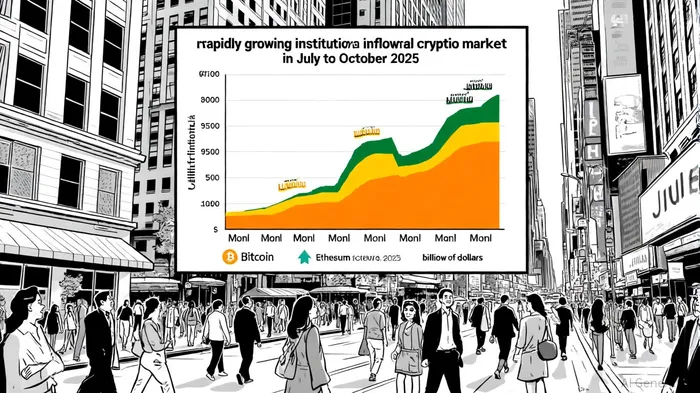
Data from CoinShares underscores this shift: crypto inflows hit $3.7 billion in the week ending July 5, 2025, the second-largest weekly inflow on record, with BitcoinBTC-- and EthereumETH-- dominating demand, as BeInCrypto reported. By October 2025, inflows had surged further, reaching $5.95 billion, driven by institutional confidence in the DFAL's consumer safeguards and operational standards, according to a CryptoNews article. JPMorgan analysts attribute over $60 billion in net inflows to digital asset funds in 2025, with Ethereum spot ETFs playing a critical role in attracting institutional capital, according to a Cryptopolitan report.
Liquidity and Market Structure
The DFAL's licensing regime has also redefined liquidity dynamics. While smaller players faced initial hurdles-application fees range from $7,500 to $20,000-the resulting market consolidation has elevated the credibility of licensed exchanges. Centralized platforms now undergo rigorous token listing certifications, requiring risk assessments and due diligence for all assets, according to DFPI guidance. This has filtered out speculative tokens, channeling capital toward established assets like Bitcoin and Ethereum.
Stablecoin requirements under the DFAL further illustrate this trend. By enforcing full collateralization, the law has bolstered trust in fiat-backed tokens, which serve as liquidity bridges between traditional and crypto markets. For example, issuers of USD-backed stablecoins must now hold reserves matching their outstanding supply, a rule that aligns with institutional demands for transparency, as detailed in a Decrypt article.
Challenges and Long-Term Implications
Despite these gains, the DFAL's implementation has introduced friction. Smaller exchanges and startups face higher compliance costs, potentially limiting short-term liquidity. However, the long-term benefits-such as reduced fraud and enhanced investor confidence-appear to outweigh these challenges. The DFPI's authority to enforce audits and financial reporting has also created a level playing field, deterring bad actors while attracting institutional players seeking stable environments.
Senate Bill 822, which preserves unclaimed digital assets in their native form, further reinforces this trend. By allowing claimants to recover assets or their converted value after 18–20 months, the law aligns with institutional preferences for asset preservation and reduces the risk of forced liquidation, as BeInCrypto explains.
Conclusion
California's 18-month recovery window under the DFAL has proven to be more than a compliance buffer-it is a strategic lever for market transformation. By providing regulatory clarity, the state has mitigated institutional hesitancy, driving record inflows and fostering a more resilient crypto ecosystem. As the July 2026 deadline approaches, the DFAL's legacy will likely extend beyond California, influencing national and global regulatory approaches to digital assets. For institutional investors, the message is clear: where there is structure, there is opportunity.






Comentarios
Aún no hay comentarios