
The Impact of Academic and Research Trends on Emerging Tech Sectors
AI: From Campus to Industry
The University of Missouri's use of machine learning to forecast energy demand with 94% accuracy highlights the transformative potential of AI in optimizing resource management. Similarly, elite institutions like MIT, Harvard, and Stanford have launched interdisciplinary AI initiatives, such as MIT's Schwarzman College of Computing, which emphasize ethical development and societal impact. These efforts underscore a broader trend: universities are not just training AI specialists but also fostering innovation that scales to real-world applications.
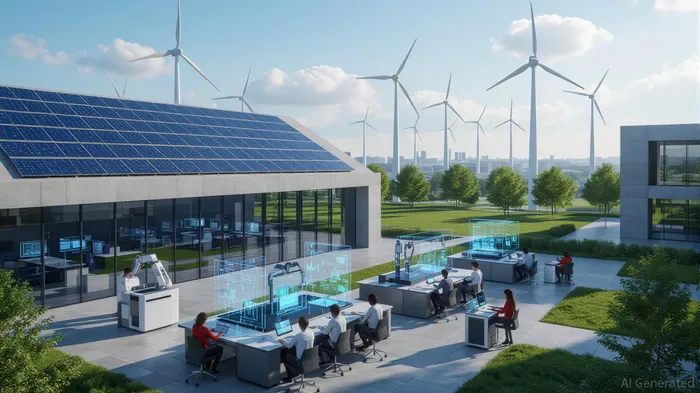
Farmingdale State College is following suit. Its $75 million Computer Sciences Center, set to open in 2025, will double enrollment in AI-related programs and introduce a Bachelor of Science in Artificial Intelligence Management (AIM). This program integrates technical and managerial skills, addressing industry demands for professionals who can navigate both algorithmic complexity and business strategy. The college's partnerships with Tesla, Amazon, and Estée Lauder further amplify its impact, with 80% of graduates securing jobs within six months. For investors, this signals a growing market: the global AI education sector is projected to reach $12.8 billion by 2028.
Cybersecurity: A Shield Against Digital Threats
As cyber threats evolve, universities are adopting AI-driven tools to bolster defenses. Chris Campbell, chief information officer at DeVry University, emphasizes the need for ethical frameworks alongside advanced threat detection systems. Farmingdale's Bachelor of Science in Computer Security Technology mirrors this approach, equipping students with skills in cryptography, network security, and incident response through hands-on learning. The program's focus on hands-on learning prepares graduates for roles in corporate and IT security, a critical need as AI-driven attacks become more sophisticated.
The college's Research Aligned Mentorship (RAM) program also supports applied research in AI-powered cybersecurity, fostering innovation in threat mitigation. For investors, this aligns with a sector where demand for skilled professionals is expected to surge, particularly in AI-driven security analytics.
Renewable Energy: Powering the Green Transition
Universities are also pivotal in advancing renewable energy technologies. The University of Missouri's AI-driven energy efficiency projects demonstrate how data science can reduce costs and carbon footprints. Meanwhile, Farmingdale's Renewable Energy and Sustainability Center (RESC) offers certificate programs in solar, wind, and smart grid technologies, directly addressing workforce shortages in Long Island's green economy through industry-aligned training.
The college's partnerships with the Offshore Wind Training Institute (OWTI) and its $500,000 investment in a microcredential program for offshore wind technicians highlight its strategic alignment with industry trends. With U.S. wind energy targets aiming for 20% of electricity generation by 2030, roles in this sector are projected to grow by 60% between 2023 and 2033 according to industry analysis. Farmingdale's $5 million gift from alumnus Murray Pasternack further underscores its commitment to workforce development, funding scholarships and mentorship in engineering technology.
Investment Implications: Balancing Opportunity and Risk
The confluence of academic innovation and industry demand presents compelling investment opportunities. For AI, the focus on workforce development-such as Farmingdale's AIM program-aligns with a sector expected to expand rapidly. Similarly, renewable energy training programs like RESC's offshore wind curriculum position institutions to capitalize on decarbonization goals. However, challenges persist. Rapid technological changes risk curriculum obsolescence, and investors must weigh long-term commitments against evolving market needs.
Conclusion
Universities like Farmingdale State College are not merely educating the next generation of technologists-they are actively shaping the future of AI, cybersecurity, and renewable energy. By investing in infrastructure, partnerships, and interdisciplinary programs, these institutions are creating ecosystems where innovation thrives. For investors, the message is clear: aligning with universities that bridge academic research and workforce development offers a strategic edge in sectors poised for sustained growth.







Comentarios
Aún no hay comentarios