
The Impact of ACA Subsidy Extension on Health Sector Stocks: A Buy Signal for Quality Growth?
The Affordable Care Act (ACA) subsidy expiration deadline looms at the end of 2025, creating a seismic shift in the healthcare landscape. As of November 2025, Congress remains deadlocked on whether to extend the enhanced premium tax credits (PTCs), which have kept ACA premiums affordable for millions. This uncertainty has triggered short-term volatility in health sector stocks while forcing companies to recalibrate strategies for a potential "subsidy cliff." For investors, the question is whether this turmoil presents a buying opportunity for quality growth or a cautionary tale of regulatory risk.
The Policy Crossroads: Subsidy Expiration and Political Gridlock
The enhanced PTCs, which expanded eligibility to 400% of the federal poverty level (FPL) and reduced premiums for many, are set to expire on January 1, 2026. Without an extension, premiums could surge by 75% to 100% in 2026, with households earning above 400% FPL losing all subsidies entirely. This would destabilize the individual insurance market, according to the Congressional Budget Office, potentially leading to a 4 million increase in the uninsured population.
Congressional negotiations have been mired in partisan divides. Democrats are pushing for a multiyear extension, while Republicans remain split between supporting temporary extensions or pivoting to alternatives like Health Savings Account (HSA) payments as reported by CNBC. President Trump's proposed "Health Freedom Account" and Senate Republicans' focus on lower-tier Bronze plans highlight the ideological rift. With the December 15 deadline for 2026 coverage fast approaching, the lack of consensus has left insurers, providers, and investors in limbo.
Short-Term Volatility: Insurers and the Subsidy Cliff
Health insurers are on the front lines of this policy uncertainty. UnitedHealth GroupUNH-- and Anthem, two of the largest ACA marketplace players, have already announced rate hikes for 2026. UnitedHealthcare, for instance, raised ACA rates by 25% for 2026 and anticipates losing two-thirds of its exchange membership if subsidies lapse. Anthem and others are bracing for enrollment declines, particularly among healthier individuals who may abandon coverage due to unaffordable premiums. This could destabilize risk pools, driving up costs for remaining enrollees and squeezing insurer margins. 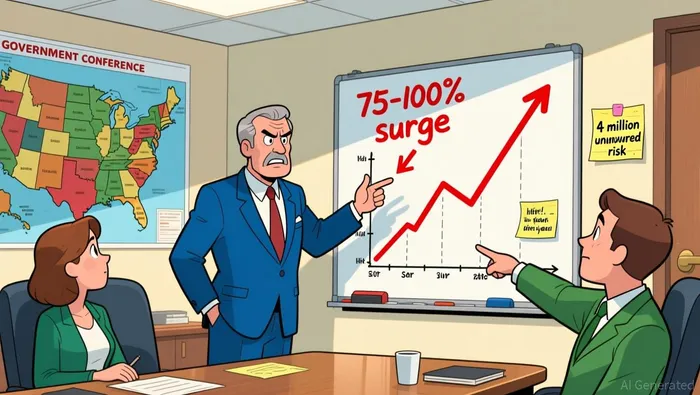
Yet, the stock market has shown optimism about potential extensions. When the White House floated a two-year subsidy extension in late November, health insurer stocks surged. Oscar Health's shares jumped over 8% in a single day. Elevance HealthELV-- and Molina HealthcareMOH-- also experienced notable gains. Analysts view a multiyear extension as favorable compared to no action, which would exacerbate premium volatility and enrollment losses.
Long-Term Strategic Positioning: Adaptation and Resilience
Beyond short-term price swings, healthcare companies are recalibrating their strategies to navigate the ACA's uncertain future. Insurers are investing in customer support tools such as one-on-one enrollment assistance and digital resource hubs, to retain members amid potential premium hikes. Operational efficiency and technology-driven solutions like telehealth are also gaining priority.
Pharmaceutical firms face a dual challenge. While a sicker, less insured population could boost demand for high-cost therapies, regulatory pressures on drug pricing may temper gains. Merck, for example, has outperformed the healthcare sector in recent months, with a 23.9% stock gain driven by strong oncology and diabetes sales. However, Pfizer's 1.7% decline over the past year underscores the sector's vulnerability to policy shifts and pricing constraints.
HSA providers like Fidelity and Charles Schwab are positioned to benefit from Republican proposals to redirect subsidies into individual accounts. While specific stock performance data for these firms is limited, the broader HSA market is expected to grow if HSAs become a primary vehicle for ACA subsidies.
Is This a Buy Signal for Quality Growth?
For investors, the ACA subsidy debate highlights both risks and opportunities. Short-term volatility in insurer stocks reflects the sector's sensitivity to policy outcomes, but companies with diversified revenue streams and robust operational efficiency may emerge stronger. UnitedHealth and Elevance Health have demonstrated resilience through strategic rate adjustments and risk pool management.
However, the long-term outlook hinges on Congress's ability to resolve the subsidy cliff. A multiyear extension would stabilize the ACA market, benefiting insurers and providers while reducing the uninsured rate. Conversely, a failure to act could trigger a wave of premium hikes, enrollment losses, and financial strain on hospitals and safety-net providers.
In this context, quality growth stocks-those with strong balance sheets, innovative product pipelines, and adaptive business models-appear more attractive than speculative plays. Merck's R&D investments and UnitedHealth's digital health initiatives exemplify this approach. Conversely, insurers overly reliant on ACA subsidies without contingency plans may face sharper headwinds.
Conclusion
The ACA subsidy expiration deadline has created a pivotal moment for the healthcare sector. While short-term volatility is inevitable, the long-term trajectory will depend on how companies and policymakers navigate this crossroads. For investors, the key is to distinguish between resilient, strategically positioned firms and those exposed to regulatory fragility. In a landscape marked by uncertainty, quality growth remains the cornerstone of a prudent healthcare portfolio.





Comentarios
Aún no hay comentarios