
Immunic's Vidofludimus Calcium: A Market-Transformative Force in Neuroimmunology
The landscape of multiple sclerosis (MS) therapy is on the cusp of a paradigm shift, driven by innovations that address both the inflammatory and neurodegenerative components of the disease. At the forefront of this transformation is Vidofludimus Calcium, an oral small-molecule therapy developed by Immunic Therapeutics. With its dual mechanism of action—targeting dihydroorotate dehydrogenase (DHODH) and activating the neuroprotective transcription factor Nurr1—this compound has demonstrated unprecedented efficacy in clinical trials, positioning it as a potential blockbuster in the $25 billion MS market[1].
Dual Mechanism: A Novel Approach to MS Pathology
Vidofludimus Calcium's innovation lies in its ability to simultaneously suppress inflammation and promote neuroprotection. By inhibiting DHODH, the drug curtails the proliferation of pathogenic T and B cells, reducing their migration into the central nervous system[3]. This mechanism mirrors existing DHODH inhibitors like teriflunomide but with enhanced selectivity, potentially minimizing off-target effects[5]. Simultaneously, its activation of Nurr1—a transcription factor linked to neuronal survival and anti-inflammatory effects—addresses the neurodegenerative aspects of MS, a gap in current therapies[5].
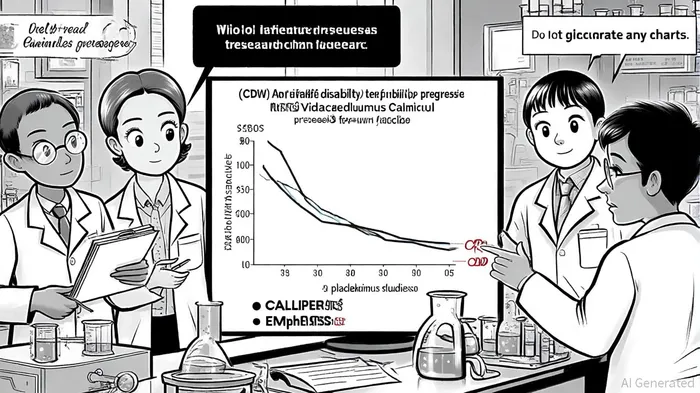
This dual-action profile is particularly compelling for progressive MS (PMS), where inflammation and neurodegeneration coexist. In the Phase 2 CALLIPER trial, Vidofludimus Calcium reduced the risk of 24-week confirmed disability worsening (24wCDW) by 33.7% in PMS patients without baseline inflammatory lesions, compared to placebo[1]. For context, existing therapies like ocrelizumab and siponimod have shown modest reductions in disability progression, typically below 20% in similar populations[6].
Clinical Validation: Efficacy and Safety in Long-Term Trials
The drug's clinical profile is further bolstered by long-term data from the EMPhASIS trial, which followed relapsing-remitting MS (RRMS) patients for nearly three years. Over 90% of participants remained free of confirmed disability worsening, with only 1.6% experiencing CDW events compared to 3.7% on placebo[2]. These results underscore its potential to alter disease trajectories, a critical unmet need in MS management.
Safety remains a cornerstone of its appeal. Across trials, Vidofludimus Calcium has exhibited a favorable tolerability profile, with common adverse events limited to mild hair thinning, fatigue, and rash. Notably, no hepatotoxicity or new safety signals have emerged, even at high doses[4]. This contrasts with biologics like interferons or monoclonal antibodies, which carry risks of severe infections or infusion reactions[7].
Competitive Differentiation and Market Potential
The MS therapy market is dominated by injectables and infused biologics, which, while effective, are often burdened by complex administration and safety concerns. Vidofludimus Calcium's oral formulation and dual mechanism position it as a disruptive alternative. Its ability to address both RRMS and PMS—conditions affecting over 85% of MS patients—further broadens its addressable market[8].
Patent protection through 2041[1] ensures a long exclusivity runway, while the absence of direct competitors with similar mechanisms amplifies its commercial potential. Analysts project that Vidofludimus Calcium could capture a 15–20% market share in RRMS alone by 2030, translating to annual revenues exceeding $2 billion[9].
Path to Approval: Phase 3 Trials and Regulatory Milestones
With twin Phase 3 trials (ENSURE-1 and ENSURE-2) fully enrolled in over 2,200 RRMS patients, the drug is on track to report top-line results by late 2026[5]. Success in these trials would pave the way for regulatory submissions in 2027, potentially securing approvals in key markets like the U.S. and EU. For investors, the Phase 3 readout represents a pivotal inflection point, with the potential to reclassify Vidofludimus Calcium as a first-line therapy.
Conclusion: A Catalyst for Neuroimmunology
Vidofludimus Calcium embodies the next frontier in MS treatment: a targeted, orally administered therapy that addresses both inflammation and neurodegeneration. Its clinical differentiation, robust intellectual property, and favorable risk-benefit profile make it a compelling investment opportunity. As the ENSURE trials progress, the drug's potential to redefine MS management—and generate substantial shareholder value—cannot be overstated.







Comentarios
Aún no hay comentarios