
The Imminent Shift: Positioning Portfolios for a Rate-Cutting Cycle in a Recession-Prone Environment
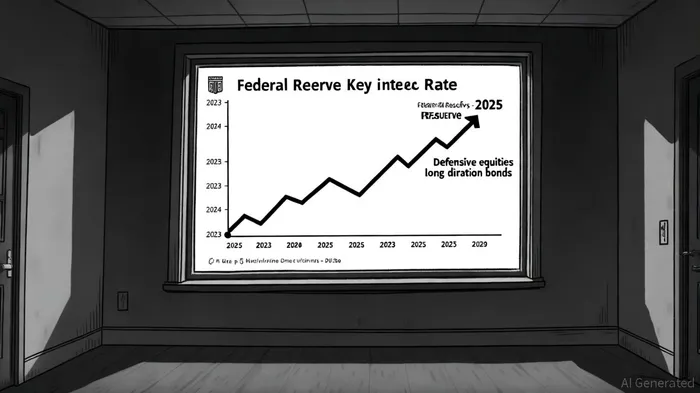
As central banks globally pivot toward accommodative monetary policy, investors face a critical juncture in portfolio strategy. The Federal Reserve's recent 25-basis-point rate cut in September 2025 marks the beginning of a projected easing cycle, with policymakers signaling an additional 50-basis-point reduction by year-end and further cuts in 2026[1]. This shift, driven by cooling inflation and a strained labor market[2], underscores the need for strategic reallocation toward assets historically resilient in rate-cut environments.
Defensive Equities: A Safe Harbor in Uncertain Waters
Defensive equities—particularly those in utilities, consumer staples, and real estate—have historically outperformed during Fed rate-cut cycles, especially in "soft landing" scenarios where recessions are averted[3]. According to a report by Northern TrustNTRS--, these sectors have averaged double-digit returns in the six months following the initiation of rate cuts since 1980[4]. For instance, during the 2001 and 2008 easing cycles, utilities and consumer staples demonstrated lower volatility compared to cyclical sectors like technology[5].
The current environment amplifies this trend. With discount rates declining, dividend-paying stocks become more attractive to income-focused investors. BlackRockBLK-- notes that defensive equities often benefit from reduced borrowing costs, which can stabilize corporate cash flows and earnings[6]. However, investors must remain cautious: while a "no recession" scenario historically supports value stocks and small-cap equities[7], rising unemployment or prolonged inflation could dampen gains.
Long-Duration Fixed Income: Balancing Yield and Resilience
Long-duration bonds, particularly those with maturities of 3–7 years (the "belly" of the yield curve), offer a compelling trade-off between income generation and risk mitigation[8]. As the Fed signals continued easing, yields on short-term instruments are expected to stagnate, making intermediate-term bonds more appealing. Data from iShares highlights that these bonds historically outperform during rate-cut cycles, as falling rates lift their prices[9].
Actively managed bond funds, such as the iShares Flexible Income Active ETF (BINC), further enhance this strategy by diversifying across high-yield corporate bonds, non-agency mortgages, and commercial paper[10]. MorningstarMORN-- notes that such funds have historically delivered higher returns than passive alternatives like AGG during periods of monetary easing[11]. However, investors should avoid overexposure to ultra-long-duration bonds, which remain vulnerable to yield spikes if growth surprises to the upside[12].
Strategic Reallocation: Navigating the New Normal
To capitalize on the Fed's easing trajectory, portfolios should prioritize:
1. Defensive Equity Tilts: Overweight utilities, consumer staples, and real estate, which historically outperform during rate cuts.
2. Duration Extension: Allocate 20–30% to intermediate-term bonds, with a focus on sectors insulated from credit risk.
3. Active Management: Incorporate bond funds that dynamically adjust to shifting yield curves and credit conditions.
A visual representation of historical returns during rate-cut cycles (see ) would further illustrate the efficacy of this approach.
Conclusion
The Fed's pivot toward rate cuts in 2025 reflects a delicate balancing act between inflation control and recession risks. By reallocating toward defensive equities and long-duration fixed income, investors can position portfolios to weather macroeconomic volatility while capturing the benefits of accommodative policy. As always, a disciplined, data-driven approach remains paramount in navigating this evolving landscape.





Comentarios
Aún no hay comentarios