
Immigration Policy Shifts and Washington State Real Estate: Navigating Political Risk and Housing Demand
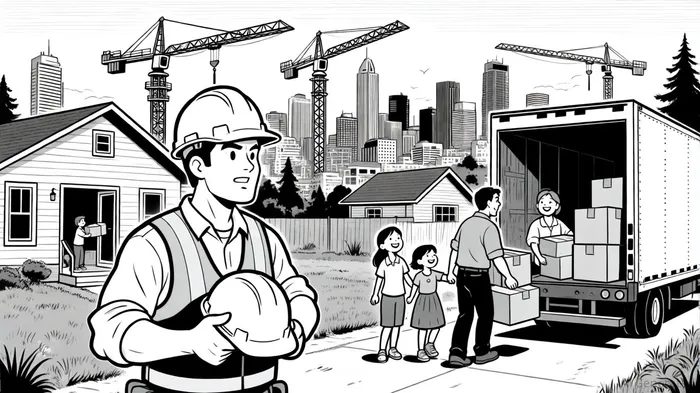
The intersection of immigration policy and real estate markets in Washington State has become a critical focal point for investors and policymakers in 2025. As over 30 new immigration, border, and deportation policies have reshaped labor dynamics and housing demand since January 2025, the state's urban and rural real estate sectors are diverging in their responses to these shifts. This analysis explores the political risks, labor shortages, and housing supply constraints driving these trends, with a focus on Seattle and rural Washington.
Urban vs. Rural: Diverging Impacts on Housing Demand
Seattle's housing market remains a bellwether for the state's affordability crisis. Median home prices in the city hover around $750,000, while average rents exceed $2,200 per month, according to the 2025 PODS Moving Trends Report[1]. These figures have contributed to out-migration, with Seattle ranking 12th nationally for cities people are leaving due to high living costs. Immigrants and low-income households, disproportionately affected by these prices, are increasingly seeking alternatives in more affordable regions like the Carolinas and Tennessee[1].
In contrast, rural Washington has seen slower growth in housing demand but remains a refuge for affordability. The 2025 housing market predictions highlight that suburban and rural areas are becoming more attractive due to remote work trends and lower costs[2]. For instance, areas like Spokane and the Columbia Basin are gaining traction for their natural amenities and lower median home prices. However, rural regions face unique challenges: restrictive land-use policies, such as the Growth Management Act (GMA), limit development near railroads in favor of preserving agricultural land[4]. This creates a paradox where rural communities, which could accommodate immigrant labor and housing needs, are constrained by urban-centric regulations.
Labor Shortages and Construction Delays: A Policy-Driven Bottleneck
Immigration policy changes have exacerbated labor shortages in Washington's construction sector, with cascading effects on housing supply. As of early 2025, the state's construction industry faces a deficit of 450,000 workers, with 14% of its construction workforce being unauthorized immigrants[1]. Nationally, 28% of construction firms report being impacted by immigration enforcement activities, and 25% of Washington-based firms note indirect effects through subcontractors who lost workers[4].
Urban centers like Seattle, where 4,000 apartment units are under construction as of early 2025, are particularly vulnerable to these shortages. The region's multifamily housing projects face delays due to capacity constraints, with nearly 78% of construction firms struggling to fill craft trade positions[1]. In rural areas, the impact is even more pronounced. Clark County issued only 1,245 residential permits in 2024, far below historical averages, reflecting both reduced demand and construction capacity[1]. The aging workforce—28% of U.S. construction workers are aged 55 or older—compounds these challenges[3].
Political Risks and Policy Reversibility
Washington's progressive housing policies, such as rent stabilization laws (HB 1217) and ADU expansion (HB 1491), aim to mitigate affordability crises. However, these measures face political and legal risks. For example, the state's 2025 tax increase, including a gas tax hike and higher business taxes, has drawn criticism for exacerbating household financial strain[1]. While Governor Bob Ferguson's administration defends these policies as necessary for long-term affordability, real estate interests and business groups have lobbied for rollbacks, highlighting the potential for policy reversibility[5].
Legal challenges further complicate the landscape. The rescission of federal protections limiting immigration enforcement near college campuses has created uncertainty for undocumented students and families, potentially deterring immigration-driven household formation[6]. Meanwhile, state-level protections, such as the Keep Washington Working Act, which restricts local law enforcement from cooperating with federal immigration authorities, may face legal pushback from federal agencies[3].
Investment Implications and Strategic Considerations
For investors, the interplay of immigration policy and real estate demand in Washington State presents both risks and opportunities. Urban markets like Seattle, while facing out-migration and high costs, remain attractive for multifamily and mixed-use developments targeting remote workers. However, construction delays and labor shortages necessitate longer lead times and higher capital expenditures. Rural areas, though constrained by regulatory barriers, offer untapped potential for affordable housing and ADU development, particularly as remote work trends persist.
A comparing labor shortages (by region) and housing permits issued in 2024-2025 would provide investors with a visual representation of these dynamics. Additionally, monitoring legislative developments—such as proposed lot-splitting reforms and ADU expansions—will be critical for navigating regulatory shifts.
Conclusion
Washington State's real estate markets are at a crossroads, shaped by immigration policy shifts that amplify both urban and rural housing challenges. While Seattle grapples with affordability and labor shortages, rural areas face regulatory and demographic headwinds. Investors must weigh these factors against the political risks of policy reversibility and legal uncertainty. As the state's housing affordability index remains stubbornly low, the path forward will require balancing progressive tenant protections with pragmatic solutions to labor and supply constraints.







Comentarios
Aún no hay comentarios