
U.S. Immigration Policy Shifts and the Tech Sector: Capital Reallocation in H-1B-Dependent Industries
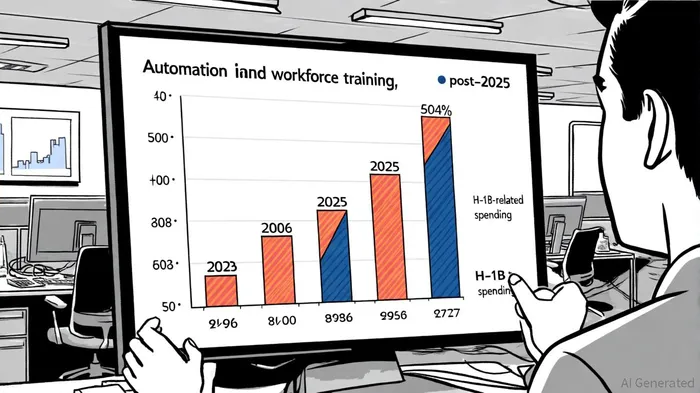
The U.S. tech sector is undergoing a seismic shift in labor dynamics and capital allocation, driven by sweeping reforms to the H-1B visaV-- program. At the heart of this transformation is the American Tech Workforce Act, introduced by Senator Jim Banks in September 2025, which raises the minimum wage for H-1B visa holders from $60,000 to $150,000, eliminates the Optional Practical Training (OPT) program, and replaces the lottery-based selection process with a wage-ranked system[1]. These changes, coupled with stricter enforcement measures by the U.S. Citizenship and Immigration Services (USCIS), are reshaping how tech companies allocate capital, with profound implications for labor costs, innovation, and global competitiveness.
Labor Costs and Compliance Burdens
The most immediate impact of the 2025 reforms is a sharp increase in labor costs for H-1B-dependent industries. The wage floor hike alone could add $90,000 per employee annually for companies relying on foreign talent, a significant burden for startups and mid-sized firms[2]. For example, Indian IT firms, historically major H-1B filers, have already scaled back their U.S. hiring amid heightened scrutiny[3]. Additionally, the new "beneficiary-centric" lottery system, which limits each individual to a single entry per application period, has reduced opportunities for system manipulation but increased administrative complexity[4].
Compliance costs are also rising. The USCIS has reintroduced "prior deference" for H-1B extensions, expediting renewals for tech firms, but this comes with stricter documentation requirements and more frequent site visits[5]. Forrester estimates that 91% of global tech decision-makers are now prioritizing budget increases for AI governance and automation tools to offset these costs[6].
Capital Reallocation: Automation, R&D, and Training
To mitigate the financial and operational challenges posed by the H-1B reforms, tech companies are aggressively reallocating capital toward automation, R&D, and domestic workforce training.
Automation and AI Infrastructure
The push for automation is accelerating. Q2 2025 saw $29.29 billion in venture-backed tech funding, with AI infrastructure capturing 85.87% of capital deployed[7]. Big Tech giants are projected to spend over $300 billion on AI infrastructure in 2025, driven by the need to reduce reliance on foreign labor and optimize productivity[8]. McKinsey notes that 92% of companies plan to increase AI investments over the next three years, though only 1% consider their AI deployment "mature," highlighting a gap that automation tools aim to bridge[9].R&D and Innovation
Federal and private R&D spending is surging. The National Science Foundation (NSF) has requested $494 million in core AI funding for FY25, while DARPA allocates $314 million[10]. Private firms are following suit: 77% of CFOs plan to increase technology spending in 2025, with 47% expecting a 10% or greater rise in IT budgets[11]. This focus on R&D is critical for maintaining innovation in fields like AI and chip design, where domestic skills shortages persist[12].Workforce Training and Upskilling
As the OPT program is eliminated, companies are investing heavily in domestic talent development. Forrester reports that 51% of tech leaders plan to boost capital allocations to new technologies, with 47% specifically targeting finance and productivity tools[13]. Training programs are now a strategic priority, with 25% of CFOs intending to increase tech investments by 10% or more in 2025[14]. This shift aligns with broader trends in "cross-skilling," where employees are trained to handle multiple roles, reducing dependency on specialized foreign labor[15].
Strategic Implications for Investors
The 2025 H-1B reforms are not merely regulatory hurdles but catalysts for structural change in the tech sector. Investors should focus on three key areas:
- Automation and AI Infrastructure: Companies leading in AI model optimization, data orchestration, and developer tools are well-positioned to capitalize on the $3.316 billion in federal AI R&D spending[16].
- Workforce Training Platforms: Firms offering upskilling solutions for AI, cybersecurity, and software development will benefit from corporate demand to bridge domestic talent gaps[17].
- Compliance and Legal Tech: As enforcement measures intensify, demand for tools streamlining immigration compliance and audit preparedness is likely to grow[18].
Conclusion
The 2025 H-1B reforms mark a pivotal moment for the U.S. tech sector, forcing companies to balance compliance costs with strategic investments in automation, R&D, and domestic talent. While these changes pose short-term challenges, they also create long-term opportunities for firms that adapt proactively. For investors, the key lies in identifying companies that are not just surviving the new regulatory landscape but thriving by redefining the future of work.







Comentarios
Aún no hay comentarios