
U.S. Immigration Policy Shifts and Healthcare Sector Growth: How H-1B Visa Exemptions for Doctors Could Fuel Innovation and Labor Supply
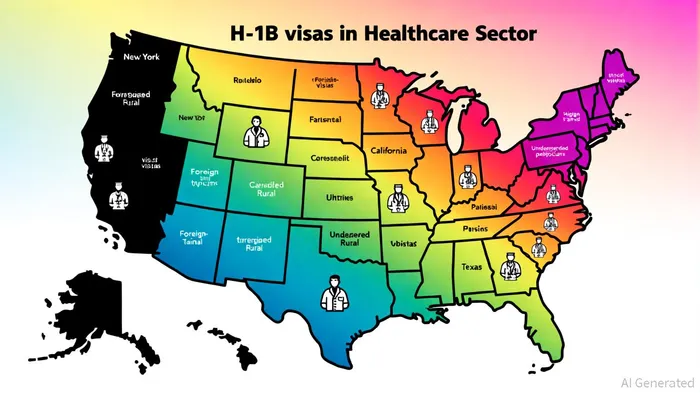
The recent overhaul of U.S. H-1B visa policies under President Trump has sent ripples through the healthcare sector, introducing a $100,000 fee for new petitions filed after September 21, 2025[1]. While this policy aims to prioritize domestic job creation and higher wages for skilled workers, its implications for healthcare innovation and labor supply hinge on a critical exception: the potential exemption for physicians and other healthcare professionals under the “national interest” clause[2]. This exemption, if fully realized, could serve as a lifeline for hospitals, research institutions, and underserved communities, ensuring the continued influx of foreign-trained medical talent that drives both clinical care and scientific advancement.
The Labor Supply Conundrum: Foreign-Trained Doctors as a Pillar of U.S. Healthcare
The U.S. healthcare system has long relied on international medical graduates (IMGs) to address persistent staffing shortages. According to a 2024 government analysis, the nation could face a deficit of over 87,000 primary care physicians by 2037[3], with over 76 million Americans already living in primary care–shortage regions[4]. IMGs constitute approximately 25% of the U.S. physician workforce, disproportionately filling roles in rural and underserved areas where domestic graduates often decline to practice[5]. For example, in specialties like internal medicine and pediatrics, IMGs make up a significant share of residents, with states like New York, California, and Massachusetts hosting over 22,000 healthcare professionals on H-1B visas[6].
The new $100,000 fee threatens to disrupt this pipeline. Hospitals in rural areas, where operating margins are already thin, may struggle to absorb the cost of sponsoring visas for foreign physicians[7]. However, the White House's acknowledgment of a “national interest” exemption—similar to pandemic-era waivers—could mitigate this risk[8]. By allowing hospitals to bypass the fee for physicians working in critical shortage areas, the policy could preserve access to care while avoiding the destabilizing effects of a sudden labor exodus.
Innovation and Research: The Hidden Engine of Healthcare Growth
Beyond staffing, IMGs play a pivotal role in advancing medical innovation. A 2025 study published in Health Affairs found that IMGs contribute disproportionately to academic medicine, bringing diverse perspectives that enhance research quality and cultural competence in patient care[9]. For instance, many U.S. medical breakthroughs in recent years, including advancements in telemedicine and pandemic response strategies, involved collaboration with international researchers[10]. The Trump administration's exemption for physicians could thus safeguard these innovation pathways, ensuring that U.S. healthcare institutions remain competitive in a globalized research landscape.
Yet challenges persist. The J-1 visa, commonly used by IMGs, often requires return-to-home-country clauses or service obligations in underserved areas, creating barriers to long-term academic or research careers[11]. Additionally, federal funding restrictions—such as NIH grant eligibility rules that exclude non-citizens—limit IMGs' ability to lead federally funded projects[12]. Addressing these systemic issues, alongside the H-1B fee exemption, will be critical to unlocking the full potential of foreign-trained physicians in driving innovation.
Investment Implications: Stability vs. Uncertainty
For investors, the interplay between immigration policy and healthcare sector growth presents a nuanced landscape. On one hand, the exemption for healthcare professionals provides a buffer against labor shortages, enabling hospitals and research institutions to maintain operations and invest in long-term projects[13]. Major healthcare systems, including the Mayo Clinic and St. Jude Children's Research Hospital, have already signaled reliance on H-1B visas for critical roles, with the exemption potentially shielding them from the financial strain of the new fee[14].
On the other hand, the lack of clarity around the exemption process—whether it will be streamlined or case-by-case—introduces uncertainty. Employers must prepare for both scenarios, which could delay hiring and strain budgets in the short term[15]. For investors, this duality underscores the importance of diversifying portfolios across healthcare subsectors. While hospitals and rural clinics may benefit from policy-driven stability, biotech firms and academic institutions could face headwinds if IMGs' research contributions are curtailed by lingering visa restrictions.
Conclusion: A Policy Balancing Act
The Trump administration's H-1B reforms, while controversial, highlight the delicate balance between protecting domestic jobs and sustaining critical sectors like healthcare. By exempting physicians and other healthcare professionals from the $100,000 fee, the U.S. can preserve its position as a global leader in medical innovation while addressing urgent labor shortages. For investors, the key takeaway is clear: policies that prioritize skilled immigration in healthcare will not only bolster public health but also create long-term value in a sector increasingly defined by technological and demographic challenges.







Comentarios
Aún no hay comentarios