
The IMF's Stablecoin Warning: A Strategic Inflection Point for Emerging Markets and CBDCs
The International Monetary Fund (IMF) has issued a stark warning in late 2025: dollar-backed stablecoins pose a systemic threat to monetary sovereignty, particularly in emerging markets. According to a report by , these stablecoins-dominated by Tether's USDTUSDT-- and Circle's USDC-could accelerate currency substitution, eroding central banks' control over capital flows and monetary policy in economies with weak institutions or high inflation. 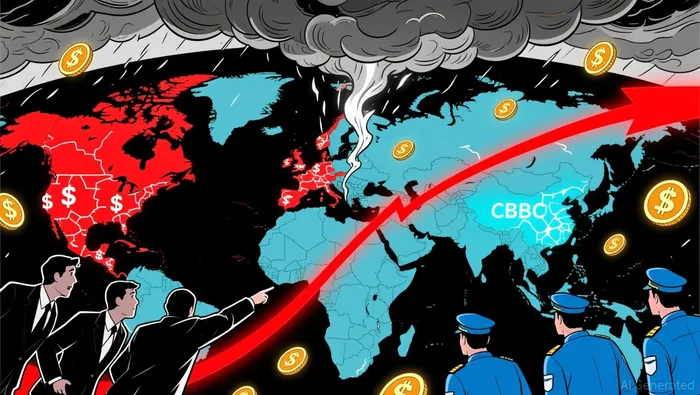 With 97% of the $300+ billion stablecoin market tied to the U.S. dollar, the risk of destabilizing local currencies is acute, especially if Central BankBANK-- Digital Currencies (CBDCs) fail to gain traction before stablecoins achieve network effects in retail payments and cross-border remittances. This warning marks a strategic inflection point, forcing emerging markets to recalibrate their financial strategies amid a rapidly shifting geopolitical landscape.
The Dual Threat: Currency Substitution and De-Dollarization
The IMF's analysis underscores a critical vulnerability: stablecoins enable households and businesses in fragile economies to bypass domestic currencies entirely. In regions like Africa, Latin America, and the Middle East, where trust in local fiat is low and banking infrastructure is underdeveloped, stablecoins have become a de facto alternative to traditional banking systems. For example, Nigeria's eNaira initiative has struggled with adoption as U.S. dollar-backed stablecoins gain ground, exacerbating fiscal revenue losses and undermining financial sovereignty. Similarly, in China, the digital yuan (e-CNY) is being positioned as a counterweight to dollar dominance, with over 325 million wallets and $1 trillion in cumulative transactions by 2025.
The geopolitical implications are profound. notes, China is even considering yuan-backed stablecoins to internationalize its currency, signaling a strategic pivot to leverage both state-controlled CBDCs and decentralized alternatives. Meanwhile, the U.S. has doubled down on promoting dollar-backed stablecoins, framing them as a tool to reinforce financial hegemony in the digital age. This bifurcation-between dollar-centric stablecoins and state-driven CBDCs-threatens to fragment global financial systems, creating a multipolar monetary order.
CBDCs as a Sovereign Countermeasure
To mitigate these risks, the IMF advocates for CBDCs as a sovereign alternative to stablecoins. A report by the Atlantic Council highlights that well-designed CBDCs can preserve monetary control, enhance financial inclusion, and stabilize economies against capital flight. However, the success of CBDCs hinges on their design. For instance, Nigeria's eNaira has faced challenges due to poor user adoption and competition from stablecoins, while China's e-CNY has thrived by integrating programmable smart contracts and cross-border payment platforms like mBridge according to research.
Emerging markets must balance innovation with regulation. The IMF emphasizes harmonized global standards to prevent regulatory arbitrage, ensuring CBDCs and stablecoins coexist without destabilizing fragile economies. Yet, as The Daily Gwei has previously argued, fragmented regulatory regimes could exacerbate systemic risks, particularly in jurisdictions where CBDCs lack the infrastructure to compete with stablecoins.
Geopolitical Realignments and Investment Implications
The rise of CBDCs and stablecoins is reshaping global economic alliances. Countries like Nigeria and Brazil are exploring digital payment mechanisms within multilateral frameworks such as BRICS to reduce reliance on the U.S. dollar according to research. Meanwhile, China's e-CNY is being deployed in Belt and Road Initiative (BRI) corridors, offering an alternative to SWIFT-based transactions and deepening its influence in Asia and Africa. For investors, these shifts signal a reconfiguration of trade routes and capital flows, with CBDCs acting as both a shield against dollar volatility and a tool for geopolitical leverage.
However, risks persist. A poorly designed retail CBDC could destabilize fragile banking systems, as seen in India and Brazil, where disintermediation risks loom large. Conversely, wholesale CBDCs may enhance cross-border liquidity, offering opportunities for institutional investors to capitalize on emerging digital infrastructure.
Conclusion: Navigating the Inflection Point
The IMF's stablecoin warning is not merely a regulatory concern-it is a catalyst for a broader realignment of global monetary power. Emerging markets must act swiftly to develop CBDCs that are both technologically robust and politically resilient. For investors, the key lies in identifying jurisdictions where CBDC adoption aligns with geopolitical strategies to de-dollarize, such as China's e-CNY or Nigeria's eNaira 2.0. Yet, caution is warranted: the interplay between stablecoins, CBDCs, and regulatory fragmentation will likely remain a volatile landscape, demanding agility and deep due diligence.
As the world edges toward a multipolar financial system, the winners will be those who anticipate the strategic inflection points-and act decisively.





Comentarios
Aún no hay comentarios