
IGC Pharma's CALMA Trial Expansion: A Tactical Catalyst or Just More Site Adds?
The immediate event is a standard operational move. On January 12, IGC PharmaIGC-- announced the addition of Dominion Medical Associates in Richmond, Virginia, as a new site for its Phase 2 CALMA trial. This is not a late-stage surprise or a pivotal data readout. It is a tactical expansion, fitting a pattern of adding sites to accelerate enrollment.
The context is critical. The trial was already 65% enrolled as of December 9, 2025, with the company targeting completion in early 2026. Adding a new site at this stage is a classic "final push" tactic, not a fundamental shift in the trial's trajectory. The new site will use a hybrid/virtual model, a standard approach the company has already deployed to boost recruitment, with 25% of participants coming from targeted social-media campaigns.
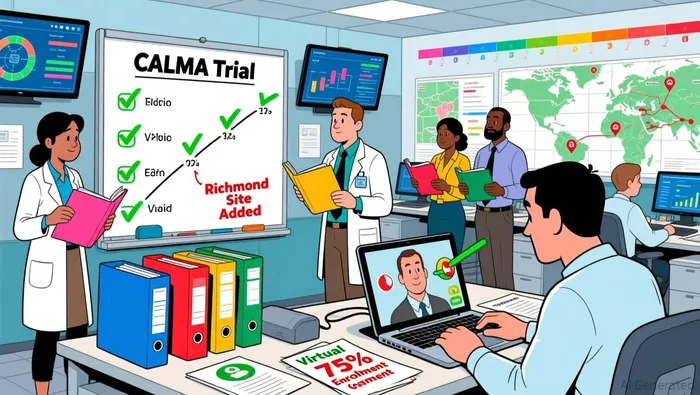
So, does this add meaningful new value? For a tactical investor, the answer leans toward operational noise. The core catalyst for the stock is the upcoming trial completion and data readout, not the addition of another site. This move simply supports the existing plan to hit the early-2026 finish line. It does not alter the timeline materially, nor does it introduce new data or a change in the drug's profile. It is the kind of routine expansion that keeps a trial on track, not a catalyst that changes the valuation equation.
Financial Context: A Small Capital Raise and a Shrinking Cash Burn
The financial picture here is one of a company managing a tight runway with a mix of minor capital infusions and meaningful expense cuts. The recent event-a small direct offering-is a tactical move, not a transformative funding catalyst. On January 5, IGC raised approximately $234,000 by selling shares at $0.30 each. That's a minimal sum for a clinical-stage biotech, barely enough to cover a few months of clinical spend. The company intends to use the proceeds for working capital and general corporate purposes, including continued funding of its Phase 2 clinical development program. In other words, it's a stopgap measure to keep the lights on while the company works toward its next major milestone.
The more impactful financial action was a strategic divestiture executed earlier in the fiscal year. By selling a non-core manufacturing facility, IGC secured long-term preferential supply rights and, more importantly, eliminated $600,000 in annual operating expenses. That's a tangible reduction in cash burn that directly extends the company's financial runway. It's a disciplined move that enhances flexibility, but it doesn't change the fundamental reality: the company is a clinical-stage entity with a market cap around $30 million, trading at a speculative valuation. The stock's recent price action, hovering near $0.30 with significant daily swings, reflects the market pricing in high uncertainty about its ability to fund the path to data.
So, does the new site addition create a funding catalyst? Not directly. The capital raise is too small to fund a major expansion. The expense reduction is meaningful but already in the past. The tactical investor should see this financial context as a backdrop of vulnerability and opportunity. The company is stretching its resources, but the recent expense cut provides a little more time. The stock's volatility means any news-positive or negative-will likely be amplified. The real funding catalyst will be the trial completion and data readout in early 2026, which will determine if the company can attract the larger capital it will need to advance. For now, the financial setup is a reminder that this is a high-risk, high-volatility play where operational execution is paramount.
Valuation and Risk/Reward: The Path to a Phase 2 Readout
The investment case here is a classic binary bet. The primary near-term catalyst is the completion and readout of the CALMA trial in early 2026, which will determine the path for IGC-AD1. Everything about the stock's current setup points to this event as the sole driver of value. The recent addition of a new clinical site is a routine operational step to hit that deadline; it does not alter the fundamental outcome the market is pricing in.
The stock's price action over the past month is a direct reflection of that anticipation. Trading around $0.30, the shares have seen daily swings of over 10% common in recent weeks. This extreme volatility is the market's way of pricing in high uncertainty. With a market cap around $30 million and a minimal cash runway, the stock is a pure play on the Phase 2 data. Any news-positive or negative-will be amplified by the lack of other fundamental anchors.
That leads to the severe risk. The key vulnerability is that the Phase 2 data fails to meet efficacy or safety thresholds. Given the company's financial fragility, a negative readout would likely devastate the stock. The recent capital raise of approximately $234,000 is a stopgap, not a lifeline. The company's ability to fund the path to a potential Phase 3 hinges entirely on the trial's success. A failure would not only destroy the value of IGC-AD1 but also likely render the company unable to continue operations, leading to a near-total loss for shareholders.
The bottom line is that the risk/reward setup is defined by this binary event. The tactical investor must weigh the potential for a massive pop on positive data against the very real possibility of a catastrophic decline on failure. The current volatility is a symptom of that tension. The path forward is clear: the stock will remain in a state of choppiness until the early-2026 readout, at which point it will likely make a decisive move based on the clinical results. For now, the trade is about timing the catalyst, not the operational details of site additions.





Comentarios
Aún no hay comentarios