
Identifying a Screaming Buy: A Value Investor's Framework
The classic value investor's playbook begins with a simple, powerful axiom: "It's far better to buy a wonderful company at a fair price than a fair company at a wonderful price." This isn't just a slogan; it's a mental model for separating enduring business quality from fleeting market noise. When a panic selling wave hits, driven by fear rather than fundamental analysis, it often creates a temporary mispricing. The key question for any disciplined investor is whether the current price reflects a temporary sentiment shift or a permanent impairment of intrinsic value.
Panic selling is a well-documented behavioral flaw. As one guide notes, it occurs when investors sell their stocks or other assets hastily due to fear of bigger losses, focusing on short-term pain while ignoring long-term potential. The problem is that this emotional reaction often ensures a loss is locked in, and the investor may miss the eventual recovery. In times of turbulence, the urge to "cut losses" can be overwhelming, but as another analysis points out, selling into a falling market ensures that you lock in your losses.
This is where the framework comes in. A "screaming buy" opportunity arises when a market-wide or sector-wide panic causes a stock's price to fall far below its intrinsic value, but the underlying business quality remains intact. The task is to look past the emotional noise and assess the signal. Is the decline due to a cyclical downturn, temporary headwinds, or a genuine, lasting damage to the company's competitive position and cash flow generation? The evidence suggests that even in the face of steep declines-stocks down more than 50% from their peaks-there can be substantial upside if the business itself is "wonderful." The framework is about having the patience to wait for the panic to subside and the discipline to buy only when the price offers a sufficient margin of safety for that wonderful business.
Case Study: CoreWeave's AI Cloud Moat vs. Financial Reality
CoreWeave presents a classic tension between a powerful competitive advantage and a challenging financial reality-a tension that defines many high-growth tech plays. The company has built a formidable technical moat, a platform specifically engineered for the most demanding AI workloads. By running its data centers on Nvidia chips and designing its architecture around AI-specific needs, CoreWeave offers a compelling alternative to general-purpose cloud giants like AWS and Azure. This niche focus has driven explosive demand, with revenue reaching $3.6 billion in the first nine months of 2025, a staggering 204% year-over-year increase.
Yet the market's reaction has been one of deep skepticism. Despite this triple-digit growth, the stock trades at a nearly 60% discount to its high from June, and its recent price action shows a volatile pullback, down over 30% in the past 120 days. This disconnect is the heart of the value investor's question. The financials reveal why: the cost of scaling so rapidly has been immense. Operating expenses ballooned 267% in the same period, and heavy borrowing to fund capital expenditure-over $6.2 billion in the first nine months-has led to crippling interest costs. The result is a loss of $715 million and a negative free cash flow of $4.8 billion, all while carrying substantial debt.
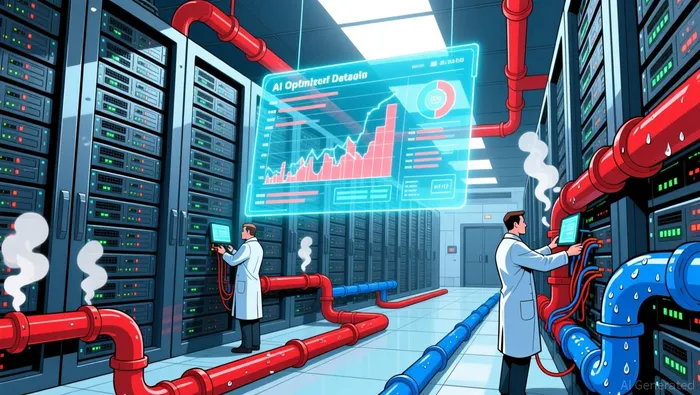
The primary risk, therefore, is the path to profitability. A "wonderful company" at a fair price requires not just a wide moat, but a clear and achievable route to generating cash. CoreWeave's current model is one of high cash burn, a characteristic that would give even the most patient investor pause. The company's recent issuance of convertible notes at a low 1.75% rate is a strategic move to manage this pressure, but it does not eliminate the fundamental challenge of converting hyper-growth into sustainable earnings. The market is pricing in the uncertainty of that transition, and the stock's steep discount reflects that doubt.
For the value investor, the opportunity here hinges on the durability of that AI-specific moat. If CoreWeave's platform truly is the superior engine for AI development, then its current losses may be a temporary, necessary investment in market share. The key will be monitoring whether the projected 134% revenue growth for 2026 begins to outpace the soaring costs, bringing the company closer to a point where its competitive edge can finally translate into the profits that justify its valuation. Until that path becomes clearer, the discount serves as a warning sign as much as a bargain.
Broader Scan: Other Potential Candidates in the Panicked Market
The search for a "screaming buy" extends beyond a single company. In a market where sentiment can swing from extreme greed to deep fear, other stocks present opportunities where price may have fallen far from intrinsic value. The evidence points to several names where a disciplined investor might find a margin of safety.
One standout is e.l.f. Beauty. The company's core business remains robust, with continued market share gains and shelf space expansion for its namesake brand. Even after a volatile 2025 marked by guidance caution and margin pressure, the underlying demand is strong, with organic consumption growth of 12% in the U.S. What makes it a potential candidate is its valuation. Despite this operational strength, the stock is considered cheap at current levels, a sentiment echoed by a PEG ratio below 0.4. This suggests the market is pricing in a slowdown or uncertainty, while the company's long growth runway and recent acquisition of skin care brand Rhode could provide a future catalyst.
Another name highlighted is BillionToOne, a precision diagnostics company. Here, the analysis is more quantitative. Based on a discounted cash flow model, the stock appears to trade at a significant discount, with an estimated discount to fair value of 44.2%. The company is also growing rapidly, with recent revenue growth of 92.2% and projected earnings growth of 86.3% annually. The deep discount, combined with high growth, creates a compelling risk-reward setup for those willing to look past its volatility.
Finally, a trio of stocks is cited as potentially wonderful companies trading at fair prices, having fallen more than 50% from their all-time highs. This group includes GXO Logistics, Zebra Technologies, and ON Semiconductor. The framework applies directly: each operates in a durable market-e-commerce warehousing, data capture, and semiconductor exposure to electric vehicles and AI-with a clear competitive position. Their steep declines from peaks signal a period of intense fear, but the analysis suggests their current prices offer a fair entry point for a long-term investor, provided the underlying business quality remains intact. The market's panic has created a gap between price and value for these names.
The Margin of Safety: Catalysts and What to Watch
For any potential "screaming buy," the margin of safety is not just a number on a spreadsheet; it is a dynamic state defined by specific catalysts and sentiment indicators. The path from a discounted price to realized value hinges on these forward-looking signals. For CoreWeave, the next earnings report is the primary catalyst. Investors will scrutinize the updated guidance on its path to profitability and, more critically, the trajectory of its cash burn. The evidence shows the company lost $715 million in the first nine months of 2025, with a negative free cash flow of $4.8 billion. The key watchpoint is whether the projected 134% revenue growth for 2026 begins to outpace the soaring costs, bringing the company closer to a point where its competitive edge can finally translate into sustainable earnings. Any deviation from that growth plan or further widening of the cash flow gap would break the thesis.
Beyond company-specific metrics, broader market sentiment provides crucial context. The VIX, often called the "fear index," and the CNN Fear & Greed Index are essential tools for gauging whether volatility is a persistent headwind or temporary noise. The VIX measures expected market volatility, acting as a barometer of investor fear and uncertainty using a portfolio of options on the S&P 500. A high VIX suggests the market is pricing in significant turbulence, which can amplify the discount on stocks like CoreWeave. The Fear & Greed Index, which uses seven market indicators, helps answer the question: What emotion is driving the market now? When the index shows extreme fear, it often coincides with the deepest discounts. Monitoring these indicators helps determine if the panic selling is a market-wide phenomenon or a company-specific issue.
The ultimate test for any candidate, however, is whether the price decline has permanently damaged the company's competitive moat or financial health. For CoreWeave, the evidence points to a temporary financial strain rather than a moat erosion. Its platform is specifically engineered for AI workloads, running on Nvidia chips-a technical advantage that seems durable. The challenge is one of scale and cost, not obsolescence. The same principle applies to other names like e.l.f. Beauty, where organic consumption growth of 12% in the U.S. signals strong underlying demand despite a cautious guidance period. The watchpoint is whether the market's fear has overcorrected, pricing in a permanent impairment that the company's operational metrics do not support. When sentiment indicators signal a shift from fear to greed, and company catalysts confirm a path to value realization, the margin of safety transforms from a theoretical concept into a tangible investment opportunity.







Comentarios
Aún no hay comentarios