
Ice Canola Futures: Navigating Short-Term Volatility Amid a Consolidating Market
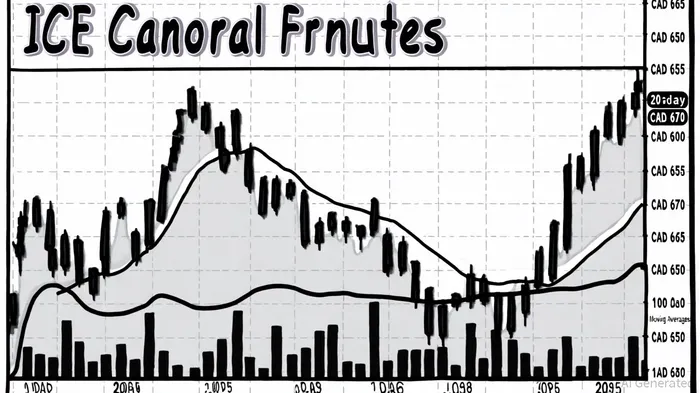
If you've been watching the ICE Canola futures market this year, you've seen it all—swings between consolidation and sharp declines, technical signals flickering like a strobe light, and fundamentals that feel like a rollercoaster with no brakes. For short-term traders, this is a golden opportunity to capitalize on volatility, but only if you know where to look.
Let's start with the basics: . By early 2025, , . But by August, the market had settled into a , . This consolidation suggests traders are waiting for a catalyst—something to break the stalemate.
Here's where the fundamentals come into play. Supply-side pressures are mounting. . , , . , and you've got a perfect storm for . , a blow that's rippling through global demand[1].
But don't count canola out just yet. offer a lifeline. The U.S. soy complex and European rapeseed markets have provided upward support, even as Chicago soyoil and Malaysian palm oil dragged prices lower[3]. Meanwhile, . . .
For short-term traders, the key is to play the range. , the market is ripe for . If you're bullish, . On the downside, , especially if the U.S. EPA's biofuel blending rules remain in limbo[1]. Weather developments in Western Canada—where most of the crop has already been seeded—could also act as a wildcard.
However, risks abound. The EPA's delay in reallocating biofuel blending obligations has created uncertainty about canola's role in U.S. [1]. Traders should also keep an eye on the U.S. ; a rebound in could lift canola, while further weakness would deepen the [2].
In conclusion, ICE Canola futures are in a but tradable position. The offers a chance to ride technical levels, while the fundamentals—though bearish—aren't all bad. For those with a short-term mindset, this is a market where patience and discipline can pay off. Just don't forget to hedge your bets—this train isn't going in a straight line.







Comentarios
Aún no hay comentarios