
IBM, NASA Unveil AI Model to Predict Solar Activity Impact on Technology
PorAinvest
jueves, 21 de agosto de 2025, 7:28 am ET1 min de lectura
IBM--
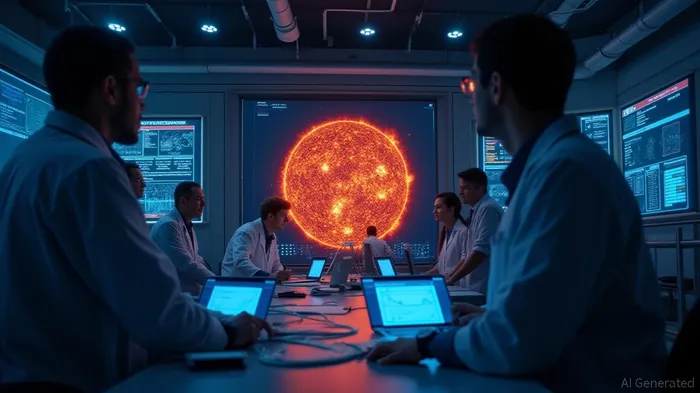
Surya is trained on nine years of data from NASA’s Solar Dynamics Observatory (SDO), which has provided continuous, high-resolution images of the Sun since 2010. This extensive dataset enables Surya to detect subtle patterns in solar behavior that shorter datasets would miss. The model's foundation architecture allows it to learn directly from raw solar data, adapting quickly to new tasks and applications [1].
The partnership aims to use AI technology to explore the planet and solar system, with potential applications in tracking active regions, forecasting flare activity, predicting solar wind speed, and integrating data from other observatories. Surya's success in predicting solar flares marks a significant step towards operational space weather prediction, providing early warnings to satellite operators and helping scientists understand how solar activity affects Earth's upper atmosphere and technology-dependent society [1].
The development of Surya is part of a broader NASA push to develop open-access, AI-powered science tools. The model and training datasets are freely available online, lowering barriers to participation and sparking new discoveries. The project is supported by the National Artificial Intelligence Research Resource (NAIRR) Pilot, a National Science Foundation (NSF)-led initiative that provides researchers with access to advanced computing, datasets, and AI tools [1].
Surya's AI architecture was jointly developed by the Interagency Implementation and Advanced Concepts Team (IMPACT) under NASA’s Office of Data Science and Informatics, IBM, and a collaborative science team consisting of experts from various universities and NASA centers. The project is part of a larger effort to advance NASA’s scientific missions through innovative data science and AI models [1].
References:
[1] https://science.nasa.gov/science-research/artificial-intelligence-model-heliophysics/
IBM and NASA have partnered to develop an AI model called Surya to predict the impact of solar activity on technology. The model uses high-resolution solar observation data and has achieved a 16% improvement in solar flare classification accuracy. Surya can visually predict solar flares and provide a high-resolution image of where the flare is predicted to occur up to two hours out. This collaboration aims to use AI technology to explore the planet and solar system.
NASA and IBM have collaborated to develop an AI model, Surya, designed to predict the impact of solar activity on technology. Leveraging high-resolution solar observation data, Surya has achieved a 16% improvement in solar flare classification accuracy, surpassing existing benchmarks [1]. The model can visually predict solar flares and provide a high-resolution image of where the flare is predicted to occur up to two hours in advance.Surya is trained on nine years of data from NASA’s Solar Dynamics Observatory (SDO), which has provided continuous, high-resolution images of the Sun since 2010. This extensive dataset enables Surya to detect subtle patterns in solar behavior that shorter datasets would miss. The model's foundation architecture allows it to learn directly from raw solar data, adapting quickly to new tasks and applications [1].
The partnership aims to use AI technology to explore the planet and solar system, with potential applications in tracking active regions, forecasting flare activity, predicting solar wind speed, and integrating data from other observatories. Surya's success in predicting solar flares marks a significant step towards operational space weather prediction, providing early warnings to satellite operators and helping scientists understand how solar activity affects Earth's upper atmosphere and technology-dependent society [1].
The development of Surya is part of a broader NASA push to develop open-access, AI-powered science tools. The model and training datasets are freely available online, lowering barriers to participation and sparking new discoveries. The project is supported by the National Artificial Intelligence Research Resource (NAIRR) Pilot, a National Science Foundation (NSF)-led initiative that provides researchers with access to advanced computing, datasets, and AI tools [1].
Surya's AI architecture was jointly developed by the Interagency Implementation and Advanced Concepts Team (IMPACT) under NASA’s Office of Data Science and Informatics, IBM, and a collaborative science team consisting of experts from various universities and NASA centers. The project is part of a larger effort to advance NASA’s scientific missions through innovative data science and AI models [1].
References:
[1] https://science.nasa.gov/science-research/artificial-intelligence-model-heliophysics/
Divulgación editorial y transparencia de la IA: Ainvest News utiliza tecnología avanzada de Modelos de Lenguaje Largo (LLM) para sintetizar y analizar datos de mercado en tiempo real. Para garantizar los más altos estándares de integridad, cada artículo se somete a un riguroso proceso de verificación con participación humana.
Mientras la IA asiste en el procesamiento de datos y la redacción inicial, un miembro editorial profesional de Ainvest revisa, verifica y aprueba de forma independiente todo el contenido para garantizar su precisión y cumplimiento con los estándares editoriales de Ainvest Fintech Inc. Esta supervisión humana está diseñada para mitigar las alucinaciones de la IA y garantizar el contexto financiero.
Advertencia sobre inversiones: Este contenido se proporciona únicamente con fines informativos y no constituye asesoramiento profesional de inversión, legal o financiero. Los mercados conllevan riesgos inherentes. Se recomienda a los usuarios que realicen una investigación independiente o consulten a un asesor financiero certificado antes de tomar cualquier decisión. Ainvest Fintech Inc. se exime de toda responsabilidad por las acciones tomadas con base en esta información. ¿Encontró un error? Reportar un problema


SOBRE NOSOTROS
Nuestra historiaAutores de noticiasBase de conocimientosPolítica de privacidadTérmino de usoDescargo de responsabilidad de corretaje de tercerosTérminos de uso de AIMEDivulgaciones de riesgos de AInvest AICarrerasCONTÁCTENOS
Email: support@ainvest.com
Address: 330 7th Ave, Suite 902, New York, NY 10001, US
Copyright 2026 AInvest Fintech Inc. All rights reserved.


Comentarios
Aún no hay comentarios