
Iberdrola's Strategic Expansion in Latin America: A Deep Dive into the Neoenergia Stake Acquisition
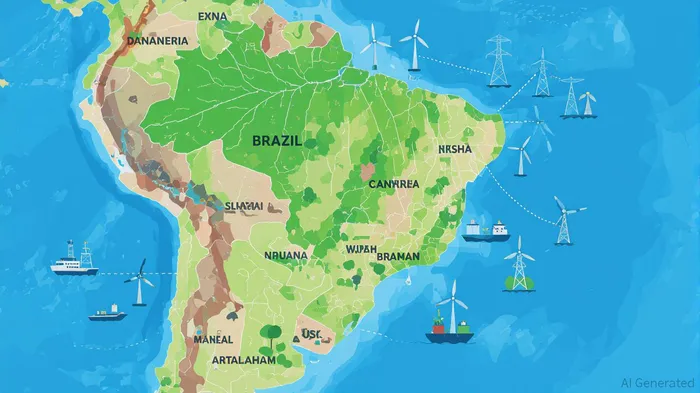
Iberdrola's recent acquisition of a 30.29% stake in Neoenergia for 1.88 billion euros marks a pivotal step in its global strategy to dominate the renewable energy sector. By increasing its ownership in the Brazilian utility to 84%, the Spanish energy giant has solidified its position in one of Latin America's most dynamic markets. This move, subject to regulatory approvals, underscores Iberdrola's commitment to leveraging strategic M&A to accelerate decarbonization while capitalizing on Brazil's robust regulatory framework and growth potential [1].
Strategic Rationale: Networks as a Foundation for Growth
Iberdrola's focus on expanding its regulated Networks business aligns with its long-term vision of stable, predictable cash flows. Neoenergia, as the largest electricity distributor in Brazil by customer base, serves 40 million people across eight states. Its extensive infrastructure provides a critical platform for integrating renewable energy into the grid, a necessity as global demand for clean power surges. According to a report by Iberdrola, the acquisition enhances the company's ability to modernize distribution systems, automate grid operations, and reduce technical losses—a priority in a region where energy demand is projected to grow by 3.5% annually through 2030 [1].
Neoenergia's Renewable Energy Ambitions
Neoenergia's existing renewable energy portfolio already positions it as a leader in Brazil's transition. The company operates 3,800 MW of renewable capacity, primarily hydroelectric, and has recently ventured into green hydrogen. A notable project includes the construction of Brazil's first green hydrogen refueling station in Taguatinga, supported by a 30 million reais investment. This initiative, aligned with national decarbonization goals, addresses the transport sector's reliance on fossil fuels and demonstrates Neoenergia's forward-looking approach [4].
Moreover, Neoenergia's collaboration with the European Investment Bank (EIB) highlights its commitment to infrastructure modernization. A 300 million euro loan will fund upgrades to distribution networks in Bahia and other regions, enhancing reliability and enabling the integration of intermittent renewable sources like wind and solar [3]. These investments not only strengthen grid resilience but also position Neoenergia to meet Brazil's target of expanding wind power capacity to 40.1 GW by 2032 [1].
Iberdrola's $5.6 Billion Bet on Brazil's Renewables
The acquisition is part of a broader, $5.6 billion investment plan by Iberdrola in Brazilian renewables between 2023 and 2025. This includes large-scale wind power projects, which are particularly attractive due to declining technology costs and a favorable policy environment. As stated by industry analysts, Brazil's wind sector has seen private sector participation surge, driven by long-term power purchase agreements and international partnerships [1]. Iberdrola's entry into this market not only diversifies its geographic exposure but also aligns with its global target of achieving net-zero emissions by 2050.
Regulatory and Market Tailwinds
Brazil's regulatory landscape, characterized by transparent auctions and stable pricing mechanisms, provides a fertile ground for renewable energy expansion. The country's National Electric Energy Agency (ANEEL) has prioritized grid modernization and decentralized generation, creating opportunities for companies like Neoenergia to innovate. Additionally, the declining cost of wind and solar technologies—down 89% and 85% respectively since 2010—has made renewables more competitive than fossil fuels, further incentivizing investment [1].
Implications for Latin America's Energy Transition
Iberdrola's acquisition of Neoenergia's stake is more than a financial transaction; it is a strategic bet on Latin America's renewable energy future. By combining Neoenergia's local expertise with Iberdrola's global scale, the partnership could catalyze cross-border technology transfer and investment in green hydrogen, a sector poised for exponential growth. As the region's largest electricity distributor, Neoenergia's role in decarbonizing Brazil's energy mix will be critical to achieving global climate targets.
In conclusion, Iberdrola's move reflects a calculated approach to M&A in the renewable energy sector, where long-term value creation hinges on infrastructure resilience, regulatory alignment, and technological innovation. With Brazil's energy transition gaining momentum, the Spanish utility is well-positioned to reap the rewards of a market that is both strategically and financially compelling.







Comentarios
Aún no hay comentarios