
Iberdrola's Strategic Expansion in Brazil's Energy Infrastructure: Investment Implications of Grid Modernization and Renewable Integration
Iberdrola's deepening commitment to Brazil's energy infrastructure underscores a pivotal shift in the global energy transition. Through its subsidiary Neoenergia, the Spanish energy giant is accelerating grid modernization and renewable integration in Brazil, a market critical to both its long-term growth and the country's climate ambitions. With over €12.5 billion allocated for 2025 investments in electricity grids, renewables, and storage, Iberdrola's strategy in Brazil reflects a calculated alignment with decarbonization goals and the electrification of energy systems. This analysis explores the financial, operational, and strategic implications of these investments, highlighting their potential to reshape Brazil's energy landscape and Iberdrola's competitive positioning.
Grid Modernization: A Catalyst for Renewable Integration
Modernizing Brazil's electricity grid is central to Iberdrola's strategy, particularly in regions like Bahia, where energy demand is surging. In July 2025, Neoenergia secured a €300 million green loan from the European Investment Bank to upgrade Bahia's distribution network, serving 6 million customers across 415 municipalities. This funding will expand grid capacity, automate infrastructure, and enhance energy efficiency, directly supporting the integration of renewable sources. Such projects are not merely technical upgrades but foundational to Brazil's goal of increasing clean energy's share in its power mix.
The Bahia initiative aligns with the EU's Global Gateway strategy, which prioritizes sustainable infrastructure in emerging markets. For Iberdrola, this partnership reduces financial risk while leveraging institutional capital to scale operations. The project also addresses a critical challenge: Brazil's aging grid infrastructure, which has historically hindered renewable adoption. By improving grid reliability and flexibility, Iberdrola is creating a platform for future solar and wind projects, reinforcing its role as a key enabler of the energy transition.
Renewable Integration: From Islands to National Impact
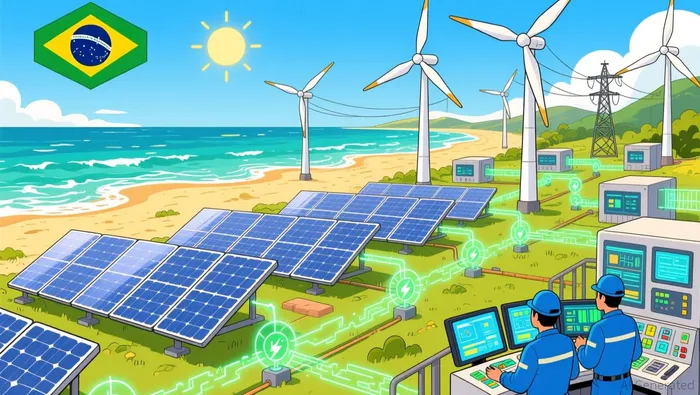
Iberdrola's investments in renewable energy are equally transformative. The company's flagship project, Noronha Verde, aims to make Fernando de Noronha-the first inhabited oceanic island in Latin America-fossil fuel-free by 2027. This $55 million initiative includes a 30,000-panel solar plant and a 49 MWh battery storage system, demonstrating Iberdrola's ability to deploy cutting-edge technology in complex environments. The project, which aligns with COP30 climate goals, is a microcosm of the company's broader vision: decarbonizing energy systems while maintaining reliability.
On a larger scale, Iberdrola plans to add 4,000 MW of renewable capacity in Brazil by 2025, with 100% of the generated power already contracted. This pre-sold capacity ensures stable cash flows, mitigating the volatility often associated with renewable projects. The company's focus on selective, high-impact investments-rather than broad expansion-highlights a disciplined approach to capital allocation. By prioritizing projects with clear regulatory and market support, Iberdrola is optimizing returns while advancing Brazil's renewable energy agenda.
Financial Strength and Strategic Returns
Iberdrola's 2025 financial performance reinforces the viability of its Brazil strategy. The company reported a 17% year-on-year increase in net profit, reaching €5,307 million in Q3 2025, driven by robust investments in regulated grids and renewables. Total investments for the first nine months of 2025 hit a record €9 billion, with Brazil playing a central role. These figures underscore Iberdrola's ability to balance growth with profitability, a critical factor for investors assessing long-term sustainability.
The company's 2025 net profit guidance-mid to high single-digit growth-further signals confidence in its Brazil strategy. If historical cost recognition in the U.S. is factored in, growth could reach double digits, amplifying shareholder returns. For Iberdrola, Brazil's energy market offers a unique combination of regulatory stability, renewable potential, and infrastructure gaps, all of which align with its electrification-focused roadmap.
Risks and Market Implications
Despite its strengths, Iberdrola's Brazil strategy is not without risks. Regulatory shifts, currency volatility, and delays in project execution could impact returns. However, the company's emphasis on partnerships-such as the EIB collaboration-mitigates some of these risks by diversifying funding sources and leveraging institutional expertise. Additionally, Brazil's commitment to climate targets provides a policy tailwind, reducing the likelihood of abrupt regulatory changes.
For the broader market, Iberdrola's investments signal a growing appetite for infrastructure in emerging economies. As global capital flows increasingly prioritize ESG-aligned projects, Iberdrola's Brazil initiatives could serve as a blueprint for similar ventures in other developing markets. This positions the company not just as an energy provider but as a strategic player in the global energy transition.
Conclusion
Iberdrola's strategic expansion in Brazil's energy infrastructure represents a masterclass in aligning corporate objectives with global sustainability goals. By modernizing grids, integrating renewables, and securing institutional partnerships, the company is addressing both technical and financial challenges in a high-growth market. With €12.5 billion in 2025 investments and a clear focus on electrification, Iberdrola is not only strengthening its competitive edge but also contributing to Brazil's climate ambitions. For investors, these moves highlight a compelling opportunity: a company leveraging infrastructure gaps and renewable potential to drive long-term value creation.







Comentarios
Aún no hay comentarios