
Iberdrola's Strategic Equity Raise: A Catalyst for Renewable Energy Infrastructure and Long-Term Value Creation
In the evolving landscape of global energy transition, Iberdrola's recent €5 billion equity raise stands out as a bold and calculated move to accelerate its €41 billion 2024–2026 Strategic Plan. This capital infusion, executed through an accelerated book-building process at a 5.6% discount to its share price, signals the company's commitment to dominating the renewable energy and grid infrastructure sectors. For investors, the question is not just whether this raise is prudent but whether it unlocks a transformative opportunity in a market poised for decades of growth.
Strategic Alignment with Global Energy Transition
Iberdrola's 2024–2026 plan is anchored in three pillars: grid modernization, offshore wind dominance, and energy storage innovation. The €21.5 billion allocated to grid infrastructure—60% of the total investment—targets high-credit-quality markets like the U.S., U.K., Brazil, and Spain. These regions, collectively accounting for 65% of Iberdrola's first-quarter 2025 investments, are experiencing surges in electrification demand from EVs, heat pumps, and data centers. By focusing on transmission lines (€6.5 billion of the grid investment), Iberdrola is not only addressing immediate infrastructure gaps but also future-proofing its assets against the volatility of wholesale energy markets.
The company's sustainability-linked credit facility—a €2.5 billion deal tied to decarbonization targets—further reinforces its alignment with the EU Taxonomy. This structure ensures that Iberdrola's cost of capital is dynamically linked to its environmental performance, creating a self-reinforcing cycle of ESG compliance and financial efficiency. For investors, this signals a strategic hedge against regulatory risks and a commitment to long-term profitability in a carbon-constrained world.
Financial Strength and ROI Projections
Iberdrola's historical performance provides a compelling baseline for optimism. In the first quarter of 2025 alone, the company invested €2.72 billion, with 53% directed to regulated networks and 7% to renewables. These investments underpinned a 12% year-over-year increase in EBITDA to €4.643 billion, with 50% of that profit now derived from U.S. and U.K. operations. By 2026, the company projects EBITDA of €16.5–17 billion, with 70% unlinked to volatile wholesale electricity prices. This shift toward stable, regulated cash flows—supported by 85% of grid assets under fixed regulatory frameworks—positions Iberdrola as a low-risk, high-conviction play in a sector often plagued by uncertainty.
The equity raise, which was oversubscribed by 45%, has been priced at a 5.6% discount to Iberdrola's closing share price. While this may initially appear dilutive, the capital will be deployed in projects with projected internal rates of return (IRR) exceeding 8–10%, driven by the compounding effects of grid expansion and offshore wind scale. For context, the company's Vineyard Wind 1 project in the U.S. alone is expected to generate $1.6 billion in annual carbon emission reductions and power 400,000 homes. Such projects are not just environmental milestones—they are financial engines.
Renewable Energy Infrastructure as a Macro Bet
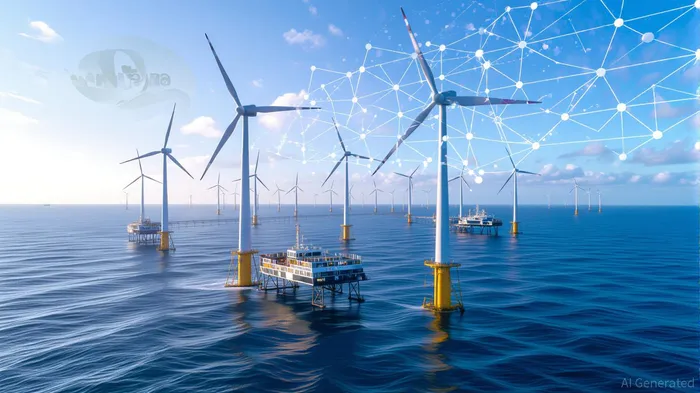
Iberdrola's €15.5 billion renewable energy investment—50% of which is directed to offshore wind—positions it as a leader in the global shift away from fossil fuels. Offshore wind, in particular, is a sector with near-zero marginal costs and long-term power purchase agreements (PPAs), ensuring predictable returns. The company's recent partnerships, such as the Windanker offshore wind farm in Germany (315 MW, €1.28 billion) and the Baltic Eagle project in the Baltic Sea (476 MW, €1.6 billion), demonstrate its ability to execute large-scale, capital-intensive projects in high-growth markets.
For investors, the appeal lies in Iberdrola's dual role as both an infrastructure developer and a renewable energy producer. The company's grid investments (€21.5 billion) directly support the integration of its own renewable capacity, creating a virtuous cycle of asset synergy. By 2026, Iberdrola aims to add 4,000 MW of new renewable capacity annually, with 100% of output contracted. This contrasts sharply with peers who face intermittency challenges and grid bottlenecks.
Dividend Policy and Shareholder Returns
Iberdrola's dividend strategy further enhances its investment thesis. The 2025 payout of €0.635 per share (a 15% increase) reflects confidence in its cash flow resilience. With €20.9 billion in liquidity and a target of €12.2 billion in alliances and asset rotation by 2026, the company is poised to maintain or even increase dividends while funding its aggressive expansion. This balance between capital allocation and shareholder returns is rare in capital-intensive sectors and underscores Iberdrola's disciplined approach.
Risks and Mitigants
While the equity raise is a net positive, investors should remain cognizantCTSH-- of macro risks:
1. Regulatory Uncertainty: Grid returns in the U.S. and U.K. could be impacted by policy shifts. However, Iberdrola's focus on A-rated countries and fixed-regulatory frameworks mitigates this risk.
2. Project Execution: Offshore wind projects like Vineyard Wind 1 face permitting and supply chain delays. Iberdrola's track record—e.g., timely completion of East Anglia THREE—suggests strong execution capabilities.
3. Competition: The renewable energy sector is becoming increasingly crowded. Iberdrola's first-mover advantage in offshore wind and its vertically integrated grid model provide a durable competitive edge.
Conclusion: A Compelling Long-Term Investment
Iberdrola's equity raise is not merely a financing event—it is a strategic inflection pointIPCX--. By aligning its capital structure with the energy transition, the company is positioning itself to capture value from two of the 21st century's most critical megatrends: decarbonization and electrification. For investors, the combination of regulated cash flows, high-margin renewables, and a disciplined capital allocation strategy makes Iberdrola a standout in a sector transitioning from speculative bets to blue-chip stability.
The €5 billion raise, when viewed through the lens of Iberdrola's €41 billion plan, is a calculated investment in a future where clean energy infrastructure is both a public good and a private asset. As the company prepares to unveil further details at its September 2025 Capital Markets Day, the market will likely reward those who recognize the long-term value embedded in its grid-first, renewables-driven strategy.
Investment Recommendation
Iberdrola's shares, currently trading at a 10% discount to its 52-week high, offer an attractive entry point for investors seeking exposure to renewable energy infrastructure. The company's EBITDA growth trajectory, coupled with its dividend resilience, supports a long-term buy recommendation. For a diversified portfolio, Iberdrola's strategic blend of regulated utilities and high-growth renewables provides a unique balance of stability and upside.







Comentarios
Aún no hay comentarios