
Iberdrola's Expansion of Renewable Energy Capacity in Its Norges Bank JV: A Strategic Catalyst for Sustainable Energy Growth
In the evolving landscape of global energy transition, strategic partnerships have emerged as pivotal drivers of decarbonization and long-term investment value. Iberdrola's collaboration with Norges Bank Investment Management (NBIM) exemplifies this trend, with their joint venture (JV) targeting 2,600 MW of renewable energy capacity in Spain and Portugal by 2025. This initiative, anchored by €2 billion in combined investments, underscores the growing alignment of financial and environmental objectives in the renewable energy sector, according to an Iberdrola press release.
Strategic Rationale: Leveraging Geographic and Institutional Strengths
The Iberian Peninsula's abundant solar and wind resources position it as a strategic hub for renewable energy development. Iberdrola, a global leader in clean energy, holds a 51% stake in the JV, while NBIM—a manager of Norway's sovereign wealth fund—contributed €307 million, according to a Norges Bank press release. This partnership capitalizes on Iberdrola's operational expertise and NBIM's capital strength, creating a synergy that accelerates decarbonization. The portfolio, comprising 60% solar PV and 40% onshore wind, is projected to supply electricity to 400,000 homes annually while avoiding 350,000 tonnes of CO₂ emissions, as reported by NS Energy.
Spain's National Energy and Climate Plan (NECP) mandates 74% renewable electricity by 2030, while Portugal aims to expand its renewable capacity to 25 GW by the same year. These policy frameworks, coupled with incentives for green hydrogen and grid modernization, create a favorable environment for the JV's scalability. A McKinsey report highlights how Spain and Portugal's geographic advantages—high solar irradiation, consistent wind patterns, and access to critical minerals—position them to lead Europe's energy transition, a point reinforced by a ScienceDirect study.
Financial Commitment and Risk Mitigation
The JV's financial structure reflects a balance of risk and reward. With a total valuation of €627 million for the 674 MW currently integrated (40% wind, 60% solar PV), the partnership leverages Iberdrola's operational control and NBIM's long-term capital, according to Iberdrola. While specific internal rate of return (IRR) or return on investment (ROI) figures for the JV remain undisclosed, NBIM's broader renewable infrastructure investments reported a -0.6% return in Q1 2025. However, the JV's focus on long-term power purchase agreements (PPAs) and stable regulatory environments mitigates exposure to market fluctuations.
The expansion to 2,600 MW by 2025 also aligns with Iberdrola's broader €6 billion investment plan in Spain, signaling confidence in the region's energy transition potential, according to The Corner. Analysts project Iberdrola's regulated networks segment to grow by 15% in 2025, further reinforcing the company's financial resilience, per S&P Global.
Policy and Grid Resilience: Addressing Challenges
Despite robust policy support, the 2025 Iberian blackout exposed vulnerabilities in renewable-dependent grids, emphasizing the need for enhanced storage and interconnectivity. Spain has since accelerated investments in battery storage (4.3 GW by 2025) and green hydrogen projects, as outlined in an Asuene blog post, while Portugal prioritizes grid modernization. These measures align with the JV's strategic emphasis on hybrid systems, integrating solar, wind, and storage to ensure reliability.
Long-Term Investment Potential
Strategic renewable partnerships like the Iberdrola-NBIM JV are increasingly viewed as cornerstones of sustainable growth. A PwC report highlights that 72% of firms plan to increase capital expenditures on climate mitigation, driven by regulatory pressures and consumer demand. The JV's potential expansion into other markets—such as North Africa or Latin America—further enhances its long-term appeal.
Moreover, the role of climate-related financial policies (CRFPs), including green bonds and carbon pricing, cannot be overstated. The EU's Carbon Border Adjustment Mechanism (CBAM) and Spain's green bond issuance (€15 billion in 2024) illustrate how policy instruments redirect capital toward low-carbon projects, according to a Sia Partners analysis. The JV's alignment with these frameworks positions it to attract additional institutional investors seeking ESG-compliant returns.
Conclusion
Iberdrola's collaboration with Norges Bank represents more than a financial transaction—it is a strategic catalyst for decarbonizing energy markets while generating sustainable returns. By leveraging the Iberian Peninsula's renewable potential, navigating policy frameworks, and addressing grid resilience challenges, the JV exemplifies how partnerships can harmonize environmental and economic objectives. As global energy systems pivot toward net-zero, such alliances will remain critical in shaping a resilient, low-carbon future. 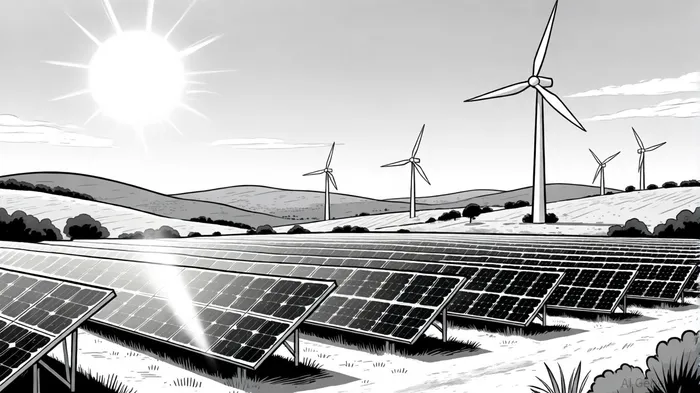







Comentarios
Aún no hay comentarios