
Hyundai's Recent Vehicle Recall and Its Implications for the Auto Sector
Hyundai's Recent Vehicle Recall and Its Implications for the Auto Sector
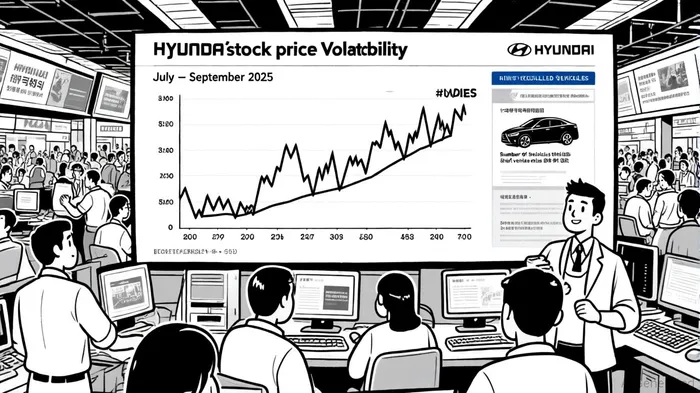
Hyundai Motor Group's 2025 vehicle recalls have sparked significant scrutiny over supply chain vulnerabilities and safety risks, raising critical questions for investors. The automaker's recall of nearly 600,000 U.S. vehicles in September 2025-including the 2020–2025 Palisade and 2023–2025 IONIQ 6-due to seat belt failures and defective EV charging port doors, according to a USA Today report, compounded earlier July 2025 recalls for ABS module malfunctions and oil consumption issues, as noted in a CarsTimes report. These events, coupled with U.S. tariffs squeezing operating margins, according to a revised 2025 forecast, have created a complex landscape for investor confidence and stock valuation.
Scope and Causes of Recalls
The September 2025 recalls alone affected 568,850 Palisade units for seat belt buckles that could fail to latch securely and 31,042 IONIQ 6 models for charging port doors prone to detachment (see the USA Today report). A separate July recall targeted 65,000 vehicles, including the Tucson and Santa Fe, for ABS modules that could cause spontaneous engine fires (reported in the CarsTimes article). These defects highlight systemic quality control challenges, particularly in Hyundai's EV segment, where the IONIQ 6 recall underscores risks in emerging technologies.
Financial Impact and Revised Projections
Hyundai's 2025 financial outlook has been recalibrated due to these recalls and U.S. tariffs, which have eroded operating profit margins to 6–7% from 7–8%, per the revised 2025 forecast. Q2 2025 results revealed a 16% year-over-year drop in operating profit, attributed to tariff-driven production costs and recall-related expenses, as shown in the Q2 2025 results. Despite this, the company reported a 5–6% revenue growth projection, supported by a 14% sales increase in September 2025 and a 153% surge in EV retail sales, according to a Hyundai Motor America release. However, the cost of recalls-estimated in the hundreds of millions-could strain cash flow, particularly as Hyundai ramps up EV production.
Stock Price Volatility and Investor Sentiment
HYMTF's stock price reflected mixed signals during the recall period. In July 2025, shares fell amid the ABS module recall announcement, though a 28.18% year-to-date gain as of November 2024 (reported in the Hyundai Motor America release) suggested resilience. Short-term forecasts predicted a decline to $13.88 in 2025 (see the HYMTF forecast), but long-term analysts noted undervaluation based on a P/E ratio of 1.33 (reported in the Q2 2025 results). The disconnect between near-term volatility and long-term fundamentals underscores investor uncertainty: while recalls signal operational risks, Hyundai's strategic investments in U.S. localized production and EVs (e.g., $21 billion through 2028, noted in the revised 2025 forecast) aim to mitigate these concerns.
Supply Chain and Safety Risks
The recalls have amplified scrutiny of Hyundai's supply chain, particularly its reliance on global components. Tariffs on U.S. imports and the Georgia battery plant immigration raid further complicated operations (outlined in the revised 2025 forecast). Safety risks, meanwhile, threaten brand equity. The July 2025 ABS recall, for instance, could depress resale values for affected models (as reported in the CarsTimes article), while the September seat belt issue raises questions about passenger safety. Yet Hyundai's 12 IIHS Top Safety Pick awards in 2025, highlighted in the IIHS safety awards, demonstrate its commitment to innovation, potentially offsetting some reputational damage.
Long-Term Strategies and Market Position
Hyundai's response to these challenges includes accelerating localized production to meet 80% of U.S. demand by 2030 (described in the revised 2025 forecast) and expanding EV incentives, such as $9,800 price cuts on the IONIQ 5 (noted in the Hyundai Motor America release). CEO José Muñoz's emphasis on flexibility and resilience (covered in the revised 2025 forecast) aligns with broader industry trends toward supply chain diversification. However, recurring recalls-such as the 17th ABS module recall since 2018-highlight the need for sustained quality improvements to restore investor trust.
Conclusion
Hyundai's 2025 recalls and tariff-related headwinds illustrate the delicate balance between short-term risks and long-term growth in the auto sector. While supply chain disruptions and safety concerns have pressured investor confidence, the company's strategic pivots-toward EVs, localized manufacturing, and cost-cutting-position it to navigate these challenges. For investors, the key lies in assessing whether Hyundai's operational adjustments can outpace recall-related costs and sustain its 5.55 million annual sales target by 2030 (as discussed in the revised 2025 forecast).







Comentarios
Aún no hay comentarios