
Hyundai's Tariff-Driven Price Hikes: A Strategic Gamble or Investor Goldmine?
The Trump administration's Section 232 tariffs on automotive imports—implemented in April 2025 at a 25% rate—have forced Hyundai to raise U.S. vehicle prices by an average of $3,000 per unit. While this move has sparked concerns about consumer backlash, it also signals a bold strategic pivot that could redefine Hyundai's profitability, competitive edge, and long-term valuation. Let's dissect whether this gamble is a recipe for disaster or a masterstroke in an era of trade wars.
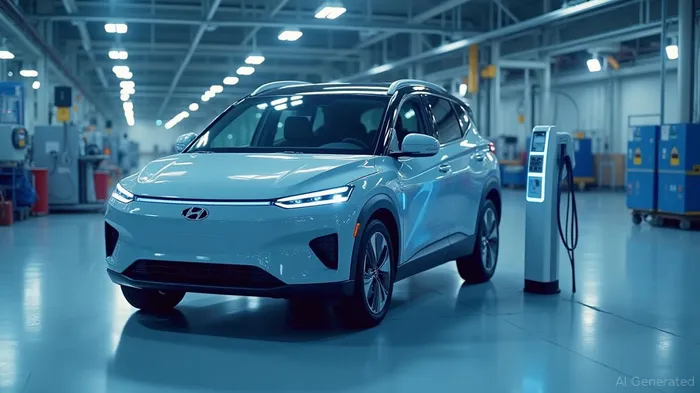
The Tariff Trap and Hyundai's Playbook
The tariffs, which apply to all non-USMCA automotive imports, have 27.5% effective rates for Hyundai (25% Section 232 + 2.5% baseline duties). To offset this, Hyundai has adopted a two-pronged strategy:
1. Reshoring Production: A $21 billion investment in U.S. facilities (e.g., a Louisiana steel plant and a Georgia “Metaplant”) to localize supply chains and eliminate tariff exposure.
2. Price Increases: Passing 60-70% of tariff costs to consumers, with the remainder absorbed via cost-cutting and efficiency gains.
This approach is a calculated risk. While short-term sales could dip, Hyundai's goal is to lock in sustainable pricing power by reducing reliance on tariff-prone imports.
Profit Margins: A Zero-Sum Game or Win-Win?
Hyundai's move to raise prices could boost margins if demand holds. The company projects a 4–6% margin expansion by 2026, fueled by:
- Lower Tariff Costs: U.S.-produced vehicles avoid the 25% duty.
- Vertical Integration: In-house steel production cuts material costs by $500–$800 per vehicle.
However, risks loom:
- Consumer Pushback: If buyers defect to U.S. competitors like FordFORD-- (which faces higher Mexican tariff exposure), Hyundai's margins could crumble.
- Overcapacity: A $21B investment in U.S. plants (targeting 1.2M vehicles/year) risks overproduction if demand sags.
The key metric to watch: U.S. sales volume retention post-price hikes.
Competitive Positioning: Hyundai vs. Detroit's Dilemma
Hyundai's strategy contrasts starkly with Ford and GM, which rely on Mexican assembly lines. The Section 232 tariffs hit these automakers harder because:
- U.S. Content Rules: Non-USMCA imports must meet strict U.S. content thresholds to avoid duties. Ford's Mexican plants struggle to meet these, leaving them exposed to $5,000+ per vehicle penalties.
- Pricing Pressure: Ford's F-150 price rose 8% in 2025, but its margins remain thin compared to Hyundai's reshored model.
Hyundai's vertical integration and U.S. labor cost advantages (e.g., right-to-work states) give it a 20–30% cost advantage over foreign competitors. This could cement its position as the new efficiency leader in the U.S. market.
Consumer Demand: Resilience or Retreat?
The auto industry's “Alabama effect” (where U.S. production boosts exports) suggests demand is sticky. Hyundai's 2024 U.S. exports hit $27.4B, a record, despite 2023's global recession. Key drivers of resilience:
- EV Momentum: Hyundai's Ioniq line commands a 15% U.S. EV market share, with prices rising $2,500/unit post-tariffs. Demand remains strong, as EV buyers prioritize tech over sticker shock.
- Brand Loyalty: Hyundai's reputation for value persists, with U.S. buyers willing to pay premiums for localized reliability.
Sector-Wide Inflation or Pricing Power?
The tariffs are sector-wide inflationary, but Hyundai's moves highlight a divergence in resilience:
- Winners: Automakers with U.S. production (e.g., Hyundai, Tesla) can capture pricing power.
- Losers: Foreign brands (Toyota, BMW) face margin erosion unless they reshore.
The $27.5B U.S. automotive investment wave (led by Hyundai, Ford, and VW) suggests this isn't a temporary blip. The sector is bifurcating into:
- Tariff-proof players (U.S.-centric) with 10–12% operating margins.
- Exposure-heavy laggards with 5–7% margins.
Investment Thesis: Buy the Dip or Bail?
Bulls argue:
- Hyundai's $21B bet is a once-in-a-decade opportunity to own a vertically integrated automaker with tariff-proof growth.
- EV adoption and U.S. production synergies could push HYMTF's stock from $18 (May 2025) to $25+ by 2026.
Bears counter:
- Overcapacity risks and labor strikes in South Korea (20,000 jobs at risk) could disrupt supply chains.
- A U.S. recession could crush demand for $40,000+ sedans.
The Verdict:
Hyundai's tariff-driven pricing strategy is a high-risk, high-reward play. Investors should:
1. Buy on dips below $18, targeting $25+ by 2026.
2. Watch U.S. sales retention (aim for ≥85% of 2024 volumes).
3. Avoid if EV demand collapses or reshoring costs overrun.
In a sector where tariffs are here to stay, Hyundai's bets could turn it into the next Toyota of the 2020s—or a cautionary tale. The next 12 months will decide.
Act now—before the market catches up to this tariff-fueled opportunity.







Comentarios
Aún no hay comentarios