
Hyundai's Strategic Reinvention: Building Tariff Resilience and Dominating the EV Market in the U.S.
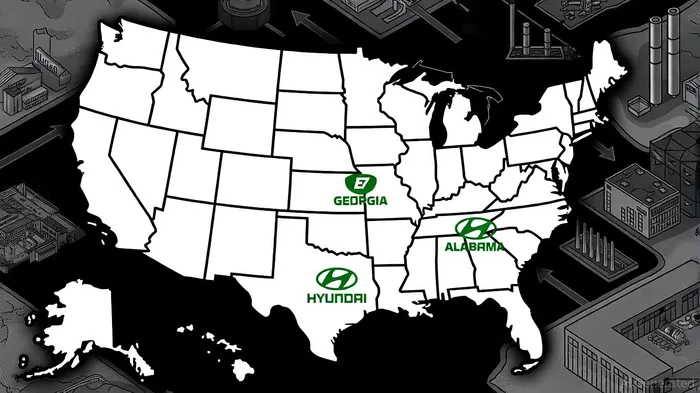
In an era of geopolitical uncertainty and shifting trade policies, Hyundai Motor Group has emerged as a case study in strategic adaptability. The automaker's recent moves to localize production, invest in vertical integration, and accelerate electrification signal a long-term commitment to insulate itself from U.S. tariff risks while capturing a growing share of the EV market. As the Trump administration's tariff policies continue to reshape global automotive dynamics, Hyundai's $26 billion U.S. investment plan—up from $21 billion in March 2025—demonstrates a calculated approach to securing market resilience and technological leadership[5].
Tariff Resilience Through Localized Production
Hyundai's core strategy to mitigate U.S. tariffs hinges on a dramatic shift toward domestic production. By 2030, the company aims to manufacture 80% of the vehicles it sells in the U.S., a target designed to reduce exposure to import duties that could reach 25% under current policy frameworks[1]. Central to this plan is the expansion of its Georgia plant, which will increase annual capacity to 500,000 vehicles by 2028, with a focus on hybrid and EV models[2]. This shift not only aligns with U.S. demand for electrified vehicles but also leverages the Inflation Reduction Act's (IRA) incentives for local production.
A critical component of Hyundai's tariff resilience is its $6 billion investment in a low-carbon steel mill in Louisiana. This facility, expected to produce 2.7 million tons of steel annually, will reduce reliance on imported materials and anchor a regional supply chain[6]. By vertically integrating key inputs, Hyundai is hedging against both tariff-driven cost inflation and global supply chain volatility. As noted by Bloomberg, this move positions the company to “decouple from China and other high-risk regions while maintaining cost competitiveness”[4].
Electrification as a Strategic Lever
While tariff mitigation is a defensive imperative, Hyundai's aggressive EV roadmap underscores its offensive ambitions in the U.S. market. The company plans to launch 10 new hybrid and EV models by 2030, including extended-range electric vehicles (EREVs) with over 560 miles of range and a mid-size pickup truck tailored to American preferences[2]. These EREVs, combining high-capacity batteries with gasoline generators, represent a pragmatic response to range anxiety and charging infrastructure gaps—a strategy that could outperform pure EVs in the short to medium term[3].
Hyundai's hybrid expansion is equally noteworthy. By 2030, the automaker will offer over 18 hybrid models, up from 14 previously, with production concentrated at its Georgia plant[1]. This diversification allows Hyundai to cater to both eco-conscious buyers and those hesitant to fully transition to EVs, thereby broadening its market footprint. According to Reuters, the company's North American hybrid production target of 690,000 units by 2030 reflects a deliberate alignment with U.S. consumer behavior and regulatory requirements[2].
Financial Implications and Risk Factors
The scale of Hyundai's U.S. investments comes at a cost. The company has trimmed its 2025 operating profit margin target to 6–7%, down from previous estimates, citing increased expenses tied to tariff mitigation and production expansion[1]. While this contraction is concerning, it must be contextualized within a broader industry trend: competitors like Ford and GMGM-- are also grappling with similar margin pressures as they scale EV production.
However, Hyundai's strategy is not without risks. Operational disruptions, such as immigration-related delays at its Georgia battery plant, highlight vulnerabilities in its execution timeline[2]. Additionally, the $26 billion investment—equivalent to roughly 10% of its 2024 revenue—requires disciplined capital allocation to avoid overextension. That said, Hyundai's focus on cost reduction (e.g., a 30% battery cost cut by 2027[3]) and IRA tax credits provides a buffer against margin erosion.
Conclusion: A Model for Long-Term Resilience
Hyundai's U.S. strategy exemplifies a dual focus on risk mitigation and market capture. By localizing production, securing supply chains, and diversifying its electrification portfolio, the automaker is positioning itself to thrive in a high-tariff, high-uncertainty environment. While near-term margin pressures are inevitable, the long-term payoff—reduced exposure to trade policies, enhanced IRA eligibility, and a robust EV/hybrid lineup—positions Hyundai as a formidable player in the next phase of the U.S. automotive market. For investors, the company's disciplined approach to capital deployment and innovation offers a compelling case for resilience in an increasingly fragmented global industry.







Comentarios
Aún no hay comentarios