
Hyundai's Recall Crisis: Assessing Long-Term Investment Risks in the EV Era
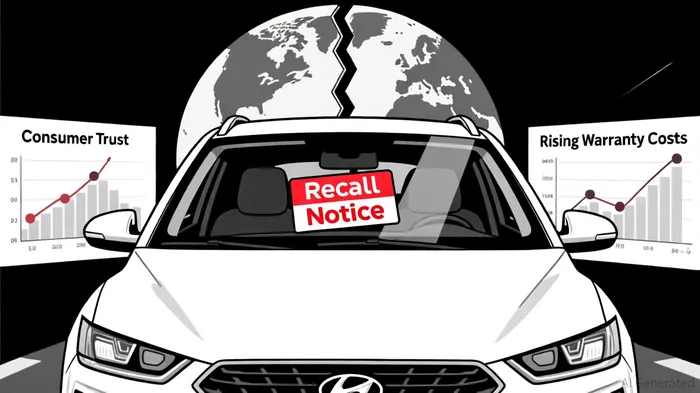
The automotive sector is no stranger to quality control challenges, but Hyundai's recent recall history has intensified scrutiny on its brand resilience and market positioning. Between 2023 and 2025, Hyundai and its sister brand Kia have issued recalls for over 13 million vehicles globally, with critical issues ranging from antilock brake system (ABS) failures to electrical defects in electric vehicles (EVs). These events, coupled with broader industry-wide shifts in EV production and trade dynamics, raise pressing questions for long-term investors.
Recalls and Brand Erosion: A Ticking Time Bomb
Hyundai's recall activity has escalated dramatically in recent years. In 2023 alone, the company recalled 2.6 million vehicles for issues such as fuel leaks, faulty seat belts, and electrical short circuits, according to USA Today. By 2025, the scale worsened: a 3.3 million-vehicle recall for ABS-related fire risks reported by CarsTimes, and a separate 205,000-unit recall for EVs with charging control unit defects that risked sudden power loss, according to MotorBiscuit. These incidents have not only raised safety concerns but also eroded consumer confidence.
According to a Four Wheel Trends report, Hyundai's frequent recalls-16 separate incidents covering 6.4 million vehicles since 2010-have positioned it among the most recalled automakers in 2025. This pattern undermines the brand's reputation for reliability, a critical asset in an era where EV buyers prioritize safety and longevity. For instance, the Autoblog report on the Genesis GV60's windshield molding defect and the Ioniq 5's charging unit flaw reported by MotorBiscuit highlight systemic quality control gaps in Hyundai's EV strategy, a segment it aims to dominate.
Financial Resilience vs. Structural Weaknesses
While Hyundai's financials have shown resilience, underlying risks persist. In 2024, the company reported a 7.73% year-on-year revenue increase to 175.23 trillion KRW, according to StockAnalysis, driven by strong EV sales like the IONIQ 5-retail sales were up 152% in September 2025, per Hyundai News. However, this growth masked vulnerabilities. A 7% drop in Q3 2024 operating profit-attributed to warranty costs for Santa Fe engines and aggressive sales incentives-sparked a 5% stock price decline, as reported by Business Standard. Analysts noted that the lack of a shareholder return policy post-Indian IPO further dented investor sentiment.
The stock's mixed performance underscores this tension: a 5-year gain of 40.11% (per a MarketBeat chart) contrasts with a 1-year loss of 21.16%. Hyundai's price cuts for the 2026 IONIQ 5 lineup, reported earlier by Hyundai News, signal a defensive strategy to retain market share, but such measures may compress margins in the long term.
Industry-Wide Risks: EVs at a Crossroads
Hyundai's challenges reflect broader industry pressures. The EV sector faces a perfect storm of trade tensions, policy shifts, and supply chain bottlenecks. China's dominance-accounting for 60% of global EV sales in 2023, according to the National Law Review-has triggered retaliatory tariffs (e.g., 45% in the EU, 100% in Canada), squeezing margins for non-Chinese automakers. For Hyundai, competing against subsidized Chinese EVs while managing recall costs creates a double bind.
Simultaneously, U.S. policy uncertainty looms. A potential repeal of the Inflation Reduction Act's (IRA) EV incentives under a new administration could slow domestic adoption, the National Law Review notes, directly impacting Hyundai's U.S. market growth. Meanwhile, supply chain diversification efforts-such as General Motors' cobalt partnership with Australia-are cited in the same report and highlight the industry's scramble to reduce reliance on China, a challenge Hyundai must address to avoid production bottlenecks.
Strategic Implications for Investors
For long-term investors, Hyundai's recall crisis underscores the fragility of brand equity in the EV era. While the company's financials remain robust, recurring quality issues could deter buyers, particularly in safety-conscious markets like the U.S. and Europe. The EV segment, crucial to Hyundai's future, is especially vulnerable: defects in flagship models like the Ioniq 5 risk stalling its transition to electrification.
Moreover, the industry's regulatory and geopolitical landscape adds layers of complexity. Trade barriers and policy reversals could amplify costs and reduce profitability. Investors must weigh Hyundai's innovation (e.g., price reductions, electrified model growth reported by Hyundai News) against its ability to address systemic quality control flaws and navigate external headwinds.
Conclusion
Hyundai's recall history is a cautionary tale for the automotive sector. While its financial resilience and EV ambitions are commendable, the company's repeated quality issues and the volatile EV market environment present significant long-term risks. For investors, the key question is whether Hyundai can transform its recall-driven reputation into a narrative of reliability and innovation-a feat that will determine its competitiveness in an increasingly fragmented and regulated global market.







Comentarios
Aún no hay comentarios