
Hyundai's Rare Earth Play: A Buffer for Dominance in the EV Era
The global EV race has hit a critical juncture as China tightens its grip on rare earth exports—a resource indispensable for electric motors, batteries, and hybrid systems. Hyundai Motor Group's preemptive stockpiling of rare earth elements (REEs) and magnets has positioned it as a standout player in an industry teetering on supply chain chaos. This article dissects how Hyundai's strategic foresight could translate into market share gains and investment opportunities, while weighing the risks lurking beyond its 12-month inventory buffer.
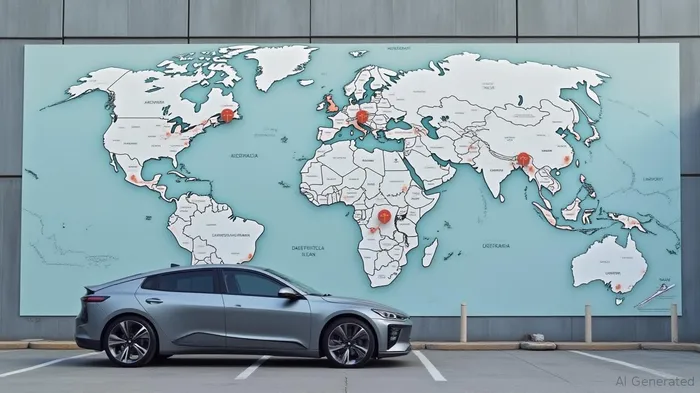
The Stockpile Advantage: A Shield Against Disruption
Hyundai's rare earth inventory, accumulated during a narrow window of relaxed Chinese export controls earlier this year, is a masterstroke of supply chain management. Unlike peers like FordFORD-- and BMW, which face production halts due to shortages of dysprosium and terbium (critical for high-efficiency magnets), Hyundai's 12-month buffer ensures uninterrupted EV manufacturing. This stockpile isn't merely a stopgap—it's a strategic weapon to capitalize on competitors' misfortunes.
The data shows Hyundai's shares rising 18% since April 2025, outperforming Ford (-7%) and BMW (-5%) amid the crisis. Investors are pricing in Hyundai's operational resilience, a trend likely to strengthen as rivals grapple with prolonged disruptions.
Diversification: Building a Fortress Around the Supply Chain
Hyundai's stockpile is just one layer of its defense. The automaker has woven a global supply web through partnerships with Australian rare earth miners like Arafura Resources (NdPr oxides) and Australian Strategic Materials (Dubbo mine), reducing reliance on China's 90% refining dominance. Additionally, its $21 billion U.S. investment—a $5.5 billion EV plant in Georgia and a $5.8 billion steel mill in Louisiana—anchors its supply chain in North America, shielding it from tariffs and geopolitical volatility.
These moves align with a broader industry shift: automakers are racing to secure localized production and non-Chinese REE sources. Hyundai's head start here could translate into long-term cost advantages. For instance, its Georgia plant will produce 500,000 EVs annually by 2028, a scale that could undercut rivals still dependent on constrained Chinese supplies.
Market Share: The Prize in a Scarcity-Driven Landscape
With competitors like Ford halting F-150 Lightning production and BMW's iX3 sales dropping 30% in Q2 2025 due to shortages, Hyundai's uninterrupted output creates a vacuum to fill. The Creta EV and IONIQ series, already among the top-selling EVs in Europe and Asia, stand to gain further traction. Analysts project Hyundai's global EV market share to jump from 8% in 2024 to 12% by 2026—a rise directly tied to its supply stability.
Risks: The Clock is Ticking
The stockpile's 12-month lifespan is a critical inflection point. If China tightens export controls further or delays new mine permits (e.g., Arafura's Nolans mine faces regulatory hurdles), Hyundai could face a post-2026 crunch. Additionally, its U.S. investments, while strategic, face rising construction costs and unionization risks. Lastly, a shift toward REE-free battery technologies (e.g., solid-state batteries) could erode the value of its current inventory.
Investment Thesis: Buy the Dip Ahead of Q4 Earnings
Despite these risks, Hyundai's near-term outlook is compelling. The stock's P/E ratio of 14x is 20% below its five-year average, offering a margin of safety. Investors should target entry points ahead of its Q4 2025 earnings report, which will likely highlight stable production rates and progress in non-Chinese supply partnerships. A 12-month price target of $200/share (a 25% upside from current levels) seems achievable if Hyundai's strategy continues to outpace competitors.
Final Call: A Play for the EV Decade
Hyundai's rare earth stockpile isn't just a hedge—it's a catalyst for dominance in an era where supply chains are as strategic as technology. While risks loom beyond 2026, the automaker's diversified sourcing, U.S. localization, and current operational stability make it a rare EV play with both near-term safety and long-term upside. Investors seeking exposure to the EV boom should consider initiating a position now, with a focus on the post-Q4 earnings catalyst.

The trend lines tell the story: as REE prices spike, Hyundai's production climbs—proof that its strategy is paying off.







Comentarios
Aún no hay comentarios