
Hyundai-Posco Steel Venture: A Strategic Gambit in the U.S. Auto Landscape
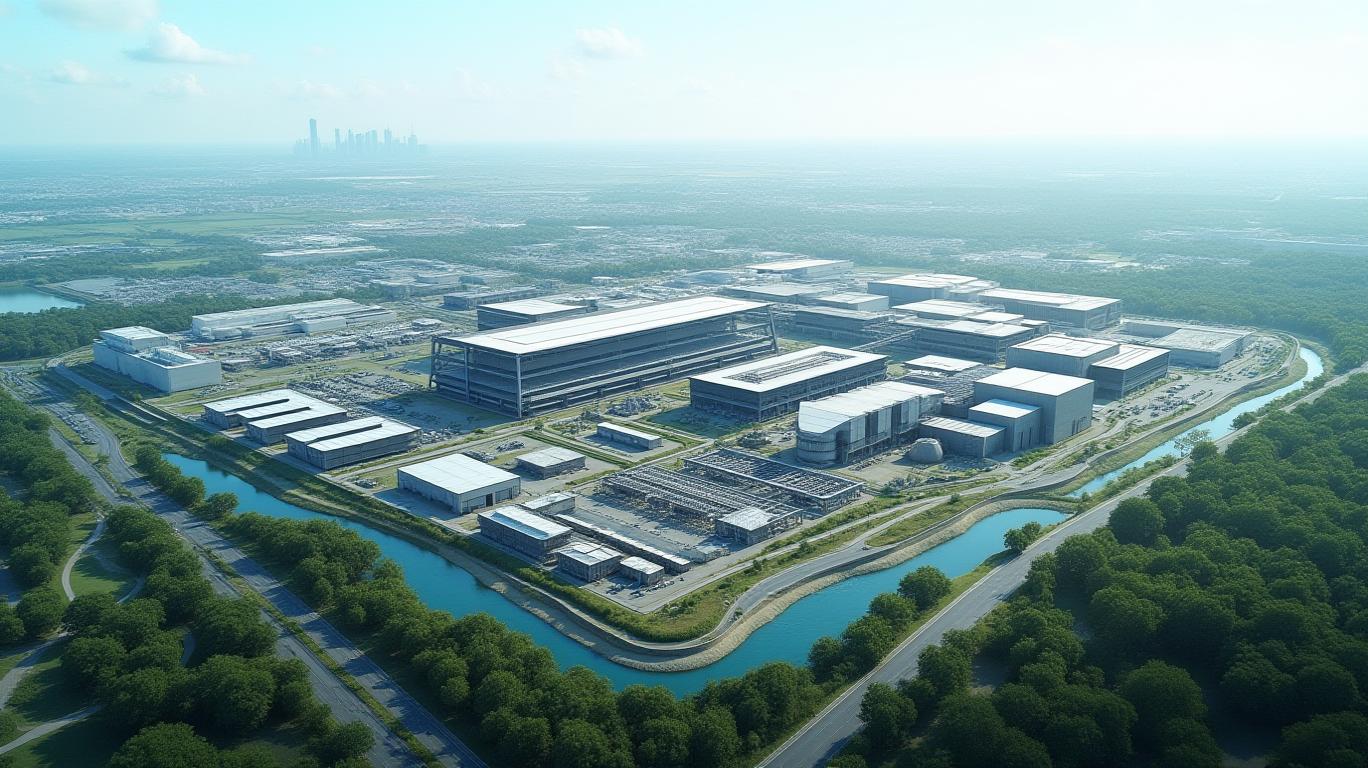
The partnership between Hyundai Motor Group and PoscoPKX-- Holdings, announced in January 2025, marks a pivotal moment in the global automotive and steel industries. Their $5.8 billion steel plant in Louisiana—set to produce 2.7 million tons of auto-grade steel annually by 2029—reflects a calculated response to U.S. trade policies, shifting consumer demand for electric vehicles (EVs), and the race to decarbonize manufacturing. This venture is not merely an investment in infrastructure but a cornerstone of Hyundai’s broader $21 billion U.S. expansion, signaling a bold bet on the region’s future as a hub for sustainable mobility.
Navigating Trade Headwinds
The MOU responds directly to U.S. trade dynamics. In early 2025, the Biden administration reinstated a 25% tariff on South Korean steel, a move that threatened Hyundai’s reliance on imported materials for its U.S. assembly plants. By localizing production in Louisiana, Posco bypasses these tariffs, gaining tariff-free access to the U.S. market while also serving Mexico-based automotive manufacturers—a strategic dual market play. The collaboration also shields Hyundai from supply chain volatility, as the plant will produce steel plates tailored to its EV and conventional vehicle lines.
The stock market has rewarded this foresight: Hyundai’s shares rose 8% in the weeks following the MOU, reflecting investor confidence in its ability to mitigate trade risks and capitalize on EV demand.
The EV Ecosystem Play
The Louisiana plant is more than a steel mill; it’s a linchpin in Hyundai’s vision of an integrated EV ecosystem. Posco, a leader in battery materials, brings expertise in lithium and cobalt processing, while Hyundai is investing heavily in EV production (including its new Georgia assembly plant). Together, they aim to develop carbon-neutral steel and battery technologies, aligning with U.S. incentives under the Inflation Reduction Act, which rewards domestic production of clean energy components.
The U.S. automotive steel market alone is projected to grow from $28 billion in 2023 to $34 billion by 2029—a trajectory accelerated by EV adoption, which requires lighter, high-strength steel. Hyundai’s dominance in this space could solidify its position against rivals like Tesla and Ford, which are also scaling up U.S. manufacturing.
EV sales in the U.S. have surged 65% annually since 2020, with 2025 estimates hitting 2.1 million units—nearly 15% of total vehicle sales. This shift underscores the urgency for automakers to secure local, low-carbon supply chains.
Posco’s Localization Strategy
For Posco, the Louisiana plant represents its first U.S. steel production facility, marking a departure from its previous reliance on Mexican processing centers. This move positions it to capture a larger share of the North American automotive market, which accounts for 40% of global automotive steel demand. The company’s expertise in battery materials—already supplying companies like Tesla—will further integrate into Hyundai’s EV supply chain, creating synergies that could reduce costs by up to 15%, according to industry analysts.
Posco’s battery materials division has seen revenue climb from $1.2 billion in 2020 to an estimated $3.5 billion in 2025, a trajectory that could accelerate with deeper ties to Hyundai’s EV plans.
Risks and Rewards
The project is not without hurdles. Delays in permitting or labor shortages in Louisiana could push the 2029 timeline back. Additionally, global steel overcapacity—a result of post-pandemic stimulus—could pressure margins. Yet Hyundai and Posco’s joint focus on high-margin automotive and battery steel, along with their access to U.S. tax incentives, mitigates these risks.
The $5.8 billion investment also aligns with broader geopolitical trends. By anchoring production in the U.S., the duo reduces exposure to trade disputes and secures a foothold in a market that now requires 75% of EV battery components to be locally sourced to qualify for full IRA subsidies.
Conclusion
Hyundai and Posco’s Louisiana venture is a masterstroke of strategic alignment. With a 2.7 million-ton capacity plant, tariff-free access, and synergies in EV and battery tech, the partnership is poised to capture a significant slice of the U.S. automotive market. Backed by Hyundai’s $21 billion U.S. investment blueprint and Posco’s battery expertise, the project not only addresses immediate trade challenges but also positions both companies as leaders in the EV revolution.
As U.S. EV sales hit record highs and battery material demand escalates, the plant’s 2029 completion will arrive at a critical inflection point. For investors, this is a long-term bet on two companies that have transformed a defensive move against tariffs into an offensive play for dominance in a $34 billion market—and beyond.
With the battery materials market expected to grow at a 10% CAGR through 2030, Hyundai and Posco’s Louisiana venture is less an isolated investment and more the foundation of a sustainable, self-reliant ecosystem—one that could redefine automotive manufacturing for decades.





Comentarios
Aún no hay comentarios