
Hyundai's Battery Plant Delay: Assessing Risks and Opportunities in the EV Supply Chain
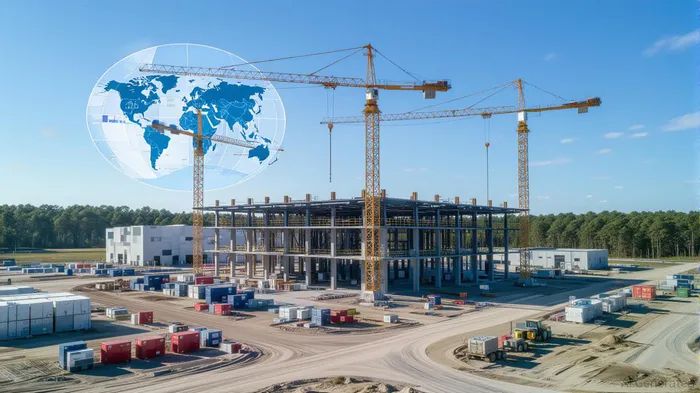
The recent U.S. immigration raid at Hyundai's joint venture battery plant in Georgia has exposed vulnerabilities in the electric vehicle (EV) supply chain, raising critical questions about resilience and investment strategies in the sector. The incident, which disrupted construction and delayed production by at least 12 months[1], underscores the fragility of global supply chains even for industry leaders. This delay, coupled with broader industry-wide risks, demands a reevaluation of how automakers and investors navigate the evolving EV landscape.
The Immediate Impact: Labor Shortages and Diplomatic Tensions
The Georgia plant, a cornerstone of Hyundai's U.S. EV strategy, now faces a timeline shift from late 2025 to early 2026[2]. According to Hyundai's CEO, José Muñoz, the absence of specialized South Korean-trained engineers—essential for battery plant construction—has caused a two-to-three-month delay[3]. This labor bottleneck highlights the sector's reliance on skilled technical talent, a resource increasingly constrained by geopolitical and regulatory factors. South Korean President Lee Jae Myung has warned that the incident could deter future investments in the U.S., citing concerns over visaV-- systems for technical workers[4].
The ripple effects extend beyond Hyundai. Analysts predict a potential year-long delay in battery production, given the difficulty of replacing South Korean-trained engineers[5]. This disruption threatens automakers' ability to meet EV production targets, particularly as global demand for EVs accelerates.
Broader Industry Challenges: Material Shortages and Supply Chain Concentration
Hyundai's delay is emblematic of systemic risks in the EV battery sector. Global demand for lithium, nickel, and cobalt is surging, but supply is struggling to keep pace. Lithium prices, for instance, spiked over 500% between 2021 and 2022 before stabilizing[6], while cobalt production is projected to fall short of demand by 20% by 2030[7]. China's dominance in battery production—controlling over 80% of global lithium hydroxide processing—further complicates diversification efforts[8].
These dynamics are reshaping investment strategies. Companies and governments are prioritizing domestic supply chain resilience, with the U.S. and EU accelerating onshoring initiatives despite higher production costs[9]. Investors must now weigh the risks of overreliance on Chinese supply chains against the costs of building redundant systems.
Opportunities in Innovation and Recycling
Amid these challenges, innovation offers a path forward. The industry is pivoting toward alternative technologies like sodium-ion and solid-state batteries, which promise higher energy densities and reduced reliance on scarce materials[10]. Hyundai's ability to adapt its supply chain strategy—such as tapping into other suppliers or accelerating R&D in next-gen battery tech—could mitigate the impact of the Georgia delay.
Recycling initiatives also present a critical opportunity. By 2035, recycling could supply up to 20% of battery materials[11], though current capacity remains insufficient. Investors with early exposure to recycling infrastructure may benefit as demand for sustainable solutions grows.
Investment Implications: Navigating Uncertainty
For investors, the Hyundai case underscores the need to monitor three key factors:
1. Supply Chain Concentration: Diversifying suppliers and investing in regional manufacturing hubs can reduce exposure to geopolitical risks.
2. Technological Innovation: Companies leading in solid-state or sodium-ion battery R&D are likely to outperform in the long term.
3. Regulatory Developments: Policies promoting domestic production (e.g., the U.S. Inflation Reduction Act) will shape the competitive landscape[12].
Conclusion
Hyundai's battery plant delay is a microcosm of the EV sector's broader challenges. While the incident highlights vulnerabilities in labor and supply chain dependencies, it also signals the urgency of innovation and diversification. For investors, the path forward lies in balancing short-term risks with long-term opportunities—prioritizing resilience over speed and embracing technologies that redefine the industry's future.







Comentarios
Aún no hay comentarios