
HyTerra's Kansas Breakthrough: A Dual-Resource Catalyst for Clean Energy and Rare Gas Markets
HyTerra's recent discoveries in Kansas have redefined the commercial potential of natural hydrogen and helium, positioning the company at the intersection of two critical global markets. With mud gas samples from the McCoy 1 well revealing hydrogen concentrations of up to 83% and helium levels of 5%, according to Discovery Alert, the Nemaha Project has emerged as a rare dual-resource asset. These findings, coupled with the company's technical advancements and strategic partnerships, signal a transformative opportunity for clean energy infrastructure and industrial gas supply chains.
Technical Achievements and Geological Promise
HyTerra's drilling campaign has demonstrated both technical rigor and geological insight. The McCoy 1 well, drilled to a depth of 1,696 meters-the deepest in the company's portfolio-has confirmed the presence of high-purity hydrogen and helium in the Pre-Cambrian basement, as HyTerra reported. This aligns with earlier results from the Sue Duroche 3 well, which recorded 96.1% hydrogen and 5% helium, according to Hydrogen Fuel News, and the Blythe 13-20 well, where helium concentrations reached 4.4% (https://discoveryalert.com.au/news/helium-discovery-kansas-unexpected-concentrations-blythe/). Such consistency across multiple wells suggests a large, continuous resource base, a critical factor for commercial viability.
The company's ability to remove drilling fluid from the wellbore and extend drilling through 1,260 meters of basement rock underscores its operational maturity (see Discovery Alert reporting at https://discoveryalert.com.au/news/hyterra-hydrogen-helium-findings-mccoy-2025/). These technical milestones reduce the risk profile of the project, particularly in a sector where exploration success rates remain uncertain.
Strategic Positioning for Market Demand
Hydrogen, particularly "white hydrogen" derived from natural geological sources, is gaining traction as a clean energy carrier. HyTerra's Kansas project could supply hydrogen for industrial applications, power generation, and transportation, aligning with global decarbonization goals. Meanwhile, helium-a non-renewable resource critical for medical imaging, semiconductor manufacturing, and aerospace-faces persistent supply shortages. Discovery Alert has highlighted that the Nemaha Project's helium concentrations are significantly higher than typical Kansas reservoirs (https://discoveryalert.com.au/news/hyterra-hydrogen-helium-findings-mccoy-2025/), positioning it to address this underserved market.
The project's proximity to Interstate 70 and its 3,116 contiguous net acres enhance its logistical appeal, reducing transportation costs and enabling rapid scaling-advantages that are rare for remote resource projects (https://discoveryalert.com.au/news/hyterra-hydrogen-helium-findings-mccoy-2025/).
Financial Backing and Commercial Pathway
HyTerra's collaboration with Fortescue Future Industries Technologies (FFIT), which holds a 40% stake in the project, provides a critical financial and industrial partnership (https://discoveryalert.com.au/news/helium-discovery-kansas-unexpected-concentrations-blythe/). FFIT's expertise in hydrogen technologies and global supply chains could accelerate the transition from exploration to production. The company is now preparing a production test program to validate steady-state flow rates, a step HyTerra has outlined on its site (https://hyterra.com/hyterra-to-kick-off-drilling-hydrogen-and-helium-wells-at-kansas-nemaha-site-in-mid-april/). Validating flow rates will be necessary for attracting further investment and securing off-take agreements.
Market Implications and Risks
The dual presence of hydrogen and helium in the Nemaha Project creates a unique value proposition. While hydrogen's role in the energy transition is well-documented, helium's industrial indispensability ensures a stable demand profile. However, investors must consider the risks inherent in early-stage resource projects, including regulatory hurdles and the need for infrastructure development. HyTerra's progress to date-particularly its production test plans-will be pivotal in mitigating these risks.
Conclusion
HyTerra's Kansas discoveries represent more than a technical achievement; they signal a strategic alignment with global energy and industrial trends. By leveraging its geological insights, operational capabilities, and FFIT's support, the company is poised to unlock a resource that could simultaneously advance clean energy goals and stabilize rare gas markets. As the production test phase begins, stakeholders will watch closely for data that could redefine the economics of natural hydrogen and helium extraction.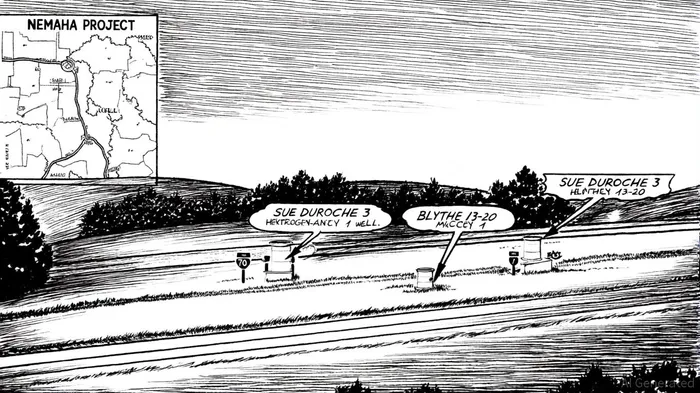







Comentarios
Aún no hay comentarios