
US Hypersonic Push Pressures Pentagon Testing Amid $12B Spend
The US Army announced that it is on track to deploy the first US hypersonic weapon, the ground-launched Dark Eagle missile, by the end of the month. The deployment is expected to support fielding in calendar year 2025, but the system has yet to prove its combat effectiveness according to Pentagon sources. The Pentagon's test office has noted that the missile system has not been rigorously tested for operational effectiveness and maintainability. This delay highlights the urgency to close a capability gap as China and Russia have already deployed hypersonic weapons.
The Pentagon's test office emphasized that the Army has yet to demonstrate the effectiveness of the hypersonic system in real-world testing. Despite previous missed deadlines, the Army remains committed to deploying the Dark Eagle, which can travel at over 3,800 miles per hour. 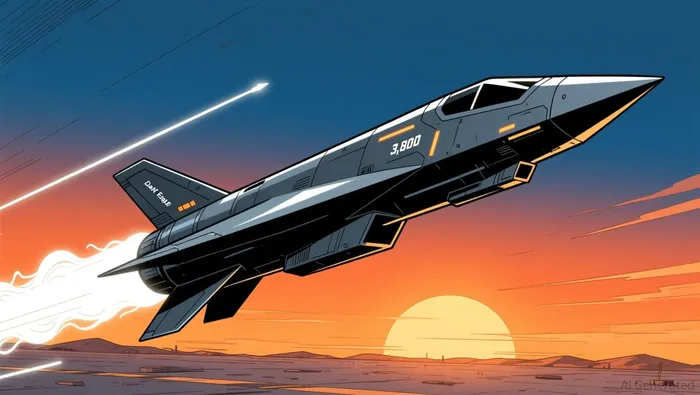 The need for a US hypersonic system is heightened by the fact that Russia has already used such technology in attacks on Ukraine, and China's deployment of similar capabilities adds pressure to the US to match their strategic advancements.
Lt. Gen. Francisco Lozano, who leads the Army's acquisition of advanced weapons, stated that the Dark Eagle has a range of nearly 2,200 miles. This capability allows for strategic reach, such as targeting mainland China from Guam or Tehran from Qatar. The Pentagon has invested over $12 billion since 2018 to develop and deploy a hypersonic system, with the first battery expected to cost $2.7 billion, according to the Government Accountability Office.
Strategic Implications for the US
The deployment of the Dark Eagle represents a significant strategic shift for the US military. The ability to strike targets over long distances at high speeds could enhance the US's deterrence posture against adversaries such as China and Russia. The Army's plan to conduct an operational assessment in the next summer will provide crucial data on the system's effectiveness and suitability. The Pentagon's test office said it will use data from this and previous test events to assess the operational effectiveness, suitability, and survivability of the system.
Defense Secretary Pete Hegseth recently viewed the Dark Eagle launcher firsthand in Huntsville, Alabama. The visit underscores the administration's focus on advanced military capabilities. The Dark Eagle's deployment is part of a broader effort to modernize US defense systems and ensure a credible response to emerging threats. With the operational assessment expected to come 10 months after the system was declared operational, the Army is under pressure to deliver on its commitments while ensuring the system's reliability and effectiveness.
Challenges and Future Steps
Despite the progress, challenges remain in the development and deployment of the Dark Eagle. The system has yet to prove its effectiveness in combat scenarios, and the test office has not given a green light for full operational deployment. The Army's ability to meet its deployment goals will depend on successful testing and validation of the system's performance in various conditions. The operational assessment is expected to be a pivotal moment in determining the Dark Eagle's readiness for real-world use.
The Army's focus on fielding the Dark Eagle by the end of the year reflects the urgency to close the capability gap with other nations. The strategic reach and speed of the missile system make it a valuable asset in modern warfare. As the Army moves forward with its deployment plans, it will need to balance speed with thorough testing and validation to ensure the system is effective in combat scenarios. The continued investment in hypersonic technology signals the US's commitment to maintaining its military superiority in the face of evolving threats.







Comentarios
Aún no hay comentarios