
Hyperliquid's USDH Stablecoin Issuance Rights Attract Institutional Bidders
PorAinvest
domingo, 7 de septiembre de 2025, 7:49 pm ET2 min de lectura
USDC--
Paxos' Proposal
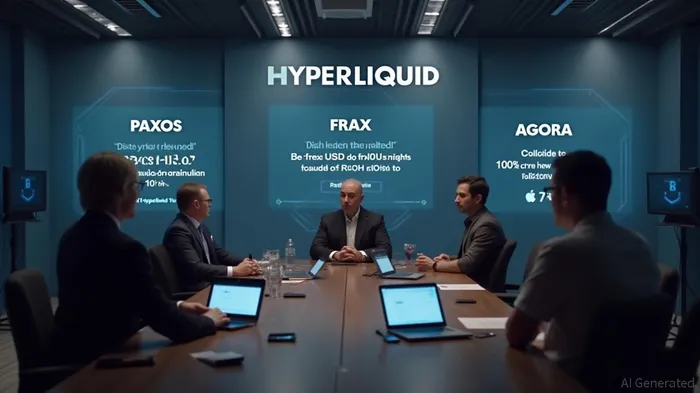
Paxos, a well-established blockchain infrastructure provider, has submitted a proposal to issue USDH for Hyperliquid. The company has highlighted its extensive experience in stablecoin issuance, having issued regulated stablecoins for over seven years. Paxos' proposal emphasizes compliance with the GENIUS Act in the United States and MiCA compliance across Europe. The USDH stablecoin will be backed by high-quality reserves such as US Treasuries, repos, and USDG tokens, and it will be deployed natively on both HyperEVM and HyperCore blockchains.
A key feature of Paxos' proposal is the revenue-sharing model, which allocates 95% of interest earnings from reserves toward HYPE token buybacks. This model aims to create aligned incentives for application builders, validators, and community members. The stablecoin will also support comprehensive funding capabilities, including direct fiat banking rails through SWIFT, ACH, and wire transfers. Paxos plans to integrate HYPE as a tradeable asset within its brokerage infrastructure, providing additional liquidity and institutional access for the governance token [1].
Frax Finance's Proposal
Frax Finance has also submitted a proposal for USDH issuance, positioning its approach as entirely community-driven. Frax's proposal pegs USDH to its own frxUSD at a 1:1 ratio and will be backed by US Treasury securities managed by asset managers like BlackRock. Unlike Paxos, Frax is committed to distributing the full yield from those treasuries directly to Hyperliquid users through on-chain mechanisms. Frax's proposal also emphasizes cross-chain functionality, leveraging its existing multichain infrastructure to connect more than 20 networks. This framework would give USDH native functionality while keeping the stablecoin within the Hyperliquid ecosystem [2].
Agora's Proposal
Agora, a joint bidding team, has assembled a proposal that promises to allocate 100% of net revenue to Hyperliquid. The specifics of Agora's proposal are not as detailed as those of Paxos and Frax, but the team's focus on revenue sharing is a notable feature. The voting process for the winning proposal will take place on September 14th, with the outcome potentially shaping the future of stablecoins in the Hyperliquid ecosystem.
Conclusion
The competition for Hyperliquid's USDH stablecoin issuance rights highlights the growing importance of stablecoins in the digital asset ecosystem. Each proposal offers unique features and benefits, with Paxos emphasizing regulatory compliance and institutional reach, Frax focusing on community-driven yield distribution, and Agora promising significant revenue sharing. The winner of the competition will likely be determined by a combination of technical capabilities, regulatory compliance, and community support.
References
[1] https://cryptonews.com/news/paxos-proposes-to-issue-usdh-stablecoin-for-hyperliquid-with-95-revenue-share-to-hype-buyback/
[2] https://www.btcc.com/en-AU/square/Beincrypto/915963
Several institutions, including Paxos and Frax, are bidding for the issuance rights of Hyperliquid's USDH stablecoin. Paxos proposed compliance with MiCA and GENIUS acts, native deployment on HyperEVM and HyperCore, and using 95% of interest income for HYPE token buyback. Frax proposed pegging USDH to frxUSD at a 1:1 ratio, with 100% of underlying bond yield distributed to Hyperliquid users. Agora also assembled a joint bidding team, promising to allocate 100% of net revenue to Hyperliquid. Voting for the winner will take place on September 14th.
In a significant development for the cryptocurrency and DeFi sectors, several major players are vying for the rights to issue Hyperliquid's USDH stablecoin. The competition underscores the growing importance of stablecoins in the digital asset ecosystem and the potential for these tokens to drive mainstream adoption.Paxos' Proposal
Paxos, a well-established blockchain infrastructure provider, has submitted a proposal to issue USDH for Hyperliquid. The company has highlighted its extensive experience in stablecoin issuance, having issued regulated stablecoins for over seven years. Paxos' proposal emphasizes compliance with the GENIUS Act in the United States and MiCA compliance across Europe. The USDH stablecoin will be backed by high-quality reserves such as US Treasuries, repos, and USDG tokens, and it will be deployed natively on both HyperEVM and HyperCore blockchains.
A key feature of Paxos' proposal is the revenue-sharing model, which allocates 95% of interest earnings from reserves toward HYPE token buybacks. This model aims to create aligned incentives for application builders, validators, and community members. The stablecoin will also support comprehensive funding capabilities, including direct fiat banking rails through SWIFT, ACH, and wire transfers. Paxos plans to integrate HYPE as a tradeable asset within its brokerage infrastructure, providing additional liquidity and institutional access for the governance token [1].
Frax Finance's Proposal
Frax Finance has also submitted a proposal for USDH issuance, positioning its approach as entirely community-driven. Frax's proposal pegs USDH to its own frxUSD at a 1:1 ratio and will be backed by US Treasury securities managed by asset managers like BlackRock. Unlike Paxos, Frax is committed to distributing the full yield from those treasuries directly to Hyperliquid users through on-chain mechanisms. Frax's proposal also emphasizes cross-chain functionality, leveraging its existing multichain infrastructure to connect more than 20 networks. This framework would give USDH native functionality while keeping the stablecoin within the Hyperliquid ecosystem [2].
Agora's Proposal
Agora, a joint bidding team, has assembled a proposal that promises to allocate 100% of net revenue to Hyperliquid. The specifics of Agora's proposal are not as detailed as those of Paxos and Frax, but the team's focus on revenue sharing is a notable feature. The voting process for the winning proposal will take place on September 14th, with the outcome potentially shaping the future of stablecoins in the Hyperliquid ecosystem.
Conclusion
The competition for Hyperliquid's USDH stablecoin issuance rights highlights the growing importance of stablecoins in the digital asset ecosystem. Each proposal offers unique features and benefits, with Paxos emphasizing regulatory compliance and institutional reach, Frax focusing on community-driven yield distribution, and Agora promising significant revenue sharing. The winner of the competition will likely be determined by a combination of technical capabilities, regulatory compliance, and community support.
References
[1] https://cryptonews.com/news/paxos-proposes-to-issue-usdh-stablecoin-for-hyperliquid-with-95-revenue-share-to-hype-buyback/
[2] https://www.btcc.com/en-AU/square/Beincrypto/915963


Divulgación editorial y transparencia de la IA: Ainvest News utiliza tecnología avanzada de Modelos de Lenguaje Largo (LLM) para sintetizar y analizar datos de mercado en tiempo real. Para garantizar los más altos estándares de integridad, cada artículo se somete a un riguroso proceso de verificación con participación humana.
Mientras la IA asiste en el procesamiento de datos y la redacción inicial, un miembro editorial profesional de Ainvest revisa, verifica y aprueba de forma independiente todo el contenido para garantizar su precisión y cumplimiento con los estándares editoriales de Ainvest Fintech Inc. Esta supervisión humana está diseñada para mitigar las alucinaciones de la IA y garantizar el contexto financiero.
Advertencia sobre inversiones: Este contenido se proporciona únicamente con fines informativos y no constituye asesoramiento profesional de inversión, legal o financiero. Los mercados conllevan riesgos inherentes. Se recomienda a los usuarios que realicen una investigación independiente o consulten a un asesor financiero certificado antes de tomar cualquier decisión. Ainvest Fintech Inc. se exime de toda responsabilidad por las acciones tomadas con base en esta información. ¿Encontró un error? Reportar un problema


SOBRE NOSOTROS
Nuestra historiaAutores de noticiasBase de conocimientosPolítica de privacidadTérmino de usoDescargo de responsabilidad de corretaje de tercerosTérminos de uso de AIMEDivulgaciones de riesgos de AInvest AICarrerasCONTÁCTENOS
Email: support@ainvest.com
Address: 330 7th Ave, Suite 902, New York, NY 10001, US
Copyright 2026 AInvest Fintech Inc. All rights reserved.


Comentarios
Aún no hay comentarios