
Hyperfine Swoop® System and the Future of Decentralized Diagnostics in Europe
The European healthcare landscape is undergoing a transformative shift toward decentralized diagnostics, driven by the need for faster, more accessible, and cost-effective medical imaging solutions. At the forefront of this revolution is the HyperfineHYPR-- Swoop® System, an AI-powered portable MRI that is redefining the boundaries of point-of-care diagnostics. For investors, the convergence of regulatory tailwinds, clinical validation, and strategic market expansion positions Hyperfine as a compelling opportunity in the portable medical imaging sector.
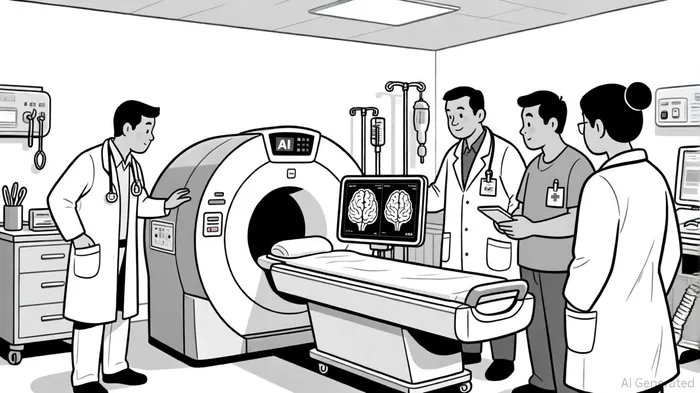
A Market on the Rise: Portable Imaging's Strategic Edge
The global portable medical imaging market is projected to grow at a compound annual growth rate (CAGR) of 7%, reaching USD 25 billion by 2033, fueled by advancements in AI, miniaturization, and the rising demand for point-of-care diagnostics, according to a Hyperfine press release. In Europe, where chronic diseases and an aging population are intensifying healthcare pressures, portable imaging technologies are becoming indispensable. Ultrasound and X-ray devices dominate the market, but the emergence of portable MRI systems like the Swoop® is addressing critical gaps in neurological and emergency care, as noted in a Hyperfine report.
The Swoop® system's unique value proposition lies in its ability to deliver high-resolution MR brain imaging in non-traditional settings. Unlike conventional MRI scanners, which require specialized rooms and hours of planning, the Swoop® is lightweight, battery-powered, and can be operated by non-technical staff. This portability is particularly vital in stroke care, where rapid diagnosis can reduce mortality rates by up to 30%, the Hyperfine report noted.
Regulatory and Strategic Momentum in Europe
Hyperfine's expansion into Europe has been marked by significant regulatory and commercial milestones. In October 2024, the company secured CE approval for its ninth-generation AI-powered software under the European Medical Device Regulation (MDR), ensuring compliance and enabling broader adoption across the continent, according to a company announcement. This approval followed a strategic agreement with UniHA, France's largest public hospital procurement body, which referenced the Swoop® system in a framework agreement covering over 1,500 public hospitals. This agreement eliminates procurement barriers, allowing hospitals to purchase the system without individual tenders-a first for portable MRI in France, as reported in a FinancialContent article.
The company's European strategy extends beyond France. Hyperfine has partnered with distributors in thirteen countries, including the UK and Italy, to accelerate market penetration. These partnerships are critical in overcoming the fragmented nature of European healthcare systems, where adoption often hinges on localized procurement processes and clinical validation, according to a NeuroNews article.
Clinical Validation and Real-World Impact
The Swoop® system's efficacy has been rigorously tested, with clinical studies demonstrating its ability to detect 90% of acute infarcts as accurately as high-field MRI while reducing scan time by over 50%, as noted in the Hyperfine report. These results, presented at the 2025 International Stroke Conference, underscore the system's potential to transform emergency stroke care. Additionally, the device has shown 100% sensitivity in detecting ARIA (amyloid-related imaging abnormalities) in Alzheimer's patients undergoing amyloid-targeting therapies, a critical application as the global burden of dementia rises, the Hyperfine press release reported.
Such clinical evidence is not only validating the Swoop® system's utility but also addressing payer and provider hesitancy. For instance, France's inclusion of the system in its national referencing agreement reflects growing confidence in its cost-effectiveness and diagnostic reliability. The FinancialContent article also highlighted this growing confidence.
Strategic Growth Opportunities
For investors, Hyperfine's trajectory highlights three key growth levers:
1. Regulatory Scalability: The CE approval and UniHA agreement provide a blueprint for replicating success in other European markets, where regulatory harmonization under the MDR is streamlining approvals.
2. Clinical Differentiation: The Swoop® system's AI-driven workflow and portability position it to capture market share in emergency departments, long-term care facilities, and rural hospitals.
3. Partnership Ecosystem: Collaborations with local distributors and healthcare providers are essential for navigating Europe's diverse reimbursement models and clinical workflows.
Conclusion: A Catalyst for Decentralized Diagnostics
The Hyperfine Swoop® System exemplifies how innovation in portable imaging can address systemic inefficiencies in healthcare delivery. By combining regulatory agility, clinical rigor, and strategic partnerships, Hyperfine is not only capitalizing on the portable imaging boom but also redefining the economics of diagnostic care. For investors, the company's progress in Europe-where decentralized diagnostics are poised to grow at 5.1% CAGR through 2030, according to a MarkWide Research analysis-represents a high-conviction opportunity in a sector primed for disruption.





Comentarios
Aún no hay comentarios