
Hydrogen Takes Flight: How Simulation is Driving the Future of Sustainable Aviation
The aviation industry's race to decarbonize is entering a new phase, and Turbotech and AnsysANSS-- have just delivered a critical milestone. Their collaboration on hydrogen-powered propulsion systems—backed by advanced simulation technologies—could redefine the economics of sustainable flight. This breakthrough isn't just about engines; it's a blueprint for how software-driven innovation is accelerating the shift to zero-emission aviation. For investors, the implications are clear: simulation tools like Ansys's (ANSS) are becoming the backbone of this transition, while hydrogen infrastructure partners like Air Liquide stand to capture outsized gains.
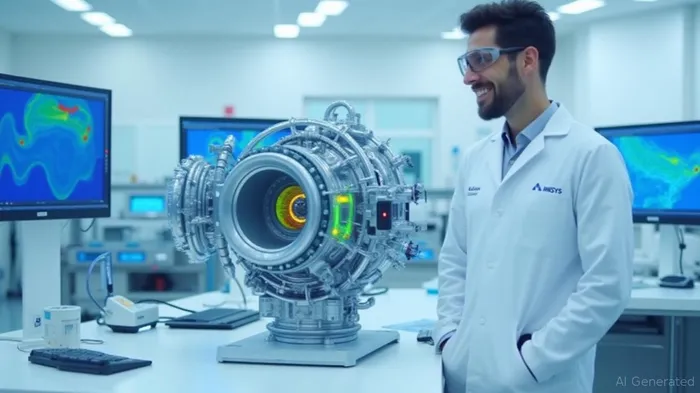
The Breakthrough: Simulation as the Catalyst
Turbotech's achievement—a scalable hydrogen-fueled turboprop engine for light aircraft—is a technical tour de force. But what makes it transformative is how it was developed. Instead of relying on costly physical prototyping, Ansys's Fluent fluid simulation software enabled Turbotech to redesign turbine components virtually. This process slashed development timelines and costs while achieving near-perfect combustion efficiency. For example, Ansys's tools allowed Turbotech to:
- Validate a regenerative turbine design that reduces heat loss by 20%
- Optimize nozzle geometries to maintain structural integrity during 30-hour hydrogen burn tests
- Eliminate the need for large-scale supercomputing by running simulations on standard workstations
The result? A propulsion system that produces zero carbon emissions, with a power-to-weight ratio competitive with traditional fuels. Turbotech's CEO, Damien Fauvet, calls this a “game-changer for light aviation,” but the real revolution lies in the methodology. As Ansys Senior VP Walt Hearn notes, “Simulation isn't just a timesaver—it's the only way to tackle the complexity of hydrogen combustion at scale.”
Why This Matters for Investors
This partnership isn't an isolated success—it's a paradigm shift. The aviation sector has long struggled with hydrogen's challenges: cryogenic storage, combustion instability, and the need for lightweight components. Turbotech and Ansys have solved these through simulation-driven design, creating a replicable template for other players. Here's why investors should pay attention:
1. Lower Barriers to Hydrogen Adoption
The ability to model hydrogen combustion and turbine dynamics in software reduces the risk for manufacturers. This opens the door to retrofitting existing aircraft fleets—a $10 billion+ opportunity by 2030—as Turbotech's engine can be adapted to platforms like Elixir Aircraft's light planes.
2. Software as the New Oil
Ansys isn't just a tools supplier—it's a systems integrator. Its digital thread approach, which links component simulations to full-system testing, creates defensible IP. With 30% of aerospace R&D now simulation-based (per McKinsey), ANSS's margins are likely to expand as more firms adopt its platform.
3. Infrastructure Plays Multiply
Hydrogen's viability hinges on storage and distribution. Air Liquide's role in supplying cryogenic tanks positions it as a critical partner, while Clean Aviation-funded projects like BeautHyFuel highlight policy tailwinds.
The Investment Thesis
This isn't just about Turbotech—it's about the entire ecosystem. Here's where to allocate capital:
- Ansys (ANSS): Buy the leader in simulation software. Its 40% revenue exposure to aerospace/defense and 20% annual growth rate since 2020 suggest it's still underappreciated. The stock trades at 35x forward earnings, but its role in enabling hydrogen adoption justifies a premium.
- Hydrogen Infrastructure: Air Liquide (AI.PA) leads in cryogenic storage, with projects like the $2.3B HyDeal Ambition plant in Spain.
- Light Aviation OEMs: Elixir Aircraft and Daher (both privately held) are beneficiaries of Turbotech's retrofit strategy; consider public plays like Cirrus Aircraft (if it goes public) or suppliers like UTC Aerospace.
Risks and Considerations
- Regulatory Hurdles: Certification of hydrogen systems is still uncharted territory. Turbotech's collaboration with DGAC and Daher is a plus, but delays could occur.
- Infrastructure Costs: Scaling cryogenic hydrogen refueling stations will require massive capital—government subsidies are a key wildcard.
- Battery Competition: While hydrogen excels in long-haul/VTOL applications, lithium-ion remains cheaper for short-haul flights.
Conclusion: The Hydrogen Dawn is Here
The Turbotech-Ansys collaboration proves hydrogen isn't a distant dream—it's a near-term reality for light aviation. Simulation isn't just accelerating this shift; it's making it economically feasible. For investors, this means two clear plays: Ansys as the software enabler and hydrogen infrastructure leaders like Air Liquide. The aerospace sector is undergoing a structural shift toward sustainability, and those who bet on simulation-driven innovation will likely reap the rewards.
As Turbotech's engine moves toward commercialization, the message to investors is clear: hydrogen-powered flight isn't just a green initiative—it's a high-growth, software-powered revolution.





Comentarios
Aún no hay comentarios