
Hydrogen as the Next Energy Transition Megatrend: Strategic Partnerships Driving Scalable Hydrogen Infrastructure
The global energy transition is entering a pivotal phase, with hydrogen emerging as a cornerstone of decarbonization strategies. As nations and corporations grapple with the dual imperatives of reducing emissions and ensuring energy security, hydrogen's versatility as a clean energy carrier is gaining unprecedented traction. Central to this shift is the role of strategic partnerships in scaling infrastructure, reducing costs, and accelerating commercialization. The collaboration between Hyundai Motor Group and Air Liquide exemplifies how such alliances are catalyzing the hydrogen economy, offering compelling investment opportunities in hydrogen-focused equities and infrastructure plays.
Strategic Alliances: The Catalyst for Hydrogen Adoption
Hyundai and Air Liquide's partnership underscores the importance of cross-industry collaboration in overcoming hydrogen's infrastructure and supply chain challenges. By combining Hyundai's expertise in fuel cell technology with Air Liquide's global hydrogen production and distribution capabilities, the two companies are accelerating the deployment of hydrogen refueling networks and low-carbon hydrogen supply chains. For instance, their joint ventures-such as Hynet and Kohygen-have already expanded hydrogen refueling stations in key markets, while Air Liquide's recent inauguration of a 450-bar filling center in Daesan, South Korea, highlights advancements in storage and distribution efficiency.
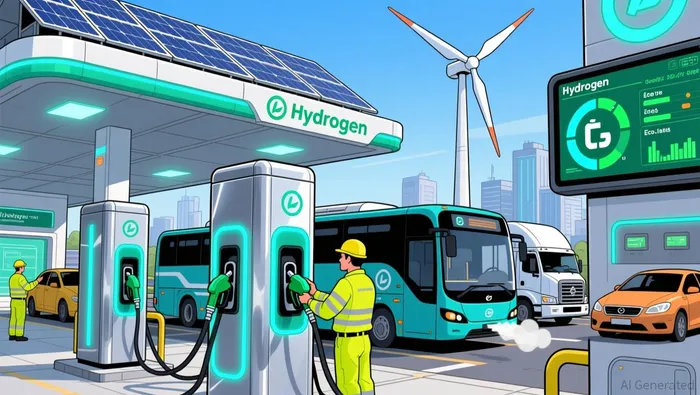 This partnership is not merely operational but strategic. As co-chairs of the Hydrogen Council, Hyundai and Air Liquide are leveraging their influence to advocate for policy frameworks and international cooperation that support hydrogen's growth. Their efforts align with broader industry trends: over 60 governments have adopted hydrogen strategies, and more than 13,000 organizations are investing in hydrogen-related projects. Such alignment between corporate action and policy momentum reduces regulatory uncertainty, a critical factor for long-term investors.
FCEV Commercialization: A Pathway to Market Viability
Fuel cell electric vehicles (FCEVs) are a linchpin of hydrogen's commercialization. Hyundai's deployment of over 2,000 hydrogen buses and 37,000 passenger FCEVs in South Korea demonstrates the scalability of hydrogen mobility solutions. These vehicles are particularly well-suited for heavy-duty and long-range applications, where battery-electric alternatives face limitations in weight and recharging time.
The economic case for FCEVs is strengthening. According to a report by the International Energy Agency, hydrogen's role in decarbonizing hard-to-abate sectors-such as steel, cement, and long-distance transport-is expected to drive demand for hydrogen-powered solutions. For investors, this signals a growing market for hydrogen infrastructure, including refueling stations and electrolyzers, which are projected to benefit from sustained capital inflows.
Market Growth and Investment Potential
The hydrogen energy market is poised for exponential growth. The green hydrogen segment alone is forecasted to expand from USD 7.98 billion in 2024 to USD 60.56 billion by 2030, with a compound annual growth rate (CAGR) of 38.5% according to Grand View Research. This surge is driven by declining renewable energy costs, advancements in electrolyzer technology, and aggressive government subsidies. For example, the U.S. Department of Energy's Hydrogen Earth Shot Challenge aims to reduce hydrogen production costs to USD 1–2 per kilogram by 2025, a target that could unlock widespread adoption according to Energy.gov.
Infrastructure development is another high-growth area. The global hydrogen market is expected to reach USD 312.90 billion by 2030, growing at a CAGR of 6.8% from USD 225.12 billion in 2025 according to Markets and Markets. This growth is underpinned by regional initiatives such as India's National Green Hydrogen Mission and the European Union's hydrogen funding programs, which are prioritizing infrastructure expansion. Investors in hydrogen infrastructure plays-such as refueling station operators and electrolyzer manufacturers-stand to benefit from this tailwind.
Overcoming Challenges Through Collaboration
Despite its promise, hydrogen faces hurdles, including high production costs and limited infrastructure. Green hydrogen currently accounts for less than 1% of global production, and electrolyzer costs remain a barrier. However, strategic partnerships like Hyundai and Air Liquide's are addressing these challenges through innovation and scale. For instance, their joint focus on low-carbon hydrogen production and supply chain optimization is reducing costs and improving efficiency.
Government support is also critical. The Asian Development Bank's USD 104 million investment in Georgia's green hydrogen and energy storage systems illustrates how multilateral institutions are de-risking projects and attracting private capital. Such initiatives are essential for scaling hydrogen infrastructure and ensuring a level playing field for early adopters.
Conclusion: A Compelling Investment Thesis
Hydrogen's transition from niche to mainstream is being accelerated by strategic partnerships that address technical, economic, and regulatory barriers. The Hyundai-Air Liquide alliance is a prime example of how cross-industry collaboration can drive scalable infrastructure and commercialization. For investors, the confluence of market growth, policy support, and technological innovation presents a compelling case for hydrogen-focused equities and infrastructure plays. While challenges remain, the momentum behind hydrogen is undeniable-and those who position themselves early stand to reap significant rewards.







Comentarios
Aún no hay comentarios