
Hydrogen's Decentralized Future: Sumitomo and Independence Hydrogen Pave the Way for Scalable Energy Transition
The global hydrogen economy is at a crossroads. While demand for low-carbon energy solutions is surging, scalability and cost barriers persist. Enter Sumitomo Corporation, which has just placed a bold bet on a U.S.-based startup—Independence Hydrogen—to unlock the potential of decentralized hydrogen (DeHy®) infrastructure. This partnership, announced in July 2025, could redefine how hydrogen is produced, distributed, and adopted, offering investors a rare opportunity to capitalize on a niche yet critical segment of the energy transition.
The DeHy® Model: Addressing Hydrogen's Scalability Bottlenecks
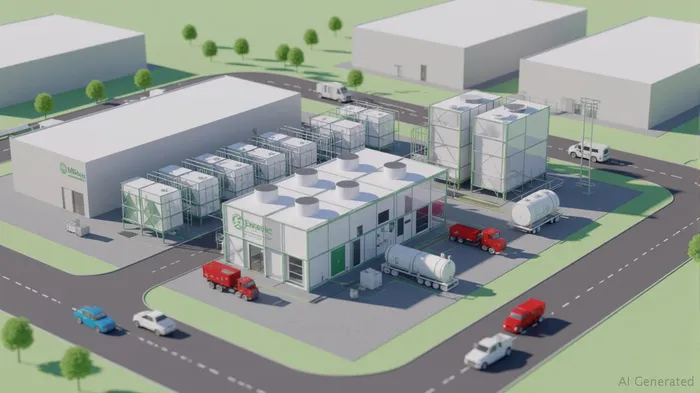
Independence Hydrogen's DeHy® business model is a direct response to two systemic challenges in the hydrogen sector: reliability and cost efficiency. Instead of relying on centralized, large-scale production facilities—which often face delays and high capital costs—the DeHy® approach prioritizes smaller, localized hubs. These hubs repurpose waste hydrogen, previously vented into the atmosphere as an industrial byproduct, into fuel-grade hydrogen.
This innovation reduces dependency on greenfield projects and slashes the time-to-market for hydrogen supply chains. For instance, Independence Hydrogen's facility in Petersburg, Virginia, already recycles waste hydrogen for customers in material handling and mobility sectors. The company's Valdosta, Georgia, project—slated to begin operations in October 2026—will produce 7 metric tons of clean hydrogen daily, with a near-zero carbon intensity score of 1.1 kg CO2e/kg H2.
Why Sumitomo's Investment Matters
Sumitomo Corporation, a Japanese multinational with deep expertise in global energy markets, is no stranger to strategic bets on emerging technologies. Its $X million investment (exact figure pending disclosure) in Independence Hydrogen signals confidence in three critical advantages:
- Global Reach Meets Local Precision: Sumitomo's network and capital will enable Independence Hydrogen to replicate its DeHy® model beyond the U.S., targeting underserved markets in Asia and Europe.
- Risk Mitigation via Decentralization: Smaller, distributed facilities are less vulnerable to supply chain disruptions or geopolitical volatility compared to megaprojects.
- Veteran-Led Innovation: The partnership's ties to Hivers & Strivers—a venture capital firm that has invested over $80 million in veteran-founded ventures—bring operational rigor and leadership talent honed in high-stakes environments.
The synergy with Suburban PropaneSPH--, which holds a 25% equity stake in Independence Hydrogen, further strengthens this ecosystem. Suburban's nationwide propane distribution network (spanning 42 U.S. states) provides a ready-made logistical backbone for hydrogen delivery. While the companies have not yet detailed infrastructure modifications, the integration of hydrogen into Suburban's existing safety protocols and customer relationships could accelerate adoption in sectors like material handling and remote infrastructure.
Investment Thesis: Niche Dominance with Near-Term Catalysts
For investors, the Sumitomo-Independence Hydrogen partnership offers exposure to a low-carbon infrastructure play with clear execution milestones:
- Valdosta's 2026 In-Service Date: A tangible milestone demonstrating the DeHy® model's feasibility.
- Government Incentives: The Inflation Reduction Act (IRA) and state-level clean hydrogen mandates create a tailwind for projects with low carbon intensity scores.
- Scalability: The modular design of DeHy® hubs allows rapid replication, reducing the risk of overcapitalization.
Risks to Consider
- Regulatory Uncertainty: Hydrogen tax credits and permitting timelines could slow deployment.
- Competition: Blue hydrogen (from natural gas with carbon capture) and green hydrogen (from renewables) remain cost-competitive in certain regions.
Conclusion: A Blueprint for Decarbonization, Built to Scale
Sumitomo's bet on Independence Hydrogen is more than a corporate partnership—it's a blueprint for how decentralized energy systems can outpace centralized alternatives in the race to net-zero. By leveraging waste streams, veteran expertise, and existing infrastructure, the collaboration addresses two existential threats to hydrogen's growth: cost and time.
For investors seeking to profit from the energy transition, this partnership offers a compelling entry point into a sector primed for growth. With Sumitomo's global clout and Independence Hydrogen's execution track record, this could be one of the most scalable—and overlooked—opportunities in the hydrogen economy.
Investment Recommendation: Consider a staged allocation to Sumitomo Corporation (ticker: 8053.T) and monitor Suburban Propane (SPH) for hydrogen-related catalysts. For thematic exposure, explore hydrogen ETFs like the VanEck Hydrogen ETF (HYZN) alongside these equity picks.
Note: The Valdosta project's success and regulatory approvals will be key near-term catalysts. Investors should track progress updates from Independence Hydrogen and Sumitomo's Q3 2025 earnings reports.







Comentarios
Aún no hay comentarios