
Hyatt's Strategic Expansion in India's Underserved Markets: Untapped Luxury Hospitality Growth and ESG-Aligned Real Estate Opportunities
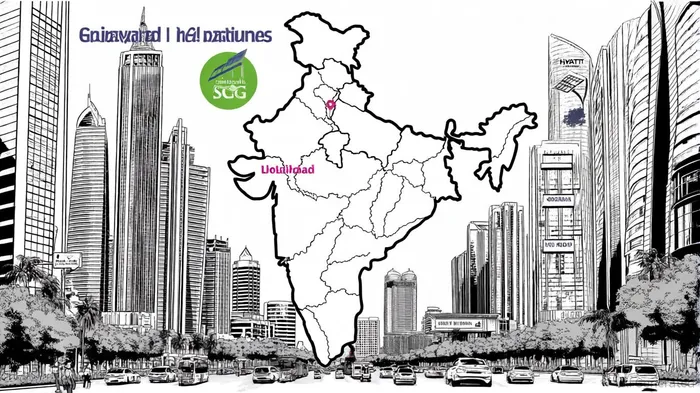
Hyatt's aggressive expansion into India's underserved markets represents a masterstroke in aligning luxury hospitality growth with ESG-driven real estate opportunities. By 2025, the company plans to open seven new hotels across cities like Ghaziabad, Kochi, Bhopal, and Jaipur, with a long-term goal of reaching 100 properties in India by 2030, per Hyatt's 2025 openings. This strategy not only taps into the country's rising middle class and evolving travel preferences but also leverages India's growing emphasis on sustainable development. For investors, the intersection of Hyatt's brand strength and India's ESG-aligned real estate trends presents a compelling case for long-term value creation.
Strategic Market Selection: Tier-II Cities and Beyond
Hyatt's 2025 expansion prioritizes a mix of emerging and established destinations, reflecting a nuanced understanding of India's travel landscape. Cities like Ghaziabad and Bhopal, classified as tier-II markets, offer untapped potential due to their growing infrastructure and rising disposable incomes. Meanwhile, Kochi and Jaipur cater to both leisure and cultural tourism, with Kochi's coastal appeal and Jaipur's historical allure drawing domestic and international visitors - a diversification that mitigates risk while capitalizing on India's urbanization wave, where tier-II cities are projected to contribute 40% of the country's GDP by 2030, according to a report by the India Brand Equity Foundation.
Hyatt's choice of locations also aligns with India's ESG-driven urban planning. For instance, Ghaziabad's issuance of India's first Green Municipal Bond-raising ₹150 crore for a Tertiary Sewage Treatment Plant-demonstrates how underserved cities are adopting sustainable infrastructure to attract investment. Such initiatives create a favorable ecosystem for luxury hotels, which require reliable utilities and eco-conscious infrastructure to operate efficiently.
ESG Integration: A Competitive Edge in Luxury Hospitality
Hyatt's ESG initiatives are not merely compliance exercises but strategic differentiators. The company's "World of Care" program emphasizes three pillars: Caring for the Planet, Caring for People, and Caring for Responsible Business. Globally, Hyatt has surpassed its 2025 DE&I goals, with Black suppliers accounting for one-third of diverse- and women-owned supplier spend-a metric highlighted in Hyatt's environmental report that enhances supply chain resilience and aligns with India's "Make in India" push for local sourcing. Locally, Hyatt's INSPIRIT Mentoring Program in India has engaged over 150 participants, fostering female leadership in a sector where women hold only 28% of senior roles, per a 2024 NASSCOM report.
In India, this ESG focus manifests in projects like the Grand Hyatt Kochi Bolgatty, which has pioneered on-site water bottling to reduce single-use plastic, installed solar panels for energy generation, and adopted banana leaves for events to support local traditions. These efforts have earned the hotel accolades such as the Best Green Wedding Gold Award, underscoring consumer demand for sustainable luxury.
Real Estate ESG Metrics: A Goldmine for Investors
India's real estate sector is rapidly adopting ESG metrics, creating fertile ground for Hyatt's expansion. Developers in cities like Bhopal and Kochi are leveraging green building certifications (LEED, IGBC) to reduce operational costs and attract environmentally conscious tenants. For example, Brookfield India Real Estate Trust (BIRET) reported a 47% reduction in Scope 1 and 2 emissions intensity since 2020, with 27% of its energy now sourced from renewables-a trajectory that mirrors Hyatt's own sustainability targets, per the Mission Net Zero report.
The Global Investors Summit 2025 further highlighted Bhopal's potential, with Madhya Pradesh securing ₹26.61 lakh crore in investments, including ₹5.72 lakh crore in renewable energy projects, according to GIS 2025 in Bhopal. Such inflows are likely to drive demand for luxury hospitality infrastructure, as investors seek returns in sectors that align with India's net-zero goals. Similarly, Kochi's 130,000 sq ft of green space at the Grand Hyatt Bolgatty exemplifies how luxury assets can coexist with environmental stewardship, a critical factor in a market where 68% of green office space is concentrated in tier-I cities, per Future-proofing cities.
The Investment Thesis: Growth, ESG, and Resilience
Hyatt's India strategy is a blueprint for sustainable luxury hospitality. By targeting underserved cities with strong ESG foundations, the company is future-proofing its portfolio against regulatory risks and shifting consumer preferences. For investors, the synergy between Hyatt's brand equity and India's ESG-aligned real estate trends offers dual benefits: capital appreciation from a growing luxury market and the reputational value of supporting sustainable development.
As India's hospitality sector is projected to grow at a CAGR of 12% through 2030, per a 2025 McKinsey report, Hyatt's early mover advantage in tier-II cities positions it to capture a disproportionate share of this growth. The key for investors will be to monitor how effectively Hyatt scales its ESG initiatives across its expanding portfolio-a challenge it appears well-equipped to meet.







Comentarios
Aún no hay comentarios