
Hurricane Season Volatility and Strategic Positioning: Infrastructure and Insurance Sectors in the Eye of the Storm
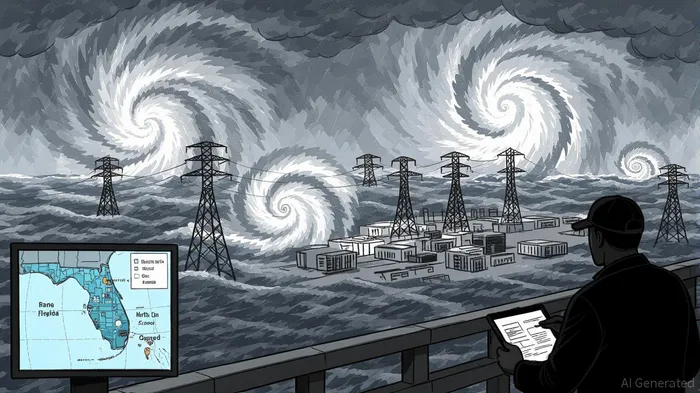
As the 2025 Atlantic hurricane season approaches its climatological peak, investors are closely monitoring the interplay between meteorological anomalies and sector-specific preparedness. While the first half of September has seen an unusually quiet Atlantic—marked by dry air, Saharan dust plumes, and strong wind shear—forecasters warn that conditions could shift dramatically in the coming weeks. By late September, warmer-than-average sea surface temperatures in the Gulf of Mexico and Caribbean Sea could fuel rapid storm development, creating a volatile backdrop for infrastructure and insurance markets[1].
Infrastructure: Building Resilience in a Climate of Uncertainty
Infrastructure companies are proactively addressing vulnerabilities in lifeline systems, recognizing that even a single major hurricane could disrupt energy grids, water supplies, and transportation networks. In Florida, the Naples Airport, Lee County Utilities, and Fort Myers have secured $11 million through the Resilient Florida Program to expand wellfields and restore water reclamation facilities, ensuring continuity during extreme weather events[2]. These projects are part of a broader trend toward targeted investments in coastal and inland defenses, with technology such as AI-driven predictive modeling and digital twins playing a critical role in optimizing resource allocation[3].
North Carolina, still recovering from the 2024 impacts of Hurricane Helene, has allocated $5 million to deploy mobile and permanent microgrids. These energy resilience hubs are designed to maintain power for critical services during outages, reflecting a strategic shift toward decentralized, community-focused infrastructure[4]. Such initiatives underscore the growing importance of climate adaptation in capital planning, with investors increasingly prioritizing projects that align with long-term resilience goals.
Insurance: Navigating Risk Through Innovation and Collaboration
The insurance sector, meanwhile, is recalibrating its risk models and underwriting strategies to account for the 2025 season's heightened uncertainty. Property and casualty (P&C) insurers are leveraging advanced analytics to assess hyper-local climate risks, enabling more precise capital allocation and coverage design[5]. For example, Florida's stringent post-Katrina building codes—enforced through collaboration between insurers, regulators, and builders—have significantly reduced property damage severity, offering a blueprint for risk mitigation[6].
Reinsurance providers like Munich Re are emphasizing "risk-adequate pricing" and expanding capacity to address potential losses at higher coverage layers[7]. This approach is critical as the Florida Hurricane Catastrophe Fund faces an $8 billion funding gap, necessitating post-event bonding to cover liabilities[8]. Additionally, alternative risk transfer mechanisms—such as parametric insurance and catastrophe bonds—are gaining traction, offering insurers faster payouts and diversified capital sources[9].
Legal and tort reforms are also reshaping the insurance landscape. By curbing claims inflation and litigation volatility, these reforms create a more predictable environment for insurers, encouraging market stability in high-risk regions[10]. As climate change amplifies disaster frequency and severity, the sector's pivot toward proactive collaboration—partnering with infrastructure developers and policymakers—positions it as a key player in systemic resilience-building[11].
Strategic Implications for Investors
For investors, the 2025 hurricane season highlights the dual importance of sector-specific preparedness and cross-industry collaboration. Infrastructure firms with exposure to resilience projects—particularly in hurricane-prone regions—offer compelling long-term value, while insurers adopting cutting-edge risk modeling and reinsurance strategies are well-positioned to navigate volatility. However, risks persist, including funding shortfalls in state catastrophe funds and the potential for rapid storm development in late September.
As the Atlantic hurricane season enters its final stretch, the coming weeks will test the effectiveness of these strategic investments. For now, the message is clear: in an era of climate uncertainty, resilience is not just a necessity—it is an opportunity.







Comentarios
Aún no hay comentarios