
Hurricane Preparedness Week: CenterPoint Energy’s $550M Grid Overhaul Poised to Weather 2025 Storms
As Hurricane Preparedness Week underscores the urgency of climate resilience, CenterPoint EnergyCNP-- (CNP) is making bold moves to fortify its infrastructure against the 2025 storm season. With a $550 million investment in grid hardening and advanced technology, the utility giant is positioning itself as a leader in disaster readiness—a strategy that could shield its bottom line while safeguarding customers in one of the U.S.’s most vulnerable regions.
Infrastructure Overhaul: Steeling the Grid Against Storms
At the core of CenterPoint’s 2025 plan is a multi-pronged infrastructure upgrade. The company is replacing 25,000 traditional utility poles with storm-resilient alternatives, clearing 4,000 miles of vegetation near power lines, and burying 400 miles of overhead lines underground—actions designed to reduce damage from wind, flooding, and falling debris. By June 1, 2025, 4,850 automated reliability devices will be deployed, enabling the grid to self-heal during outages and slashing restoration times.
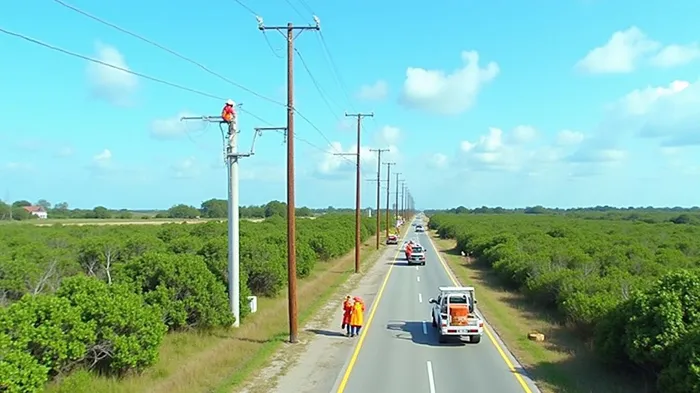
These measures are no small feat. Phase Two of the Greater Houston Resiliency Initiative (GHRI), launched in 2024, is already 70% complete. To date, 350 miles of lines have been undergrounded, 17,500 poles upgraded, and 2,900 automated devices installed. The goal? Reduce annual outage minutes by over 125 million—a critical metric for maintaining customer trust and minimizing revenue loss during prolonged outages.
Tech & Partnerships: The AI-Driven Edge
CenterPoint isn’t just burying lines; it’s leveraging cutting-edge tech to predict and mitigate risks. Partnerships with firms like Technosylva and Neara are fueling AI-driven platforms that model damage scenarios in real time. Drones now inspect power corridors, while predictive analytics guide vegetation management—a proactive approach that could cut emergency response costs by up to 30%, according to internal estimates.
The company’s upgraded Outage Tracker—a bilingual, cloud-based system updated every five minutes—also signals a commitment to transparency. Combined with expanded text alerts and a 165% boost in call center capacity, these tools aim to reduce customer frustration during crises, a key factor in regulatory and public sentiment.
The Financial Case: Risk Mitigation Meets Growth
Investors should note that resilience isn’t just a cost—it’s an investment. CenterPoint’s $5 billion infrastructure plan through 2028 (including $21 billion by 2030) positions it to capitalize on federal and state subsidies for climate-resilient utilities. Meanwhile, its $550 million 2025 spend aligns with the Biden administration’s Infrastructure Investment and Jobs Act, which offers grants for utilities modernizing grids.
While CNP’s stock has lagged peers like Dominion Energy (D) in recent years, its proactive stance on resilience could soon pay dividends. Utilities with robust storm preparedness typically see lower insurance premiums and fewer regulatory penalties—a competitive advantage as climate volatility rises.
Community & Long-Term Strategy: Building Trust, Building Value
Beyond infrastructure, CenterPoint’s focus on community partnerships—such as its “Plant Smart, Plant Safe” tree-planting initiative with Trees for Houston—bolsters its social license to operate. These programs not only reduce physical risks (e.g., trees toppling onto lines) but also improve public perception, a critical asset for rate hikes and regulatory approvals.
Looking ahead, the company’s 2030 vision—a $21 billion grid with flood-resistant substations, elevated poles, and enhanced cybersecurity—aligns with Houston’s status as an energy and economic hub. As storms grow fiercer, utilities like CenterPoint that blend physical hardening with tech-driven agility will likely outperform peers in both reliability and investor returns.
Conclusion: A Resilient Grid = A Resilient Bottom Line
CenterPoint Energy’s 2025 hurricane preparations aren’t just about avoiding outages—they’re about future-proofing its business. With $550 million allocated to grid upgrades this year alone, and a long-term $21 billion roadmap, the utility is turning climate risk into strategic advantage. The data speaks for itself: reducing outage minutes by 125 million annually could save millions in lost revenue and regulatory fines, while its tech partnerships and community programs build the kind of goodwill that fuels stable cash flows.
For investors, the question isn’t whether hurricanes will hit—but whether CenterPoint’s investments will pay off. With federal subsidies flowing and customer expectations rising, this could be the year the company transitions from a laggard in grid modernization to a leader in the new era of climate-resilient utilities.
Data note: CenterPoint’s 2025 initiatives are detailed at CenterPointEnergy.com/TakingAction. Historical storm impacts, such as Hurricane Harvey’s $125 billion cost, underscore the urgency of preparedness.





Comentarios
Aún no hay comentarios