
Hungary’s Strategic Energy Diversification: Implications for European Gas Infrastructure and Energy Security Investments
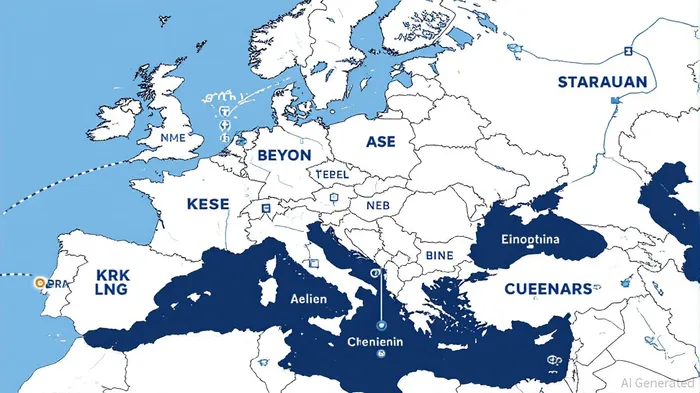
Hungary’s energy diversification strategy has emerged as a critical focal point for European energy security, particularly in the wake of the 2022 Russian invasion of Ukraine. As the EU accelerates its transition away from Russian hydrocarbons, Hungary’s investments in gas infrastructure and renewable energy are reshaping regional dynamics. However, the long-term viability of these projects hinges on balancing geopolitical resilience, financial sustainability, and alignment with EU climate goals.
Strategic Infrastructure and EU Funding
Hungary’s 2023–2025 energy strategy prioritizes reducing dependence on Russian gas through a combination of pipeline diversification, LNG terminal expansion, and renewable energy development. Central to this effort is the Krk LNG terminal in Croatia, which is expanding its regasification capacity from 2.9 to 6.1 billion cubic meters annually by 2026. This project, supported by €101 million in EU funding and matching Croatian contributions, is designated a Project of Common Interest (PCI) under EU energy policy [1]. The terminal’s integration into regional networks, including pipelines connecting to Hungary and Slovenia, underscores its role in diversifying supply routes and enhancing Central Europe’s energy resilience [2].
Complementing this is the Hungary-Slovenia-Italy Interconnector Gas Pipeline, a €344,500 EU-funded preparatory project aimed at strengthening cross-border connectivity. Hungary has allocated €10.43 billion under the EU’s Recovery and Resilience Facility (RRF), with €6.512 billion in grants and €3.918 billion in loans, to fund grid modernization, renewable energy, and energy efficiency initiatives [3]. These investments align with the EU’s REPowerEU Plan, which seeks to replace Russian gas with LNG and renewables while accelerating decarbonization.
Geopolitical Risks and Financial Challenges
Despite these strides, Hungary’s energy strategy faces significant challenges. The EU has flagged Hungary’s renewable energy target of 21% by 2030 as below the regional average of 23%, raising concerns about misalignment with broader climate objectives [4]. This gap could limit Hungary’s access to future EU funding and strain regional cooperation. Additionally, the Three Seas Initiative (3SI), which includes Hungary, has seen mixed progress. While some members, like Poland, have advanced clean energy projects, others, such as Czechia and Poland, have paradoxically increased Russian gas imports in 2024, undermining collective energy security goals [5].
Geopolitical risks further complicate infrastructure viability. The 3SI’s planned LNG import capacity is projected to double by 2030, but analysts warn of overcapacity and stranded assets if demand growth lags [6]. For instance, the Krk LNG terminal’s expansion, while strategically vital, could face underutilization if Europe’s energy transition accelerates faster than anticipated. Similarly, the Hungary-Slovenia-Italy pipeline’s success depends on navigating geopolitical tensions in key gas supply regions, such as the U.S. and North Africa [7].
Financial Metrics and Investment Viability
Quantifying the risks and returns of Hungary’s energy projects requires a nuanced analysis. The Krk LNG terminal’s expansion, with a projected cost of €1.2 billion, is expected to yield long-term benefits by securing alternative gas supplies and reducing transit dependencies. However, its financial viability hinges on stable demand and competitive pricing, which remain uncertain amid volatile global markets [8].
The Hungary-Slovenia-Italy pipeline, meanwhile, benefits from EU grants but faces delays due to regulatory hurdles and geopolitical uncertainties. A case study of similar projects, such as Germany’s Stuttgart 21, highlights the risks of inadequate risk management, with cost overruns and budget variances undermining investor confidence [9]. For Hungary’s pipeline to succeed, robust risk mitigation strategies—including transparent cost tracking and adaptive planning—are essential.
Geopolitical Resilience and Regional Cooperation
Hungary’s energy strategy also intersects with broader geopolitical realignments. The 10th Three Seas Summit in 2025 emphasized a 2027 phase-out of Russian gas, prioritizing clean energy and interconnectivity [10]. However, Hungary and Slovakia’s resistance to this timeline—driven by financial incentives from Russian transit fees—poses a challenge to regional cohesion. Conversely, Poland’s “East Shield” initiative, a €20 billion defense and energy security project, exemplifies how CEE nations are leveraging infrastructure to bolster strategic autonomy [11].
Conclusion: Balancing Ambition and Pragmatism
Hungary’s energy diversification efforts present a compelling case for investment, but their success depends on navigating a complex interplay of geopolitical, financial, and environmental factors. While EU funding and strategic partnerships enhance short-term resilience, long-term viability requires aligning with decarbonization goals and mitigating overcapacity risks. For investors, the key lies in supporting projects that balance immediate energy security needs with the transition to a low-carbon future.
Source:
[1] U.S.-Croatia LNG Ties: Krk Terminal Expansion and Transatlantic Energy Security [https://china-cee.eu/2025/07/30/croatia-monthly-briefing-u-s-croatia-lng-ties-krk-terminal-expansion-and-transatlantic-energy-security/]
[2] TYNDP 2024 Annex A - Projects [https://www.entsog.eu/sites/default/files/2024-07/TYNDP%202024%20Annex%20A%20-%20List%20of%20projects.xlsx]
[3] Hungary's recovery and resilience plan - European Commission [https://commission.europa.eu/business-economy-euro/economic-recovery/recovery-and-resilience-facility/country-pages/hungarys-recovery-and-resilience-plan_en]
[4] Hungary: 2024 Article IV Consultation-Press Release [https://www.elibrary.imf.org/view/journals/002/2024/268/article-A001-en.xml]
[5] 10th Three Seas Summit: From gas trap to clean power and connectivity [https://ember-energy.org/latest-insights/10th-three-seas-summit-from-gas-trap-to-clean-power-and-connectivity/]
[6] Future European Union gas imports: balancing different [https://www.bruegel.org/analysis/future-european-union-gas-imports-balancing-different-objectives]
[7] The Three Seas Initiative stands at an inflection pointIPCX-- [https://www.atlanticcouncil.org/in-depth-research-reports/issue-brief/the-three-seas-initiative-stands-at-an-inflection-point/]
[8] Oil & Gas Laws and Regulations in Croatia (2024) [https://ceelegalmatters.com/croatia/27398-oil-gas-laws-and-regulations-in-croatia-2024]
[9] Financial Management and Risk Mitigation in Mega-Projects: A Longitudinal Study of Stuttgart 21 in Germany [https://www.researchgate.net/publication/388885711_Financial_Management_and_Risk_Mitigation_in_Mega-Projects_A_Longitudinal_Study_of_Stuttgart_21_in_Germany]
[10] Strategy at the Geopolitical Crossroads: The Imperative for Secure Clean Energy in Central and Eastern Europe [https://www.catf.us/resource/strategy-geopolitical-crossroads-imperative-secure-clean-energy-central-eastern-europe/]
[11] European Geopolitical Leverage in a Shifting Ukraine [https://www.ainvest.com/news/european-geopolitical-leverage-shifting-ukraine-peace-narrative-2508/]







Comentarios
Aún no hay comentarios