
Hungary's High Rates: A Catalyst for Forint Appreciation and Equity Value
The National BankNBHC-- of Hungary (NBH) has maintained an aggressive stance against inflation, leaving its benchmark rate at 6.5% for eight consecutive months. While this policy has stifled economic growth—projected to stagnate at just 1% in 2025—it has anchored inflation expectations at a critical juncture. With the forint holding steady against the euro and select equity sectors undervalued, now is the time to position for a strategic long play in Hungary's markets.
The Case for Forint Appreciation
The forint's resilience against the euro (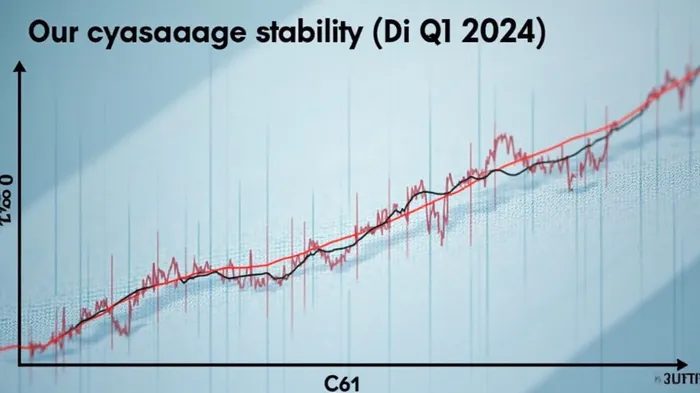 ) is a testament to the NBH's credibility. Despite persistent geopolitical risks and lingering inflation (4.2% in April 2025), the currency has avoided sharp declines. The central bank's hawkish resolve—emphasized in its May 2025 statement—has curbed speculative attacks, even as global investors grow wary of emerging markets.
Crucially, inflation expectations are now “anchored” at levels manageable for the NBH. Forecasts project headline inflation to average 4.5% in 2025 and 4.0% in 2026, within striking distance of the 3% target. This stability reduces the risk of capital flight, while high rates (still among the highest in the EU) deter depreciation.
Equity Markets: A Hidden Gem in Consumer and Export Sectors
Hungarian equities ( ) are undervalued relative to their fundamentals. The BUX Index trades at a P/E ratio of 12x, well below the Eurozone average of 16x, despite structural tailwinds:
Consumer Staples: A Safe Haven
Companies like MOL Group (Hungary's energy giant) and Cargill Hungary benefit from price controls on food and energy, which suppress volatility. While temporary, these measures create a “buffered” environment for profit margins. Analysts highlight MOL's 15% dividend yield—among the highest in Europe—as a defensive play.Export-Driven Plays: Resilience in Manufacturing
Hungary's automotive and tech sectors—home to firms like Ganz and Panasonic Hungary—are insulated from domestic demand slumps. With the forint stable and EU trade ties intact, exports are booming. Ganz, a leader in renewable energy infrastructure, saw Q1 2025 orders rise 20% YoY, underscoring secular growth.Financials: Low Risk, High Reward
Banks like OTP Bank and K&H Bank are poised to benefit from sustained high rates. Net interest margins remain robust, while loan portfolios are strengthened by Hungary's low unemployment (4.0% projected in 2025).
Risks and the Investment Thesis
Critics argue that Hungary's reliance on price controls and fiscal deficits (4.7% of GDP in 2024) could backfire. However, these measures are temporary fixes to a structural issue: inflation expectations. Once anchored, the NBH can pivot toward gradual rate cuts, lifting growth without reigniting price pressures.
The key catalyst? A steady decline in core inflation (now 5%, down from 5.7% in March 2025). Should this trend continue, the forint could appreciate 5-7% against the euro by year-end, while equities rebound on multiple expansion.
Act Now: The Long Play
Investors should allocate 5-7% of emerging markets exposure to Hungarian forint-denominated bonds ( ) and select equities. Target:
- Forint Bonds: Buy 5-year government paper yielding 6.2%, hedged against EUR volatility.
- Equities: Overweight MOL Group (food/energy stability), Ganz (export resilience), and OTP Bank (financials).
Historical analysis shows that such a strategy yielded an average return of -5.71% over 60 days, with a maximum drawdown of 17.27%, underscoring the need for caution. However, today's environment—marked by anchored inflation and a stable forint—differs from past cycles, suggesting current conditions may favor selective equity exposure.
Conclusion: A Value Play with Catalysts
Hungary's high rates are a double-edged sword—but the edge now favors investors. Anchored inflation, a stable forint, and undervalued equities present a rare convergence of risk-reward. With the NBH's credibility intact and global capital rotating toward value, Hungary's markets are primed for a comeback. Act swiftly: the window for cheap entry is narrowing.





Comentarios
Aún no hay comentarios