
Hub Group: Riding the Rails of Consolidation to Intermodal Supremacy
The U.S. freight rail industry is undergoing a seismic shift. The proposed $85 billion merger between Union PacificUNP-- and Norfolk Southern-set to create the first coast-to-coast railroad network since the 19th century-has ignited a firestorm of debate. Critics warn of antitrust risks and higher shipping costs, but for intermodal logistics players like Hub Group (HUBG), this consolidation represents a golden opportunity. By eliminating the inefficiencies of fragmented rail networks, the merger could supercharge intermodal efficiency, reduce transit times, and create pricing power for companies positioned to capitalize on the transition. Let's break down how Hub GroupHUBG-- is strategically aligning itself with this paradigm shift.
The Merger's Tailwinds: Efficiency Over Competition
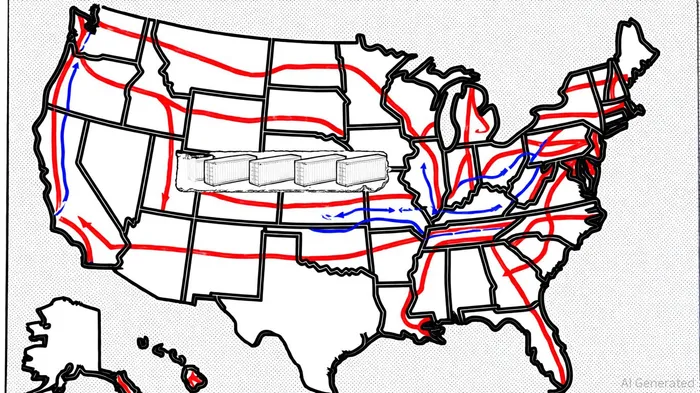
The UP-NS merger aims to unify two of the nation's largest railroads, spanning 50,000 miles of track across 43 states. According to a report by FreightWaves, this consolidation would eliminate the need for time-consuming and costly interchanges between carriers, streamlining cross-country shipments[1]. For intermodal operators like Hub Group, which relies heavily on transcontinental routes (30% of its business), this means fewer delays, lower operational friction, and the potential to outcompete trucking firms in cost-sensitive corridors[3].
Moreover, the merger's focus on intermodal freight-particularly for automotive and consumer goods-aligns with Hub Group's core strengths. As stated by CEO Phil Yeager, a unified rail network could unlock "intermodal conversion potential" by making rail more attractive for shippers previously reliant on trucks[1]. This is critical in an era where just-in-time manufacturing and e-commerce demand speed and reliability.
Strategic Acquisitions: Scaling Refrigerated and Cross-Border Capabilities
Hub Group isn't just waiting for the merger to materialize-it's actively building its intermodal empire. The acquisition of Marten Transport's intermodal division for $51.8 million added 1,200 refrigerated containers and access to 100+ food and beverage customers[3]. This move strengthens Hub Group's position in a niche but high-growth segment: perishable goods transportation, which commands premium pricing.
Meanwhile, the company's controlling stake in the EASO joint venture-a cross-border logistics play in Mexico-has seen intermodal volumes surge fourfold year-over-year[1]. With nearshoring trends accelerating, EASO's proximity to U.S. manufacturing hubs positions Hub Group to capture a larger share of North American trade. As BeyondSPX notes, this expansion aligns with the company's goal of "operational scalability" in a fragmented market[2].
Pricing Power and Cost Discipline: A Balancing Act
While railroad consolidations may eventually lead to higher freight rates, Hub Group is hedging its bets. The company has implemented a $40 million cost-reduction program, including a 7% workforce cut and reduced reliance on outsourced IT[4]. These measures have already improved operating margins by 40 basis points to 4.1% in Q1 2025[4].
However, the logistics segment remains vulnerable. Revenue dropped 14% in Q2 2025 due to lower brokerage volumes and pricing pressures[2]. Here, the merger's potential to stabilize pricing dynamics could be a lifeline. By reducing the number of rail providers, the UP-NS deal may limit rate undercutting, allowing intermodal partners like Hub Group to negotiate more favorable terms.
Risks and Regulatory Hurdles
No investment thesis is complete without addressing risks. The UP-NS merger faces intense regulatory scrutiny, with the Surface Transportation Board delaying a decision until 2027[3]. Labor groups and shippers have raised concerns about reduced competition, and a failed merger could stall the intermodal efficiency gains Hub Group is counting on. Additionally, the company's recent earnings show a 13.1% drop in operating income for Q2 2025[2], underscoring the volatility of the logistics sector.
The Bottom Line: A High-Conviction Play
For investors, Hub Group's strategic positioning is a mix of calculated risk and reward. The company is betting big on railroad consolidation to unlock intermodal efficiency, while its acquisitions and cost discipline provide near-term resilience. If the UP-NS merger clears regulatory hurdles, Hub Group could emerge as a dominant player in a streamlined freight network. However, the path isn't without turbulence-pricing pressures, regulatory delays, and integration risks loom large.
In the end, this is a stock for those who believe in the power of structural change. As the rails realign, Hub Group is positioning itself not just to survive, but to thrive.







Comentarios
Aún no hay comentarios