
Huawei's Strategic Push to Disrupt the AI Chip Market: Investment Opportunities in China's Rising Semiconductor Ecosystem
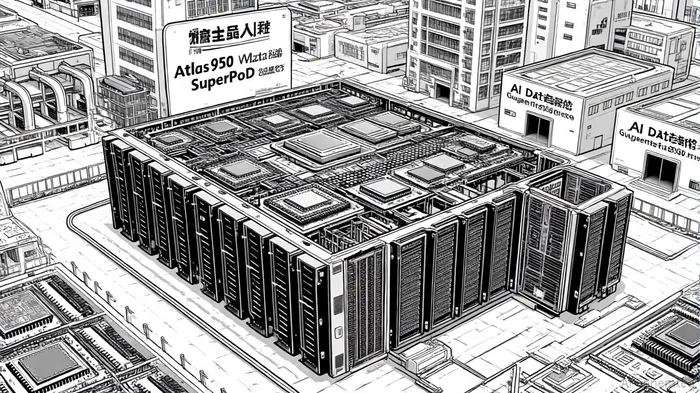
The global AI chip race is heating up, and Huawei is pulling out all the stops to claim a dominant position. With a meticulously crafted roadmap extending through 2028, the Chinese tech giant is not only challenging U.S. semiconductor leaders like NvidiaNVDA-- but also reshaping the geopolitical dynamics of the industry. For investors, this represents a golden opportunity to capitalize on China's accelerating semiconductor self-sufficiency and the explosive growth of its AI infrastructure.
Huawei's AI Chip Roadmap: A Game-Changer in Compute Power
Huawei's Ascend series is set to redefine the AI chip landscape. At the Huawei Connect 2025 conference, rotating chairman Eric Xu unveiled a three-year plan that includes the Ascend 950PR and 950DT (launching in early 2026), followed by the Ascend 960 (2027) and 970 (2028). These chips are engineered to deliver exponential gains in compute power and memory capacity, with the 950PR and 950DT integrating Huawei's proprietary high-bandwidth memory (HBM) technologies—HiBL 1.0 and HiZQ 2.0, respectively. According to a report by The Asian Times, , outpacing many current-generation solutions [1].
The strategic implications are profound. By developing its own HBM, Huawei is breaking China's reliance on South Korean suppliers like Samsung and SK Hynix. This move not only insulates the company from U.S. sanctions but also positions it to export cutting-edge AI infrastructure globally. As stated by Reuters, Huawei's UnifiedBus interconnect technology—a rival to Nvidia's NVLink—will further enhance the scalability of its systems, enabling the creation of supercomputing clusters like the Atlas 950 SuperPoD, .
Strategic Partnerships and System-Level Innovation
Huawei's success hinges on its ability to collaborate with China's domestic semiconductor ecosystem. The company has forged critical alliances with SMIC and CXMT to manufacture and supply HBM, ensuring a self-reliant production chain. Despite U.S. restrictions on advanced manufacturing nodes, Huawei is leveraging system-level innovations in packaging and software to bridge the gap. For instance, the Ascend 950PR's HiBL 1.0 technology, , is already optimized for inference tasks, a key area where demand is surging [2].
This ecosystem-driven approach is paying off. Chinese chipmakers like SMIC and Cambricon have seen their R&D investments soar. In 2024, , , . These figures underscore the sector's momentum and its potential for sustained growth.
Government-Backed Funding and Market Rally
China's third National Integrated Circuit Industry Investment Fund, , is a testament to the government's commitment to semiconductor self-sufficiency. As highlighted by CNN Business, this fund is targeting critical areas like chip design, manufacturing, and equipment, providing a tailwind for firms like SMIC and Hua Hong Semiconductor [3]. The impact is already visible: Hua Hong's shares rose 13% following the fund's announcement, .
For investors, this confluence of public and private investment creates a fertile ground for long-term gains. Huawei's AI infrastructure, coupled with state-backed funding, is likely to drive further stock appreciation in key players.
Conclusion: A High-Stakes Bet with High Rewards
Huawei's AI chip ambitions are not just about technological parity—they're about redefining global standards. With its roadmap, partnerships, and government support, the company is poised to disrupt the status quo. For investors, the semiconductor ecosystem in China offers a compelling mix of innovation, policy tailwinds, and market momentum. While risks like geopolitical tensions and technical hurdles remain, the potential rewards for early movers in this space are substantial.
Now is the time to position for the next phase of China's AI revolution.





Comentarios
Aún no hay comentarios