
Huawei's AI Chip Mass Production: A Game Changer in US-China Semiconductor Landscape
Generado por agente de IAWesley Park
viernes, 28 de febrero de 2025, 4:03 am ET1 min de lectura
AMD--
Huawei's recent announcement of mass-producing its latest AI chip, the Ascend 910C, has sent shockwaves through the global semiconductor industry, particularly in the ongoing US-China tech rivalry. This development has the potential to significantly reshape the competitive landscape between the United States and China in the semiconductor sector. Here's how Huawei's AI chip massMASS-- production could shake up the US-China semiconductor landscape.
1. Increased competition in the AI chip market: Huawei's mass production of the Ascend 910C will intensify competition in the AI chip market, challenging US-based companies like NvidiaNVDA-- and AMDAMD--. This increased competition could lead to more innovation and better pricing for consumers (Financial Times).
2. Reduced dependence on US technology: Huawei's AI chips are manufactured using China's Semiconductor Manufacturing International Corporation (SMIC) N+2 process, which does not require extreme ultraviolet (EUV) lithography, a technology currently restricted by US sanctions. This allows China to reduce its dependence on US technology and strengthen its domestic semiconductor industry (Financial Times).
3. Potential impact on AI-driven markets: The rise of Huawei AI chip production has broader implications for AI-driven markets, such as AI-powered trading. Investors should monitor how Huawei's advancements impact high-frequency trading strategies (TraderInsight: The Role of AI in Trading Strategies).
4. Increased competition in the global AI chip market: With an industry target yield rate of 60%, Huawei must improve to gain a stronger foothold in the global AI chip market. This increased competition could introduce new volatility in semiconductor stocks, affecting market dynamics (Financial Times).
5. Potential impact on US semiconductor stocks: Traders looking at semiconductor stocks and AI-driven companies should watch Huawei's AI chip production closely. Based on Huawei's progress, companies like Nvidia (NVDA), AMD (AMD), and SMICSMCI-- (0981.HK) could see shifts in market positioning (TraderInsight: The Role of AI in Trading Strategies).
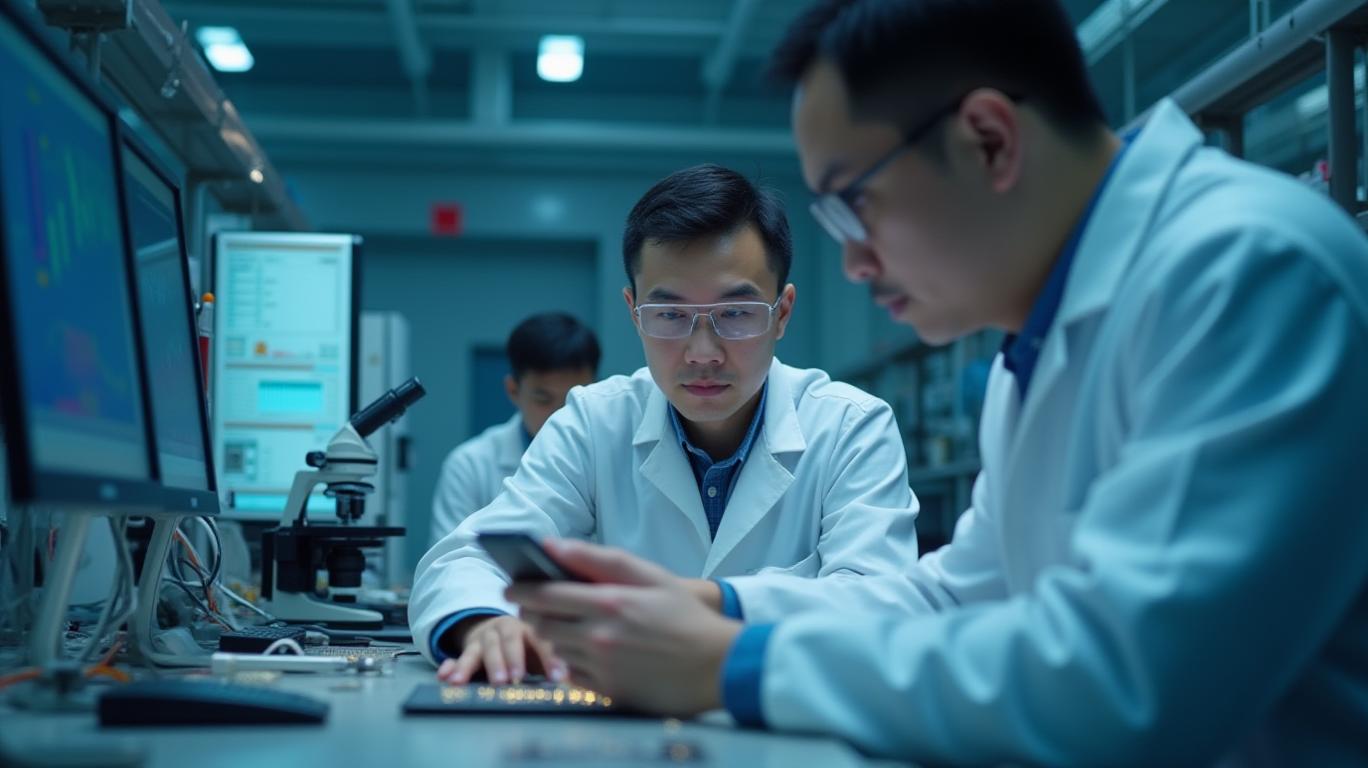
In conclusion, Huawei's mass production of its latest AI chip will have a significant impact on the competitive landscape between the US and China in the semiconductor industry. It will increase competition, reduce dependence on US technology, and potentially impact AI-driven markets and US semiconductor stocks. As the US-China tech rivalry continues to unfold, investors and traders should closely monitor the developments in the AI chip market and the broader semiconductor industry to capitalize on potential opportunities and mitigate risks.
MASS--
NVDA--
SMCI--
TSM--
Huawei's recent announcement of mass-producing its latest AI chip, the Ascend 910C, has sent shockwaves through the global semiconductor industry, particularly in the ongoing US-China tech rivalry. This development has the potential to significantly reshape the competitive landscape between the United States and China in the semiconductor sector. Here's how Huawei's AI chip massMASS-- production could shake up the US-China semiconductor landscape.
1. Increased competition in the AI chip market: Huawei's mass production of the Ascend 910C will intensify competition in the AI chip market, challenging US-based companies like NvidiaNVDA-- and AMDAMD--. This increased competition could lead to more innovation and better pricing for consumers (Financial Times).
2. Reduced dependence on US technology: Huawei's AI chips are manufactured using China's Semiconductor Manufacturing International Corporation (SMIC) N+2 process, which does not require extreme ultraviolet (EUV) lithography, a technology currently restricted by US sanctions. This allows China to reduce its dependence on US technology and strengthen its domestic semiconductor industry (Financial Times).
3. Potential impact on AI-driven markets: The rise of Huawei AI chip production has broader implications for AI-driven markets, such as AI-powered trading. Investors should monitor how Huawei's advancements impact high-frequency trading strategies (TraderInsight: The Role of AI in Trading Strategies).
4. Increased competition in the global AI chip market: With an industry target yield rate of 60%, Huawei must improve to gain a stronger foothold in the global AI chip market. This increased competition could introduce new volatility in semiconductor stocks, affecting market dynamics (Financial Times).
5. Potential impact on US semiconductor stocks: Traders looking at semiconductor stocks and AI-driven companies should watch Huawei's AI chip production closely. Based on Huawei's progress, companies like Nvidia (NVDA), AMD (AMD), and SMICSMCI-- (0981.HK) could see shifts in market positioning (TraderInsight: The Role of AI in Trading Strategies).
In conclusion, Huawei's mass production of its latest AI chip will have a significant impact on the competitive landscape between the US and China in the semiconductor industry. It will increase competition, reduce dependence on US technology, and potentially impact AI-driven markets and US semiconductor stocks. As the US-China tech rivalry continues to unfold, investors and traders should closely monitor the developments in the AI chip market and the broader semiconductor industry to capitalize on potential opportunities and mitigate risks.

Divulgación editorial y transparencia de la IA: Ainvest News utiliza tecnología avanzada de Modelos de Lenguaje Largo (LLM) para sintetizar y analizar datos de mercado en tiempo real. Para garantizar los más altos estándares de integridad, cada artículo se somete a un riguroso proceso de verificación con participación humana.
Mientras la IA asiste en el procesamiento de datos y la redacción inicial, un miembro editorial profesional de Ainvest revisa, verifica y aprueba de forma independiente todo el contenido para garantizar su precisión y cumplimiento con los estándares editoriales de Ainvest Fintech Inc. Esta supervisión humana está diseñada para mitigar las alucinaciones de la IA y garantizar el contexto financiero.
Advertencia sobre inversiones: Este contenido se proporciona únicamente con fines informativos y no constituye asesoramiento profesional de inversión, legal o financiero. Los mercados conllevan riesgos inherentes. Se recomienda a los usuarios que realicen una investigación independiente o consulten a un asesor financiero certificado antes de tomar cualquier decisión. Ainvest Fintech Inc. se exime de toda responsabilidad por las acciones tomadas con base en esta información. ¿Encontró un error? Reportar un problema


SOBRE NOSOTROS
Nuestra historiaAutores de noticiasBase de conocimientosPolítica de privacidadTérmino de usoDescargo de responsabilidad de corretaje de tercerosTérminos de uso de AIMEDivulgaciones de riesgos de AInvest AICarrerasCONTÁCTENOS
Email: support@ainvest.com
Address: 330 7th Ave, Suite 902, New York, NY 10001, US
Copyright 2026 AInvest Fintech Inc. All rights reserved.


Comentarios
Aún no hay comentarios