
Huaneng Power's Leadership Transition and Strategic Implications for Clean Energy Investment
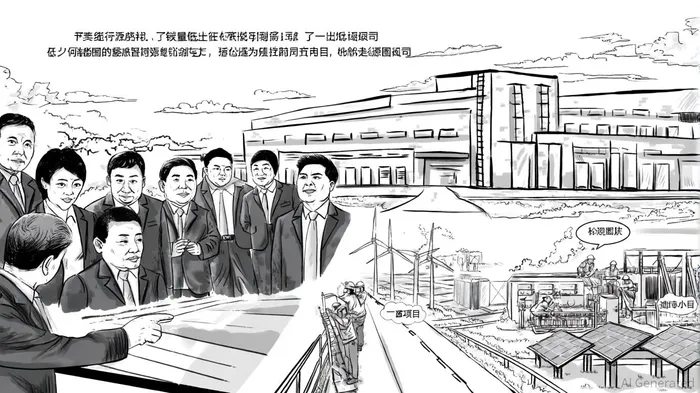
The recent leadership transition at Huaneng Power International, Inc. has positioned Liu Ancang as a pivotal figure in shaping the company's strategic trajectory. Appointed as President and Executive Director in July 2025, Liu succeeds Huang Lixin, whose departure marked the end of a tenure focused on stabilizing operations amid sector-wide challenges[1]. Liu's extensive experience within the Huaneng Group—including roles as Deputy Director of the General Office, Vice President of the Shanghai Branch, and Chairman of Huaneng (Guangdong) Energy Development—underscores his deep institutional knowledge and alignment with the company's long-term objectives[1].
Strategic Alignment with Clean Energy Goals
Huaneng's clean energy ambitions are anchored in its "Dual Carbon" strategy, which aims to achieve carbon neutrality by 2060. By 2025, the company targets a 50% share of low-carbon electricity capacity (up from 36.6% in 2020) and plans to expand its total power generation capacity to 300 million kilowatts, with over 80 million kilowatts from new energy sources[1]. Liu's appointment coincides with a critical phase in this transition. In 2024 alone, Huaneng initiated 222 new energy projects, including a 250,000-kilowatt solar and energy storage project in Xizang, which is projected to reduce annual CO₂ emissions by 329,000 tons[4]. These initiatives reflect a strategic pivot toward renewables, supported by the company's "3411" development framework, which prioritizes new energy, nuclear, and hydropower as core pillars[1].
Liu's leadership is expected to accelerate these efforts. As a member of the Strategic Committee and Nomination Committee, he holds direct influence over capital allocation and governance reforms[3]. His tenure also aligns with Huaneng's $10 billion investment plan in renewable energy by 2025, a commitment highlighted in the company's ESG reports[3]. Analysts note that Liu's operational background in Guangdong—a region with aggressive clean energy targets—may further drive innovation in hybrid energy systems and grid integration[1].
Governance Reforms and ESG-Driven Performance
Huaneng's governance reforms under Liu's stewardship emphasize compliance and transparency. The company established a compliance management committee in 2022, implementing a "comprehensive coverage and key areas" mechanism to ensure adherence to regulatory standards[1]. Liu's prior roles in corporate governance, including his tenure as Party Secretary of Huaneng (Guangdong), suggest a familiarity with balancing regulatory demands and operational efficiency[1].
ESG performance has also improved under Huaneng's broader strategy. The company reduced water use per unit of energy by 15% in 2023 and aims for a 25% reduction in carbon intensity by 2025 compared to 2020 levels[3]. These metrics align with global benchmarks, such as the World Benchmarking Alliance's Climate and Energy Benchmark, which ranks Huaneng among China's top performers in clean energy transition[3]. Liu's leadership is likely to reinforce these gains, particularly as the company invests ¥13 billion annually in R&D for smart grid technologies and virtual power plant systems[1].
Investment Implications
For investors, Liu Ancang's appointment signals continuity in Huaneng's clean energy pivot while introducing potential for accelerated innovation. The company's 2025–2026 strategic roadmap, which includes expanding offshore wind projects in the Shandong Peninsula and the Guangdong-Hong Kong-Macao Greater Bay Area, positions it to capitalize on China's $1.2 trillion clean energy market[4]. However, risks remain, including regulatory shifts and the high capital intensity of renewable projects.
Huaneng's ESG disclosures, now in their 17th consecutive year, provide transparency for stakeholders. The 2022 ESG report highlights 11,629 domestic patents and a 5.4 percentage-point year-on-year increase in low-carbon capacity, reinforcing confidence in the company's technical capabilities[1]. Liu's focus on governance, coupled with Huaneng's compliance-driven culture, may mitigate operational risks and attract ESG-focused capital.
Conclusion
Liu Ancang's leadership represents a strategic inflection point for Huaneng Power. His operational expertise, combined with the company's ambitious clean energy targets and governance reforms, positions Huaneng to navigate the dual challenges of decarbonization and profitability. For investors, the alignment of Liu's tenure with China's "Dual Carbon" goals and global ESG trends suggests a compelling long-term opportunity, albeit with careful monitoring of execution risks.







Comentarios
Aún no hay comentarios