
HSBC's Strategic Gambles in Emerging Market IPOs: Navigating Risks and Opportunities in 2025
HSBC's strategic pivot toward emerging markets in 2025 reflects a calculated bet on the resilience and growth potential of these regions amid a fragmented global economy. The bank's investment banking division is increasingly focused on Asia and the Middle East, where fintech and e-commerce firms are driving a surge in IPO activity, according to HSBC's Emerging Markets report. A separate analysis by HSBCHSBC-- Innovation Banking also argues that digital transformation and sustainability trends are reshaping market structures, with these sectors projected to dominate IPO pipelines in 2025 in its HSBC Innovation Banking fintech report. However, this shift is not without risks, as geopolitical tensions, regulatory complexities, and internal restructuring challenges test HSBC's ability to balance growth with stability.
Strategic Opportunities: Digital Transformation and Structural Growth
Emerging markets are undergoing a transformative phase, fueled by declining inflation, relaxed monetary policies, and a weaker U.S. dollar, which have spurred capital inflows, as outlined in HSBC Asset Management's 2025 outlook. HSBC's Q3 emphasis on AI adoption and alternative assets is highlighted in HSBC Private Bank's Q3 2025 outlook, which frames structural growth in Asia as central to resilient portfolios. For instance, China's domestic innovation ecosystem and India's expanding middle class are seen as critical drivers, while Singapore and the UAE are leveraging their geopolitical positioning to attract cross-border capital, according to HSBC's Asia-Middle East analysis.
The fintech sector, in particular, is a focal point. Embedded finance and AI-driven tools are redefining customer expectations, creating opportunities for HSBC to support high-growth startups in markets like Vietnam and South Korea, as demonstrated in Robeco's emerging markets note. As observed in Deloitte's regulatory outlook, these markets often trade at a discount to developed economies, offering attractive diversification for investors navigating a volatile global landscape.
Strategic Risks: Geopolitical Volatility and Regulatory Scrutiny
Despite these opportunities, HSBC faces significant headwinds. U.S. tariffs and trade realignments are complicating investment climates, forcing emerging markets to recalibrate trade dependencies, as noted in Diplomatic Affairs on HSBC's restructuring. For example, the bank's Swiss unit recently removed over 1,000 affluent Middle Eastern clients due to regulatory pressures, underscoring the challenges of managing high-risk portfolios in politically sensitive regions in coverage from the FT on HSBC's Swiss unit.
Regulatory scrutiny is intensifying globally, with industry observers urging stronger operational resilience and third-party risk management; a detailed Finance Digest case study examines HSBC's risk programs. HSBC's restructuring-stepping back from Western markets to focus on Asia-risks alienating long-term clients and creating talent retention issues, a concern echoed on HSBC's managing risk page. Meanwhile, geopolitical tensions, such as U.S.-China trade disputes, could disrupt supply chains and investor sentiment in key markets.
Risk Mitigation: Technology and ESG-Driven Resilience
To navigate these challenges, HSBC is leveraging advanced analytics and machine learning to strengthen credit risk assessment and compliance frameworks. The bank has deployed over 100 models to calculate risk metrics like Probability of Default (PD) and Loss Given Default (LGD), ensuring precise Risk-Weighted Asset (RWA) calculations. This technological edge is critical for maintaining compliance with Basel Accords while optimizing capital efficiency.
ESG principles are also central to HSBC's risk management strategy. By prioritizing sustainable growth and diversifying exposure across regions with strong macroeconomic fundamentals-such as the GCC and ASEAN-the bank aims to mitigate idiosyncratic risks. As noted in HSBC's Emerging Markets Seminar 2025, active country allocation and ESG integration are key to capitalizing on structural trends while avoiding overexposure to volatile markets.
Conclusion: A Delicate Balance
HSBC's strategic repositioning in emerging markets underscores its confidence in the long-term potential of these regions. However, the bank's success will depend on its ability to adapt to rapid regulatory changes, geopolitical shifts, and technological disruptions. While fintech and e-commerce offer a clear growth trajectory, HSBC must remain vigilant against risks such as currency volatility, trade realignments, and internal restructuring challenges. As the global IPO market evolves, HSBC's resilience will be tested by its capacity to innovate, comply, and maintain trust in an increasingly fragmented world.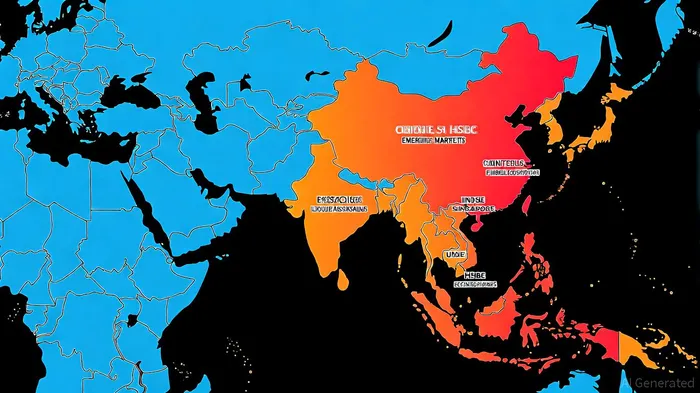





Comentarios
Aún no hay comentarios