
HSBC's Private Credit Play: Riding Asia's Wealth Boom to High-Margin Dominance
The global financial landscape is undergoing a seismic shift. As public markets stagnate and institutional investors chase yield, private credit—a sector projected to hit $3 trillion by 2028—is emerging as the new frontier of banking profitability. Nowhere is this truer than in Asia, where a tidal wave of cross-border wealth flows, underpenetrated mid-market lending opportunities, and a geopolitical pivot toward regional self-reliance are rewriting the rules of finance.
HSBC, the banking titan with an 8,000-branch footprint across 24 Asian markets, has positioned itself to capitalize on this transformation. By consolidating its private credit, debt capital markets (DCM), and wealth management operations under a unified strategy, HSBC is primed to dominate a $68–239 trillion shadow banking ecosystem. This isn’t just a tactical move—it’s a structural bet on Asia’s rise as the engine of global wealth creation.
The Structural Shift: Why Private Credit is the New Gold
Private credit’s appeal is simple: high returns with low correlation to public markets. With central banks normalizing rates and public bond yields climbing, institutional investors are fleeing fixed-income traps for private debt instruments offering 5–9% yields—a spread that widens to 10–15% in mid-market deals.
HSBC’s Global Transition Infrastructure Debt Strategy, which targets $240M in initial commitments, exemplifies this shift. By focusing on senior/secured loans for green energy, logistics, and tech infrastructure projects—sectors critical to Asia’s $275 trillion net-zero transition—HSBC is aligning its balance sheet with the region’s most urgent capital needs.
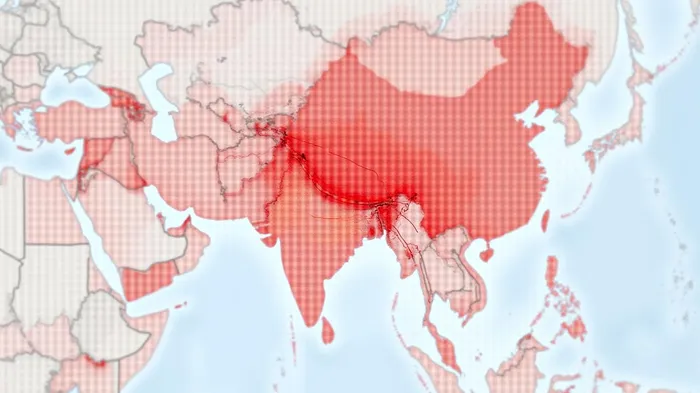
The Asia Opportunity: Wealth Boom Meets Lending Gap
Asia’s ultra-wealthy—projected to grow by 22% annually—are fleeing volatile equities for tangible, income-generating assets. Yet mid-market companies in Southeast Asia, India, and China remain underserved by traditional banks, creating a $1.5 trillion credit gap. Here’s how HSBC is exploiting this:
- Network Advantage: HSBC’s Asia-Pacific wealth management division manages $2.4 trillion, with 40% of clients holding cross-border assets. By bundling private credit products into wealth portfolios, HSBC turns its client relationships into a funding engine.
- Cost Reallocation: Post-restructuring, HSBC has slashed investment banking costs by 15%, redirecting capital to its $71.1B alternatives platform. This lean structure lets it underwrite deals with 200–300 basis points lower costs than U.S. rivals.
- Geopolitical Tailwinds: As trade wars accelerate “onshoring” of supply chains, HSBC’s $4.1B infrastructure debt platform is funding factories, data centers, and green energy hubs—assets that no foreign bank can replicate without local partnerships.
Navigating Near-Term Headwinds
Critics point to two risks:
- Valuation Pressure: HSBC’s stock trades at a 40% discount to peers on P/B, reflecting skepticism over its restructuring.
- Near-Term Demand Slump: U.S. tariff uncertainty has slowed corporate borrowing.
But these are tactical speedbumps. HSBC’s European Senior Direct Lending Strategy—now fundraising into 2025—demonstrates its ability to scale without dilution. Meanwhile, Asia’s $130B private credit fund inflows (up to Q3 2024) suggest investors are already voting with their wallets.
The Bottom Line: Buy HSBC for Asia’s Future
HSBC’s private credit pivot isn’t just a strategy—it’s a decade-long bet on Asia’s ascendancy. With its unmatched network, cost discipline, and alignment with regional growth drivers, HSBC is uniquely positioned to capture $50–100B in high-margin fee income over the next decade.
The catalyst? Look to 2025: HSBC’s Q1 2025 earnings will likely showcase its Asia-focused infrastructure deals pipeline, while its wealth management division’s private credit-linked products could hit $50B in AUM.
For investors, the calculus is clear: HSBC’s valuation discount offers a rare entry point into a bank that’s literally writing the playbook for the next phase of global finance.
Actionable Thesis:
- Buy HSBC (HSBC) at current levels.
- Target: $5.80–$6.50/share by end-2025 (25–40% upside).
- Triggers: Q1 2025 infrastructure deal wins, Asian wealth fund partnerships.
The structural shift is here. HSBC isn’t just adapting—it’s leading the charge.







Comentarios
Aún no hay comentarios