
HP's Strategic Resilience and AI-Driven Growth: A Buying Opportunity in Uncertain Times
Amid global trade tensions and macroeconomic volatility, HP Inc.HPQ-- (HPQ) stands out as a paradoxical play: a company navigating near-term headwinds while positioning itself for a transformative leap into AI-driven markets. For investors, the confluence of its margin-stabilizing supply chain shifts, undervalued valuation metrics, and high-margin AI product pipeline creates a compelling case to buy the dip. Here's why HP's current struggles are temporary—and why its stock could surge once its strategic bets pay off.
Tariff Mitigation: A Supply Chain Masterstroke
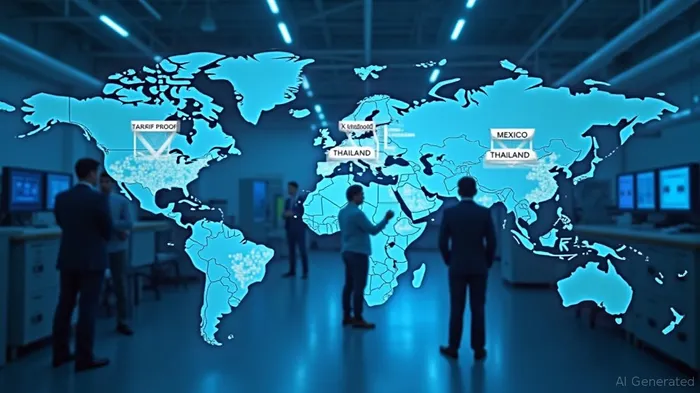
HP's aggressive restructuring of its supply chain is a critical defensive move against U.S. tariffs on Chinese imports. By shifting 90% of North American production out of China by end-2025—up from 60% in 2024—the company is slashing its exposure to tariff-related costs. This geographic diversification isn't just about cost control; it's also enabling HP to pivot to higher-margin, advanced products like AI-powered PCs and quantum-resistant printers.
The financial impact is clear: less than 10% of North American revenue will remain tariff-exposed by year-end, reducing a major drag on margins. Meanwhile, the company's “Future Ready” restructuring plan—targeting $1.9 billion in annualized cost savings—will further offset inflationary pressures. While Q1 2025 operating margins dipped to 6.3%, management expects stabilization by year-end as these initiatives gain traction.
AI-Driven Growth: The Margin Catalyst of 2026
HP isn't just defending its legacy business—it's reinventing it. The company's push into AI-enabled PCs, such as the EliteBook 8 Series, offers a path to higher margins and defensible market share. These devices, with 224% better power efficiency and 43x faster AI image generation, are targeting high-growth enterprise and gaming markets.
By the end of 2025, AI PCs could account for 25% of shipments, rising to 40–60% within two years. This shift isn't just incremental; it's a strategic pivot to software-defined hardware, where recurring revenue models (e.g., HP's All-in Plans) and premium pricing can offset commodity cost volatility.
Cash Flow and Dividends: A Safety Net for Volatility
HP's financial discipline is a standout advantage. Despite Q1's $100 million free cash flow (up 180% year-over-year), management remains on track to deliver $3.2–$3.6 billion in annual free cash flow—a critical buffer for navigating near-term risks like Q2's projected negative free cash flow.
The dividend, meanwhile, offers a 4.46% yield—a near-record for HP—and underscores management's confidence. With $2.9 billion in cash and a track record of consistent payouts (13.47% dividend growth over three years), investors are rewarded even as the company invests in its future.
HP's P/E ratio of 10.31 is nearly half the sector median of 23.76, reflecting investor skepticism about its near-term margin pressures. But this undervaluation ignores the company's structural advantages: a tariff-proof supply chain, AI-driven margin expansion, and a dividend yield that outperforms 10-year Treasuries.
Risks? Yes—but Manageable
Skeptics will point to lingering challenges:
- Supply Chain Volatility: Component shortages (e.g., for AI processors) could delay margin improvements.
- Regulatory Risks: The DOJ's review of HP's Juniper acquisition could delay synergies.
- Print Business Decline: China's weak demand and a 7% drop in commercial printing revenue threaten cash flow.
Yet these risks are offset by HP's proactive strategy: premium print offerings (quantum-resistant printers, Agentic AI solutions) aim to stabilize recurring revenue, while AI PCs provide a high-margin counterbalance.
Conclusion: Buy the Dip, Position for 2026
HP's stock is pricing in worst-case scenarios—tariff drag, supply chain delays, and margin stagnation. But the data tells a different story: its supply chain is being retooled, AI is becoming a growth engine, and cash flow remains robust. With a P/E of 10.31 and a 4.46% yield, HP offers a rare combination of defensive income and high-growth exposure to AI.
The near-term selloff is a buying opportunity. By 2026, as restructuring savings flow and AI PCs hit scale, HP could surprise to the upside—making today's dip a foundation for long-term gains.
Act now—before the market catches on.





Comentarios
Aún no hay comentarios