
Housing Market Momentum and Sector Rotation: Navigating Opportunities in a Shifting Landscape
The U.S. housing market in late 2025 is a study in contrasts. While existing home sales hit an eight-month high in October, , regional disparities and structural challenges persist. This divergence creates fertile ground for strategic sector rotation, as investors navigate a landscape where affordability, inventory, and policy shifts are reshaping opportunities.
Regional Divergence and Market Dynamics
The latest data from the National Association of Realtors (NAR) underscores a fragmented market. The Midwest and South drove October's gains, , respectively, . These trends reflect broader regional imbalances: the Northeast and West remain constrained by high prices and limited inventory, whereas the Midwest and South offer more accessible entry points. For investors, this means opportunities are not evenly distributed.
, . Lower rates have spurred demand, particularly among first-time buyers, . However, inventory remains tight, , . This imbalance favors sectors that benefit from construction activity and innovation in cost efficiency.
Sector Rotation: Winners and Losers
The housing market's evolution has triggered a clear shift in capital allocation. ETFs tracking homebuilders, such as the SPDR S&P Homebuilders ETF (XHB), have outperformed construction-focused funds like the iShares U.S. Home Construction ETF (ITB), . This divergence reflects investor skepticism toward traditional construction models and a pivot toward innovation-driven sectors.
Homebuilders are adapting to tighter margins by leveraging digital tools like Building Information Modeling (BIM) and prefabrication, which reduce costs and accelerate timelines. These advancements have bolstered XHB's performance, as companies like D.R. HortonDHI-- and PulteGroupPHM-- integrate technology into their operations. Meanwhile, ITB's underperformance highlights the sector's vulnerability to rising material costs and labor shortages, which persist despite rate cuts.
The commercial real estate (CRE) market offers another lens for rotation. , . The iShares Residential and Multisector Real Estate ETF (REZ) has struggled to gain traction, but niche sectors like industrial real estate—bolstered by reshoring and automation—remain resilient. Investors should consider geographic diversification, as the South and West's industrial hubs benefit from lower costs and growing demand.
Strategic Implications for Investors
- Hedge Against Macro Risks: While the Federal Reserve's anticipated rate cuts in mid-2025 could boost demand, affordability challenges linger. (TIPS) and infrastructure REITs offer defensive exposure, mitigating risks from inflation and inventory corrections.
- Prioritize Innovation-Driven Sectors: and infrastructure funds are gaining traction as builders adopt cost-saving technologies. The adoption of and modular construction is likely to drive long-term gains, even as traditional homebuilders face margin pressures.
- Leverage Regional Divergence: ETFs with broad geographic exposure, such as the Invesco Dynamic Building & Construction ETF (PKB), may face uneven returns due to regional imbalances. Investors should tilt toward regions with favorable demographics and inventory levels, such as the Midwest and South.
The Road Ahead
The housing market's trajectory hinges on three factors: the pace of , the normalization of inventory levels, and the adoption of cost-efficient construction methods. While October's data signals a modest rebound, the path to equilibrium remains uneven. For investors, the key is to balance exposure between cyclical sectors (e.g., homebuilders) and defensive plays (e.g., TIPS) while capitalizing on regional and technological trends.
In a world where affordability and inventory dynamics dominate, strategic sector rotation is not just a tactic—it is a necessity. The housing market's complexity demands agility, and those who align their portfolios with the forces reshaping this sector will find themselves well-positioned for the cycles ahead.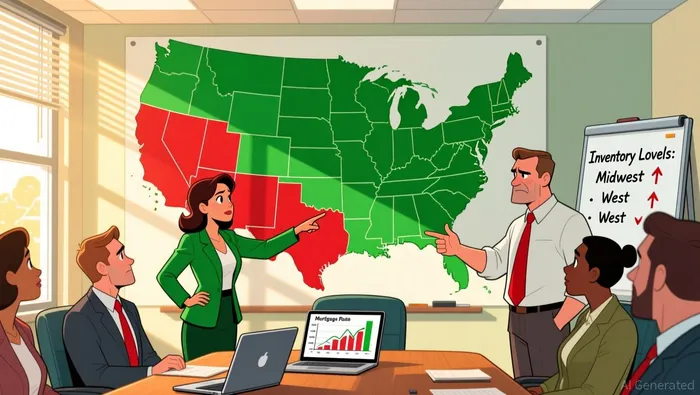





Comentarios
Aún no hay comentarios