
Housing Market Fragmentation in the U.S.: Unlocking Geographic Arbitrage Opportunities in Real Estate
The U.S. housing market in 2025 is a patchwork of contradictions. While the Northeast and Midwest cling to stubbornly high prices and scarce inventory, the Sun Belt is navigating a measured correction. This divergence isn't just a blip—it's a structural shift that savvy investors can exploit through geographic arbitrage. Let's break down where to play and where to avoid.
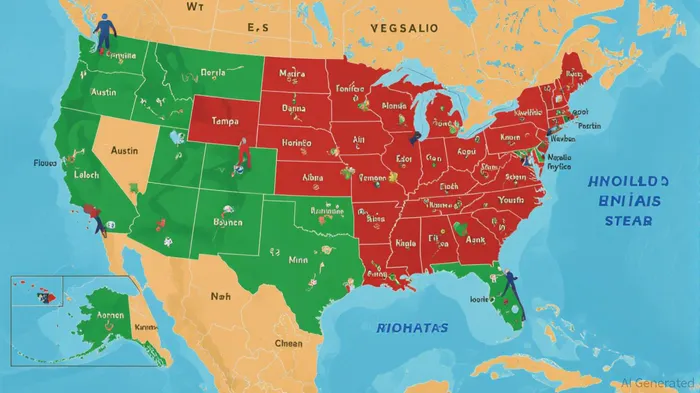
The Sun Belt: A Correction, Not a Collapse
Cities like Austin, Tampa, and Phoenix are experiencing price declines, but these corrections are rooted in overvaluation, not fundamentals. Austin's median home price has dropped 4.5% year-over-year to $449,900, with inventory rising to 5.5 months of supply. While that sounds alarming, it's a normalization of a market that surged 30% during the pandemic. The key here is opportunity: Austin's tech and healthcare sectors are still adding jobs, and population growth remains robust. Zillow projects a 4.2% price decline by May 2026, but that's a buying window for investors with a 5–10 year horizon.
Tampa and Phoenix are similar stories. Tampa's 1.4% price drop hides a 26% job growth rate in healthcare and construction, while Phoenix's 3% decline is offset by 4.8% wage growth. These markets are still outperforming the national average, and their suburban affordability makes them magnets for first-time buyers and renters. Single-family rentals (SFRs) in these areas have seen rent growth of 2–3% in 2025, outpacing apartments and insulating investors from price volatility.
Public homebuilders like LennarLEN-- (LEN) and D.R. Horton (DHI) are already capitalizing on this shift. Their economies of scale let them absorb rising material costs, and their focus on Sun Belt markets aligns with population trends. If you're looking for indirect exposure, these names are worth a closer look.
The Northeast and Midwest: A Stuck Market
Meanwhile, the Northeast and Midwest are trapped in a different kind of problem. Restrictive zoning laws, aging infrastructure, and a lack of new construction have left these regions with inventory levels 40–50% below pre-pandemic norms. New York's median home price is up 16% since 2022, but that's not a sign of strength—it's a symptom of scarcity. Over 80% of homeowners here are “out-of-the-money,” meaning their mortgages are far below current rates, which discourages selling and exacerbates the inventory shortage.
Milwaukee's 26% price surge since 2022 is another red flag. High prices aren't sustainable in markets where wages haven't kept pace. The real risk here is overvaluation. If rates dip or inventory increases, these markets could face a sharper correction than the Sun Belt's measured decline.
Strategic Entry Points for Investors
The path forward lies in geographic arbitrage: buying where fundamentals are strong and selling where overvaluation is baked in. Here's how to play it:
- Suburban and Secondary Markets: Focus on neighborhoods with strong job growth and infrastructure. Austin's suburbs, for example, offer fix-and-flip opportunities with 32.3% of listings undergoing price cuts.
- Single-Family Rentals (SFRs): These assets outperform apartments in Sun Belt markets, with rent growth of 2–3% in 2025. Use platforms like Zillow's Zestimate or Realtor.com's affordability reports to identify undervalued properties.
- Long-Term Fixed-Rate Strategies: With mortgage rates stabilizing around 7%, locking in fixed rates now can hedge against short-term volatility.
- 1031 Exchanges: For those with existing real estate holdings, these exchanges let you defer capital gains by reinvesting in Sun Belt properties.
Risks and Mitigation
Don't ignore the risks. Rate volatility and local market variability could derail even the best-laid plans. Mitigate these by:
- Diversifying geographically: Spread investments across multiple Sun Belt cities to avoid overexposure.
- Using data tools: Platforms like Zillow and Realtor.com provide real-time affordability metrics.
- Avoiding high-cost markets: The Northeast and Midwest's “sticky high” prices are a trap for the unwary.
The Bottom Line
The U.S. housing market is a mosaic of opportunities and pitfalls. The Sun Belt's correction isn't a crash—it's a recalibration that rewards patient, data-driven investors. By targeting markets with strong fundamentals and avoiding overvalued regions, you can turn fragmentation into profit. The key is to act now, before the window closes in 2026–2027.
In a world of rising costs and policy uncertainty, geographic arbitrage isn't just a strategy—it's a necessity. The data is clear: where you invest matters more than ever.







Comentarios
Aún no hay comentarios