
The U.S. Housing Market: Decoding August Existing Home Sales and Its Implications for Real Estate and Housing REITs
The U.S. housing market entered August 2025 with a mix of caution and cautious optimism. While existing home sales data signaled a cooling trend, the broader implications for real estate and housing REITs reveal a nuanced picture of cyclical positioning and market momentum. For investors, understanding these dynamics is critical to navigating a sector at a potential inflection point.
A Slowing Market: Inventory Growth and Price Adjustments
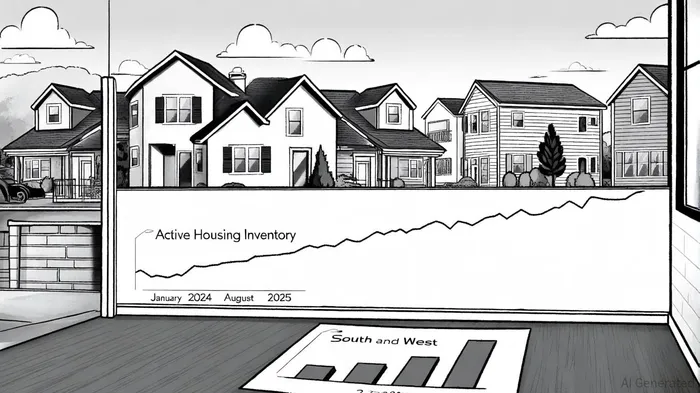
According to a report by Realtor.com, active listings surged 20.9% year over year in August 2025, marking the 22nd consecutive month of inventory growth[1]. However, the pace of this expansion has slowed, with growth rates declining from 31.5% in May to 20.9% by August. This deceleration suggests a market nearing equilibrium, though challenges persist. Pending home sales fell 1.3% year over year, and new listings grew only 4.9%, declining for four straight months[1].
Price trends further underscore the cooling dynamics. The national median list price remained flat at $429,990, with a 2.2% monthly decline, while 20.3% of listings featured price cuts—concentrated in the South and West[1]. These adjustments reflect a shift in buyer-seller power, with sellers increasingly compelled to compete in a buyer's market.
Housing REITs: Mixed Performance and Cyclical Opportunities
The August 2025 data aligns with a broader narrative of market transition, which has had mixed implications for housing REITs. Year-to-date, REITs underperformed the S&P 500, with an average total return of -6.42% compared to the index's 3.83%[1]. Sectors like multifamily and single-family housing traded at higher FFO multiples (21.8x) relative to hotels (6.3x) and offices (8.7x), highlighting divergent valuations[1].
Despite these challenges, housing REITs are positioned for a potential rebound. A report by REMAX notes that the U.S. housing market saw a 1.6% year-over-year decline in home sales in August 2025, with a steeper 5.5% drop from July 2025[1]. This cooling trend, coupled with a 0.6% monthly decline in home prices and an average of 47 days on the market, signals a shift toward balance. Analysts argue that lower interest rates and stabilizing regional markets could expand profit margins for REITs, enabling property expansions or acquisitions[1].
Long-Term Outlook: Demographics and Supply Constraints
The cyclical positioning of housing REITs is further bolstered by structural demand drivers. Morgan Stanley Wealth Management highlights that the U.S. will need approximately 18 million new housing units by 2035, yet labor shortages and rising construction costs are limiting supply[1]. This imbalance is likely to push more Americans toward rental markets, benefiting REITs with exposure to high-demand regions.
Demographic shifts also play a role. As the baby boomer population ages and Millennials and Gen Zers enter peak household-formation years, demand for rental properties—particularly in senior and affordable housing—is expected to rise[1]. REITs specializing in these niches are uniquely positioned to capitalize on this trend.
Investment Implications: Balancing Risk and Reward
For investors, the August 2025 data underscores a market in transition. While existing home sales and price adjustments signal a slowdown, the growing inventory and stabilizing regional markets suggest a path toward balance. Housing REITs, though currently undervalued, offer long-term appeal as the sector adjusts to lower interest rates and demographic tailwinds.
However, cyclical positioning requires caution. REITs remain sensitive to rate fluctuations, and regional disparities—such as the 7 buyer's markets, 20 seller's markets, and 23 balanced markets among the 50 largest metros—necessitate a granular approach[1]. Investors should prioritize REITs with strong leverage management and exposure to high-growth rental segments.







Comentarios
Aún no hay comentarios