
The Housing Market Correction: Implications for Homebuilders and Investors
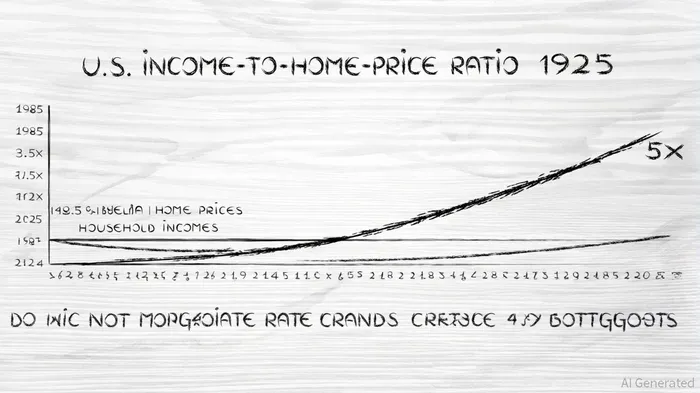
The U.S. housing market in 2025 is navigating a complex correction driven by affordability constraints and shifting demand patterns. While median home prices have surged to $405,000—over 50% above 2019 levels—year-over-year price growth has slowed to 1.4%, trailing inflation and creating localized pockets of affordability improvement[1]. However, the broader affordability crisis persists, with the income-to-home-price ratio widening to 5x in 2025, up from 3.5x in 1985[3]. This divergence, despite a decline in mortgage rates from 12.4% to 6.8% over the same period[3], underscores the structural challenges facing homebuilders and investors.
Affordability-Driven Demand Shifts
High mortgage rates—hovering between 6.5% and 7% in 2025—have suppressed demand, particularly among first-time buyers, who now account for just 24% of transactions, with a median age of 38[2]. The "lock-in" effect, where homeowners with low-rate mortgages avoid selling, has further reduced inventory, keeping existing home supply near record lows (4.0 million units in Q3 2025)[2]. This dynamic has redirected demand toward smaller urban centers like Raleigh and Austin, where shifting work habits and inflation pressures are reshaping buyer preferences[4].
Regional disparities are also intensifying. The Northeast and Midwest have seen relatively stable demand, while the South and West face cooling markets and falling prices[2]. For investors, this fragmentation highlights the importance of geographic diversification. Multifamily construction, for instance, is projected to grow by 6% in 2025[1], reflecting stronger demand for rental housing amid affordability barriers for home purchases.
Sector Resilience and Investment Opportunities
Despite these headwinds, the housing sector exhibits resilience. J.P. Morgan forecasts modest price growth of 3% in 2025, driven by a wealth effect and sustained demand[3]. However, homebuilders face near-term challenges, including a 3.0% decline in single-family construction in 2025[1] and a 3.8 million-unit supply shortage[4]. Labor shortages, rising material costs, and regulatory delays compound these issues, creating both risks and opportunities for agile investors.
For homebuilders, the path forward lies in adapting to affordability-driven demand. Companies prioritizing cost-efficient construction methods or modular housing may outperform peers. Similarly, investors should consider multifamily REITs and developers targeting undersupplied urban markets, where demand is less sensitive to mortgage rate fluctuations[4].
Conclusion
The 2025 housing market correction is not a collapse but a recalibration. Affordability constraints are reshaping demand, favoring rental markets and smaller urban hubs while straining single-family builders. For investors, the key lies in balancing short-term volatility with long-term structural trends. As J.P. Morgan notes, mortgage rates are expected to ease slightly to 6.7% by year-end[3], offering a glimmer of hope—but not a full resolution. The sector's resilience will ultimately depend on its ability to innovate amid persistent affordability challenges.







Comentarios
Aún no hay comentarios