
U.S. House Passes Three Bills to Reshape Digital Asset Markets
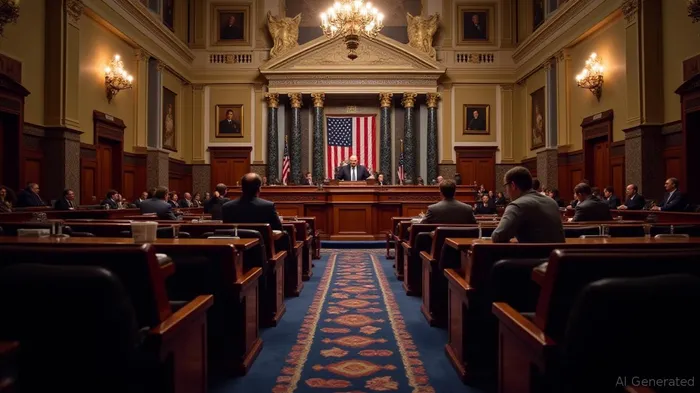
The U.S. House of Representatives has made a significant move by passing three key bills aimed at reshaping the digital assetDAAQ-- markets. These legislative actions, collectively referred to as “Crypto Week,” introduce a new regulatory framework targeting stable cryptocurrencies and central bank digital currencies (CBDCs).
The GENIUS Act, which stands for “Guiding and Establishing National Innovation for US Stablecoins,” was passed with a vote of 206 to 102. This act provides the first comprehensive legal framework for emerging digital asset markets, focusing on improving consumer protection and regulatory oversight in the stable cryptocurrency sector, which is valued at nearly $250 billion. The GENIUS Act aims to resolve legal uncertainties surrounding crypto assets, fostering a safer environment for market participants in the United States. It is currently awaiting President Biden’s signature.
In addition to the GENIUS Act, the CLARITY Act was also approved. This act seeks to establish a clear regulatory roadmap for cryptocurrencies, enhancing transparency and predictability. Furthermore, the Anti-CBDC State Act aims to prevent the U.S. Federal Reserve from issuing digital currencies and restricts banks from handling CBDC transactions. All three proposals are now awaiting consideration in the Senate, with stakeholders from the crypto industry closely monitoring the potential impacts of these policy shifts.
Critics have raised concerns about the new regulations. Republican Senator Josh Hawley expressed his opposition, stating that the legislation provides significant privileges to tech giants, allowing them to issue stable cryptocurrencies without sufficient oversight. Despite these criticisms, the overall response to the legislation has been positive, with the U.S. laying the groundwork for enhanced transparency and consumer safeguarding in the crypto landscape. Preventing central bank digital currencies remains high on the agenda, marking shifts that may influence markets globally.
These legislative efforts could redefine the path of digital assets and cryptocurrencies in the U.S., affecting regulatory clarity and consumer protection. The GENIUS Act, in particular, establishes the first regulatory framework for payment stablecoins, requiring full backing by liquid assets and monthly reserve reports. This legislation is set to fundamentally alter how digital assets are regulated, dividing oversight between the Securities and Exchange Commission (SEC) and the Commodity Futures Trading Commission (CFTC) based on the nature of the blockchain networks involved.
The Clarity Act defines digital assets and provides regulatory clarity for the crypto industry. This act is designed to safeguard financial privacy and position the United States as a global leader in digital asset regulation. The Anti-CBDC Act aims to prevent the Federal Reserve from issuing a central bank digital currency (CBDC), ensuring that private companies retain the ability to issue stablecoins and other cryptocurrencies.
The passage of these bills marks a significant milestone in the regulation of digital assets in the U.S. The GENIUS Act establishes a framework for private companies to issue stablecoins, which are cryptocurrencies with a value pegged to another currency or financial asset. This move is expected to reshape the $238 billion stablecoin market by ensuring that these assets are fully backed by liquid reserves and subject to regular audits.
The implications of these legislative actions are far-reaching. The GENIUS Act and the Market Structure Bills are set to redefine the future of crypto compliance, providing a clear regulatory path for digital assets. Experts predict that these bills will enhance the transparency and stability of the digital asset markets, making them more attractive to investors and fostering innovation in the sector.
The U.S. House of Representatives has taken a pivotal step by passing these bills, which are designed to establish a comprehensive regulatory framework for cryptocurrencies. This move is expected to position the United States as a global leader in digital asset regulation, ensuring that the industry operates within a clear and transparent legal framework. The passage of these bills is a major milestone in the evolution of digital asset markets, setting the stage for a new era of regulatory clarity and stability.







Comentarios
Aún no hay comentarios