
House Agriculture Committee Approves Digital Asset Market Clarity Act 47-6
The US House Agriculture Committee has taken a significant step forward in the regulation of digital assets by approving the Digital AssetDAAQ-- Market Clarity Act. The bill, which aims to establish a clear regulatory framework for digital assets, was passed with an overwhelming majority of 47 votes in favor and 6 votes against. This bipartisan support underscores the growing recognition of the need for regulatory clarity in the digital asset space.
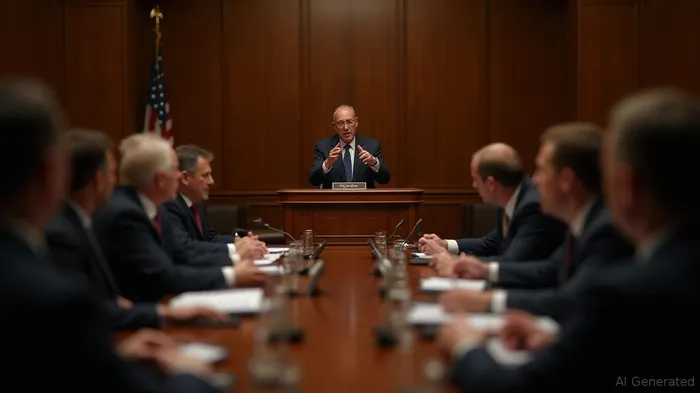
The approval of the Digital Asset Market Clarity Act by the House Agriculture Committee marks a crucial milestone in its legislative journey. The committee, which has jurisdiction over certain aspects of digital assets deemed commodities, conducted a nearly three-hour markup session. During this session, committee members debated, amended, and refined the bill's language before voting to advance it. This process is essential for ensuring that the bill is comprehensive and addresses the key issues facing the digital asset industry.
Following its approval by the House Agriculture Committee, the Digital Asset Market Clarity Act is now headed to the House Financial Services Committee. This committee has significant oversight over financial markets, including securities, which fall under the jurisdiction of the Securities and Exchange Commission (SEC). Given that the bill touches upon the roles of both the SEC and the Commodity Futures Trading Commission (CFTC), review by both committees is necessary. The Financial Services Committee is expected to potentially merge the bill into a larger legislative package, a common practice in Congress aimed at streamlining the process before moving to the full House floor for a vote.
The Digital Asset Market Clarity Act builds upon the foundation laid by the Financial Innovation and Technology for the 21st Century Act (FIT21). FIT21 was another significant piece of legislation aimed at establishing a framework for digital asset regulation and also saw passage through the House. By building on FIT21, the Digital Asset Market Clarity Act seeks to reinforce and refine the proposed regulatory structure. Its primary goals include defining jurisdictional boundaries between the SEC and the CFTC, requiring developer registration, and limiting certain disclosure obligations.
The lack of clear jurisdictional lines between the SEC and the CFTC has been a persistent source of frustration and legal challenges for companies operating in the digital asset space. Both agencies have asserted authority over various aspects of the crypto market, leading to enforcement actions and uncertainty. The Digital Asset Market Clarity Act aims to address this issue by providing a clear legal framework that defines which digital assets fall under the SEC’s authority as securities and which fall under the CFTC’s authority as commodities. This clarity is crucial for businesses to comply with the correct rules and reduce the risk of conflicting regulatory demands.
If enacted, the Digital Asset Market Clarity Act could bring several potential benefits to the crypto market and its participants. These benefits include increased legal certainty, encouragement of innovation and growth, enhanced investor protection, and reduced enforcement risk. Clear rules can provide a predictable environment for startups and established companies alike, attracting more investment and talent to the digital asset sector. Additionally, clear regulation ultimately benefits investors by ensuring that platforms and issuers operate under defined rules, promoting transparency and accountability.
Despite the positive step forward, the Digital Asset Market Clarity Act still faces challenges. The bill must pass through the House Financial Services Committee, where debates and potential amendments are likely. The final combined package will need careful consideration to ensure consistency and effectiveness. Assuming it clears the committee, the bill must pass a vote by the full House of Representatives. Even if passed by the House, similar legislation would need to advance through the Senate, which has its own committees and legislative priorities regarding digital asset regulation. The Senate’s approach to digital asset regulation has sometimes differed from the House, and the bill’s language and scope could change significantly as it moves through the legislative process.
For participants in the digital asset market, the advancement of the Digital Asset Market Clarity Act is a signal that Congress is actively working towards establishing a regulatory framework. While the outcome is not guaranteed, these developments are worth watching closely. Staying informed about the progress of this and other digital asset-related bills in Congress is crucial for investors, developers, and businesses operating in this space. The passage of the Digital Asset Market Clarity Act through the House Agriculture Committee represents progress towards a more defined future for digital assets in the United States.







Comentarios
Aún no hay comentarios